Democratic Alliance mayor Cilliers Brink was removed through a vote of no confidence brought by the ANC and supported by ActionSA.
(Frennie Shivambu/Gallo Images)
The Democratic Alliance’s (DA’s) Tshwane mayor, Cilliers Brink, has warned its coalition partner ActionSA that voters will make it pay for collapsing the coalition in the metro municipality in favour of forming a new government with the ANC and the Economic Freedom Fighters (EFF).
Brink said ActionSA should also shoulder some blame for the service delivery problems it has cited among the reasons it wanted to oust him, arguing that Herman Mashaba’s party was involved in the policy decisions made by the current city government.
On Tuesday, the Mail & Guardian reported that ActionSA is set to get the mayoral position in Tshwane while the ANC will get the council speaker as part of a deal between the parties to take over the city.
Both parties are also prepared to offer the EFF some member of the mayoral committee (MMC) positions in return for the Red Berets’ support in ousting the DA.
Brink said ActionSA was claiming credit for the city’s advances but blaming its failures solely on the DA.
“You will see on social media ActionSA deputy mayor [Nasiphi Moya] and MMCs doing visits in various communities across the city to show how streetlights are being repaired, how community facilities are being improved. It contradicts the story that ActionSA is telling that Tshwane is failing,” he told the M&G on Wednesday.
“Either Tshwane is making progress or it is failing. If it’s making progress and ActionSA is sharing the credit then they can’t attack and blame the failures on us. If Tshwane is not making progress, then ActionSA must take responsibility for that.”
Brink said ActionSA has oversight of townships such as Mabopane, Winterveld, Soshanguve and Hammanskraal.
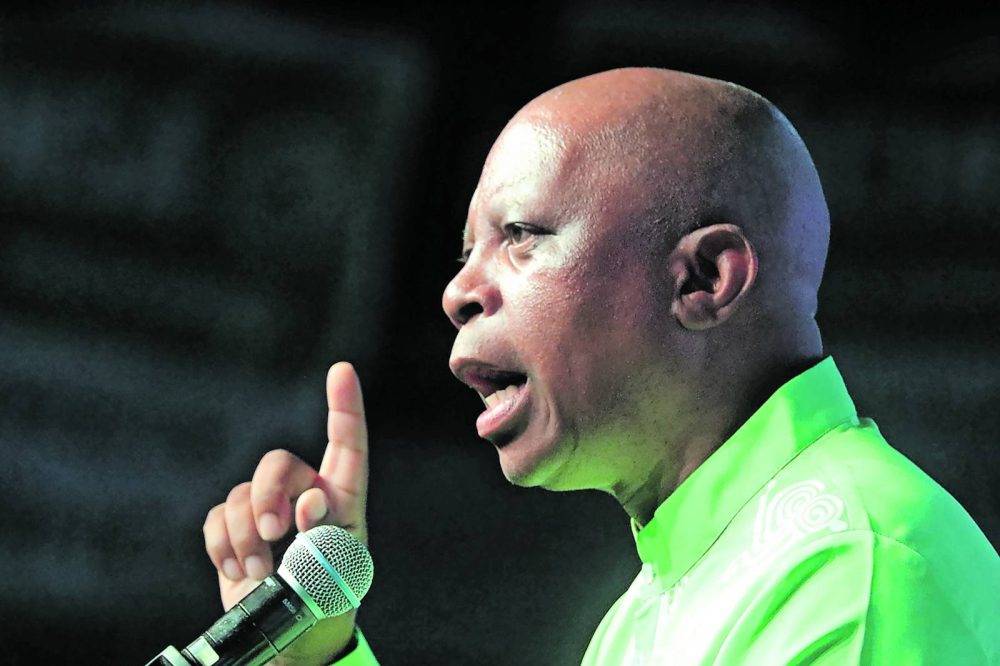 Action SA leader Herman Mashaba. Photo: Fani Mahuntsi/Gallo Images
“Even in these circumstances they are attacking the performance of the coalition and, at the same time, they are taking credit for our successes. There is serious hypocritical conduct on the part of ActionSA.”
ANC Tshwane regional secretary George Matjila said this week that ActionSA would get the mayoral position, but it was still not clear who Mashaba’s party would field as its preferred candidate.
“The speaker will come from the ANC. The MMC positions will be ActionSA, ANC and EFF, but it will depend on what becomes the final arrangement with the smaller parties,” Matjila said.
The ANC has tabled a motion of no confidence against Brink, which will be supported by some of the DA’s current partners — ActionSA, the EFF, the African Christian Democratic Party and the Congress of the People.
The motion was initially expected to be tabled on 30 August but was withdrawn by the ANC after Brink approached the Pretoria high court to challenge its legality, citing procedural irregularities.
Brink told the M&G: “It’s clear to me that they intend to bring the coalition down and effectively install a new government that will have the EFF as the kingmakers. This will be incredibly bad for the city of Tshwane.
“If you add the seats of ActionSA up to the ANC seats, it’s not enough for a working majority. To have a working majority either you have the DA or you need the EFF. I think they will be held accountable by their voters for bringing the EFF into government. I believe they will pay for that at the next election; the people will not forget it. If you think you can improve ActionSA’s performance in government by bringing the EFF in, you are mistaken.”
Brink said he believed the move would see ActionSA being “wiped out” for bringing the EFF into the centre of government. “It will also wipe out the progress which we have achieved for the past 17 months.”
He said it was “inaccurate” to blame the DA for Tshwane’s woes because the city had been run by a series of coalitions since the ANC lost power and that the coalition government had been dealing with the consequences of 16 years of ANC rule, cadre deployment and the conflation of party and state.
“The story that it had been a DA government, it hasn’t. It’s been a coalition government and even at the outset, there has been active disruption of council meetings and that has had a significant effect.
“Of course, we take responsibility for fixing what is wrong and whatever the source of that wrongdoing is, but to say the DA has been in government for so long is simply inaccurate.”
Among the reasons cited by ActionSA for dumping the DA as a coalition partner was its failure to provide service delivery in townships around the City of Tshwane.
Mamelodi resident Moses Selepe said poor services and water problems in the township were a big concern, along with the failure to collect rubbish in areas where there were informal settlements.
“You find that the trucks do not go there and people end up dumping wherever they can. The place starts stinking which becomes a health hazard, especially for children,” Selepe said.
Crime was also a big worry in the township, he added, narrating how a group colloquially known as “Boko Haram” — after the Islamist jihadist group in Nigeria — has been terrorising residents in the area.
“This thing of extortions has been happening for a long time in Mamelodi. They will make you pay a protection fee if you have a shop. So the government has failed to deal with crime and I do not think there will be any change even if the DA is removed,” Selepe said.
He said he believed the DA and its coalition partners had prioritised delivering services to the affluent suburban areas of Tshwane rather than the townships, and this was evident in the deterioration of his area.
“Unemployment is high, crime has increased, rubbish is not being collected in some areas, and some people in Ikageng have not had water for four years but those who stay in the nearby squatter camp and are connected illegally to the water reservoir can access water,” Selepe said.
“The ones who actually pay for this water cannot get it and have to stand in long queues for water tankers to provide water.”
Brink acknowledged that service delivery in Tshwane “is far from perfect”, but insisted that the city had made considerable progress in making management changes and taking action against the misspending of public money. The city’s audit outcomes have improved and the financial recovery of the city has been acknowledged by rating agencies.
“It is not easy to govern Gauteng or the City of Tshwane, it requires difficult decisions, and it is not like flipping a switch. The fact of the matter is that the economy of Gauteng is growing slower than the population, we have got massive migration and that immigration is affecting the townships in particular,” he said.
“Land grabs are affecting the township more than it is the suburbs because folks in the township cannot afford private security and all of these other things that folks who have means have. That is why it is incredibly important that you have a stable government that improves the administration.”
A resident in Soshanguve Block BB, who is also a municipal worker, said the possibility of the DA being relegated to opposition benches was “exciting”, accusing the party of “just frustrating workers”.
The council employee, who asked not to be named, said that when the DA took over the municipality, workers had been protesting about not getting salary increases, but the party had fired them instead of listening to their concerns.
“What we are saying is don’t just choose a mayor, but choose somebody with knowledge of running the municipality and what are the things affecting residents and workers. You can’t just put on a face that doesn’t understand anything.”
The employee praised the last ANC mayor in Tshwane, Kgosientso Ramokgopa, who is now the national electricity and energy minister.
“If there’s one man who changed Tshwane, it was Sputla [Ramokgopa]. When he came in here there were a lot of things we were told were impossible but under him, they were possible. We want someone like that who is going to say to my people, ‘I’m going to make sure things run well.’
“Since these coalitions took over, we have never smiled to tell you the truth …. If you are frustrated [how] do you look forward to going to work? The working morale is down. [Out of] the municipalities of Johannesburg, Ekurhuleni and Tshwane, we are the ones that are paid less,” the council worker added.