Many railway lines are underutilised or abandoned, with over 30% of Africa’s rail infrastructure inoperable.
South Africa’s economy is projected to grow slowly in 2025 because of delayed reforms in its ports and rails systems; water is becoming the new Eskom; and crime is a deterrent for investment; but the government of national unity (GNU) brings a glimmer of hope.
Economists believe the year will bring new challenges for the country with the Trump administration expected to introduce new economic policies. But there is some optimism in the domestic environment because of the improved electricity supply and expectations of the unity government.
“Every year there’s a lot of uncertainty, but last year, the election was a major uncertainty, because we could have got any outcome,” said Maarten Ackerman, chief economist at Citadel Investment Services.
“During the first half of 2024 almost all activity was paused, and then as soon as we started getting clarity, things started to move in the right direction.
“We found the government of national unity, and it’s probably slightly more pro-business, so that should give the government the mandate to actually implement some of these business reforms that are needed to get the economy going. That’s why we probably ended the year with more positive sentiments.”
The major limitation to economic growth in 2025 is the rails and ports systems under Transnet.
Investec chief economist Annabel Bishop said; “Transnet’s freight incapacity remains a very substantial limitation on economic growth, without which the economy could expand to at least 4.0% year-on-year. Transnet’s recapacitation will take several years, with GDP over 3.0% year-on-year likely only by 2030.”
She said data for 2024 to date shows a 0.8% year-on-year GDP growth outcome, but the third quarter numbers are likely to be revised higher after contracting 0.3%, resulting in an outcome closer to 1.0% on an annual basis, while South Africa is expected to see economic growth of 1.8% year-on-year for 2025.
Transnet’s incapacity to fully meet demand has reduced GDP growth by about 3% a year.
“South Africa’s GDP growth has been subdued by blockages at the ports and on the rails, and while slightly reduced versus 2024, still provides a severe brake on GDP growth, while some load-shedding is reportedly at risk of occurring in 2025 again,” she said.
“Substantial increases in electricity tariffs have also been a significant burden on economic growth in SA, as have increases in other costs of doing business in South Africa, while water outages have increased.”
South Africa’s water crisis has worsened over the past year, particularly in the Johannesburg region, because neglected infrastructure and pump stations have had to undergo maintenance, frequently restricting water supply to residents.
Ackerman said the structural issues in South Africa are causing hindrances to economic growth.
Although the government said it is more willing and committed to implementing some reforms, the benefits won’t be reflected this year, and will likely take three to five years, “which implies we need to prepare for a challenging environment”.
Unemployment
The unemployment crisis is a major contributor to slow economic growth.
In the third quarter of 2024, the unemployment rate was 32.1%, and eight million people were without jobs, according to Statistics South Africa. Jobs were added in six of the 10 industries tracked by Stats SA: community and social services, construction, trade, agriculture, mining and utilities.
Zandile Makhoba, lead research and insights specialist at Liberty Group, said the job growth in these industries, especially trade, mining and utilities, was an indication of productivity. “We are starting to get into a reparation phase.”
She said the aim is to see that activity turning into job creation because South Africa has been in an “almost stagnant phase of very low employment opportunities, at a time when salaries are not growing fast, but inflation and interest rates have”.
Last year, inflation slowed for five consecutive months from May and was at a four-year low of 2.8% in October (it rose to 2.9% in November). Consequently, the South African Reserve Bank cut interest rates by a cumulative 50 basis points in the last two meetings of the year, bringing the rate to 7.75%.
Economists are cautious about whether the Reserve Bank will cut the interest rates soon, but Makhoba said the current conditions are favourable for consumer spending, which enables economic growth. But other economists say reduced interest rates and inflation are not enough to cushion the strain caused by the structural issues.
Makhoba projects an economic growth of 1.8% for the year, and is optimistic about the CEO pledge in which 160 chief executives committed to help the government accelerate structural reforms and interventions to drive economic growth and job creation.
Makhoba added that Operation Vulindlela — a joint initiative between government and the treasury to drive economic growth through reforms, especially in the electricity, water, transport and digital communications sectors — is also making strides for the economy. She added that the government’s ongoing efforts to be delisted from the greylist is also encouraging.
According to an October 2024 statement from the treasury, if South Africa addresses all remaining action items in the “next reporting cycle”, the February 2025 Financial Action Task Force (FATF) Africa Joint Group will be called to conduct a visit to assess the progress. If the outcomes are positive, South Africa could be removed from the grey list.
“In terms of security and stability of an investment, we are doing the work that it takes to get off that list,” Makhoba said.
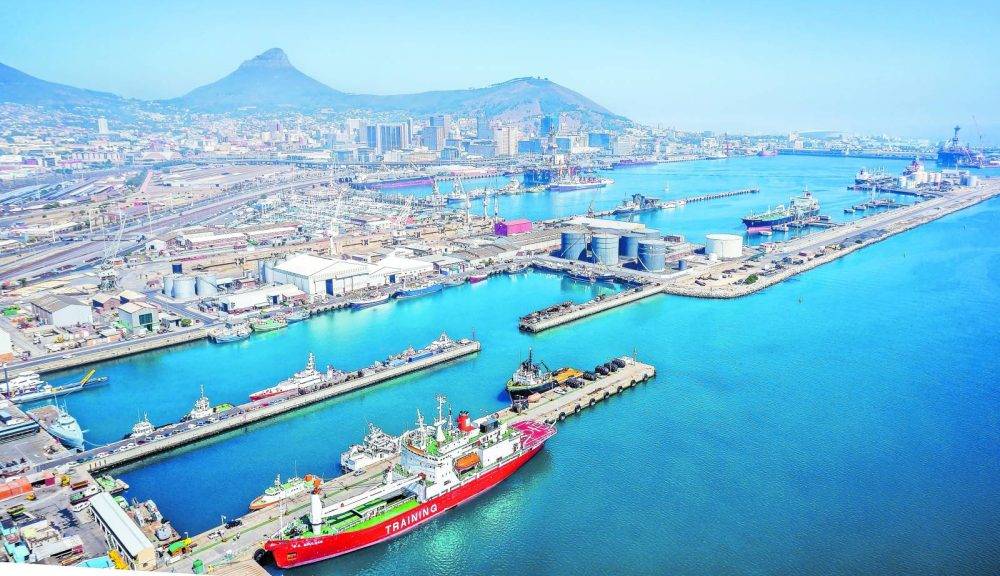 The port of Cape Town
Investment
But conditions are still not ripe for investment, according to investment strategist at Brenthurst Wealth Magnus Heystek.
“It’s been tough for South African business people in general. It’s also been tough in terms of the political uncertainty caused by the GNU … business is waiting for certain actions by the government to improve the economic outlook.
“Although there is a lot of talk behind the scenes between government and the private sector, it seems as if they’ve not yet unlocked the economic potential that is there, although they are good signs in terms of tourism.”
He added that crime has become a major deterrent for both local and foreign investors.
“Crime is a big negative, and many businesses, foreign business people, arrive here and when they look at the local conditions and see the full picture of crime, physical crime, crime to buildings, they actually walk away.
“The crime situation is probably the biggest deterrent of something like manufacturing, which is very exposed to crime. That’s why I’m saying it’s very hostile.”
Heystek said South Africa’s interest rate is high when compared with the rest of the world, which also makes it difficult for foreign businesses to invest in the country.
“The government or Reserve Bank are forced to keep interest rates very high for fear of an outflow of capital, and if the interest rates are reduced, the currency could come under tremendous pressure. So they’ve got a very difficult situation,” he said.
“They’re trying to balance economic growth and stability in the currency, but it makes it very difficult for foreigners to turn up a business where the cost of money is very expensive, and you’ve got to make huge amounts of money [the return on investment to cover the cost of financing].”
He added that although some businesses are building their investments in the country, inflows have been slow, and South Africans should remain cautious. “I don’t think we must become excited about a rapid return to normal growth. If we can get 1% or 1.5% or maybe 2%, that will be fantastic, but it’s still not enough.”