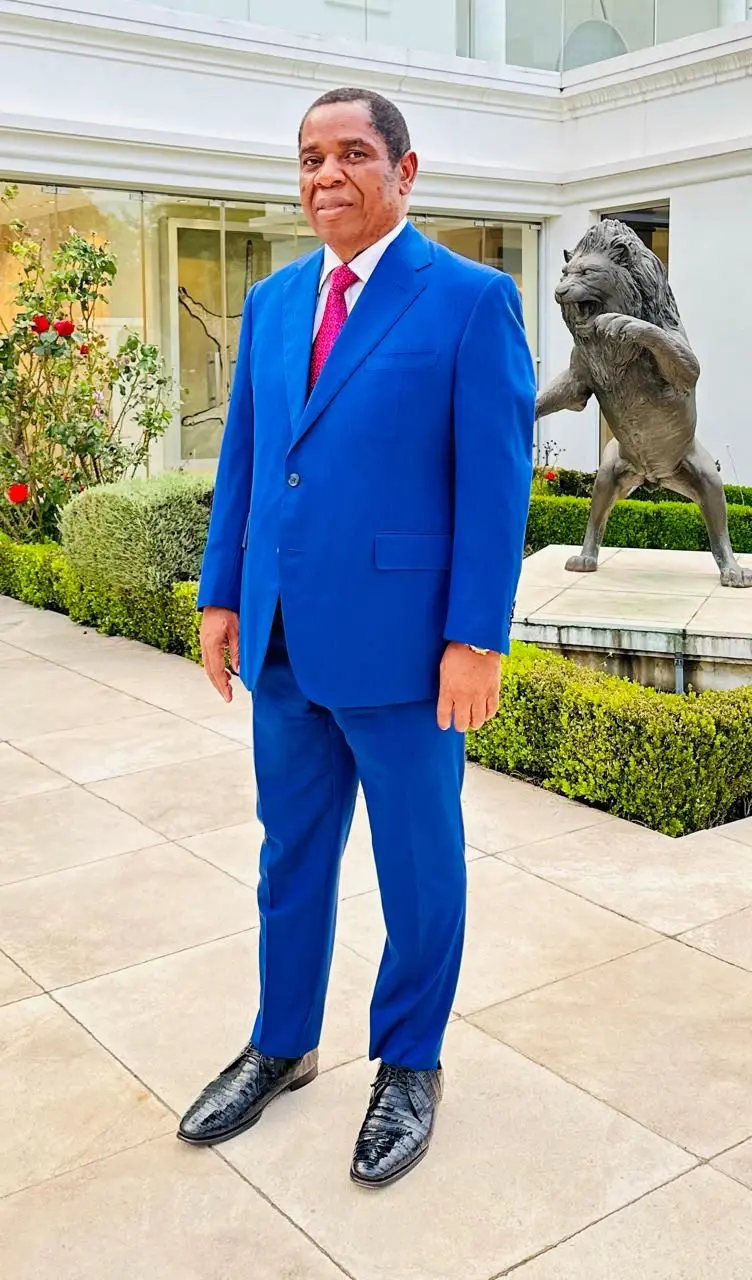
Slush fund resurfaces: According to allegations made this week, Nathi Mthethwa benefitted from looted crime intelligence funds. Photo: X
As Nathi Mthethwa’s body was due to arrive in the country on Friday for a state funeral on Sunday, questions swirled around his involvement in the looting of crime intelligence slush funds during his tenure as police minister, while details around his demise remained sketchy.
South Africa’s ambassador to France is expected to be buried about two weeks after he allegedly jumped to his death from a hotel in Paris, and as investigators still try to piece together the circumstances around the incident. He is said to have jumped from the 22nd-floor hotel room he had booked days earlier, and a day after his wife, Philisiwe Buthelezi, reported him missing.
On Wednesday, President Cyril Ramaphosa said Mthethwa would be given a special official funeral category two at his homestead in KwaMbonambi, KwaZulu-Natal.
Mthethwa’s body arrives in South Africa against the backdrop of fresh allegations by KwaZulu-Natal police commissioner Nhlanhla Mkhwanazi this week that he was a beneficiary of funds looted from the crime intelligence slush fund by crooked police top brass during his time as minister.
Mkhwanazi told parliament’s ad hoc committee, which is investigating police corruption, that Mthethwa had erected a wall around his KwaZulu-Natal home, where mourners were gathered, using funds stolen from the crime intelligence account in an apparent scheme by top police officials to capture the executive, so that no questions would be asked about the looting.
“People will say Mkhwanazi is very insensitive, but when we speak the honest truth, we must tell the truth. The country was in pain listening to how much money was spent at the former president’s (Jacob Zuma) homestead in Nkandla because there was accountability that was happening at the time,” Mkhwanazi said.
“We are sitting today because the country is in mourning because we lost one of our ambassadors in France, but then the ambassador was a minister of police. As you switch on the television and watch the homestead of the former minister of police, you’re going to see a very big perimeter wall that was built with the money from crime intelligence. Nobody was held accountable for that, and reports are there.”
Mkhwanazi accused the government of not paying attention to the amount of expenditure incurred by crime intelligence over the years within the secret service account, as well as the misuse of the secret service account.
He also slammed parliament’s joint standing committee on intelligence, which must ensure accountability and transparency, for not doing anything about the irregular expenditure within crime intelligence.
Mkhwanazi, who served as an acting police commissioner in 2011, said the rot in crime intelligence had happened as far back as that short stint and was still continuing.
“In 2011, we were experiencing all these things; it is members from crime intelligence who take the money from crime intelligence to use the money to take control of the executive authority. The minister never asked for the wall. The members took the money from the secret fund account to make that wall so that tomorrow they can loot that money on their own, then the minister can’t say anything,” he testified.
“Some of the executive officials or authorities that are arriving in the South African police service had no bad intentions, but the rogue within catches them, and they take control of them, and they do as they please with them.”
On Tuesday, national police commissioner Fannie Masemola said a senior police official would head to France to cooperate with the authorities there who are investigating Mthethwa’s death.
“We are not going there to do an investigation; we are going there to get the report from our counterparts in terms of what has happened. We take it as very important that the late ambassador was representing South Africa in the country and was representing the president of this country,” Masemola said.“When such incidents happen, it is our responsibility to make sure that we liaise with our counterparts. We are aware that our counterparts in the department of international relations have been involved, and we are not going there to investigate but we are just going there to receive a report firsthand and, of course, ask questions, and be taken through certain things and there we will come back.”