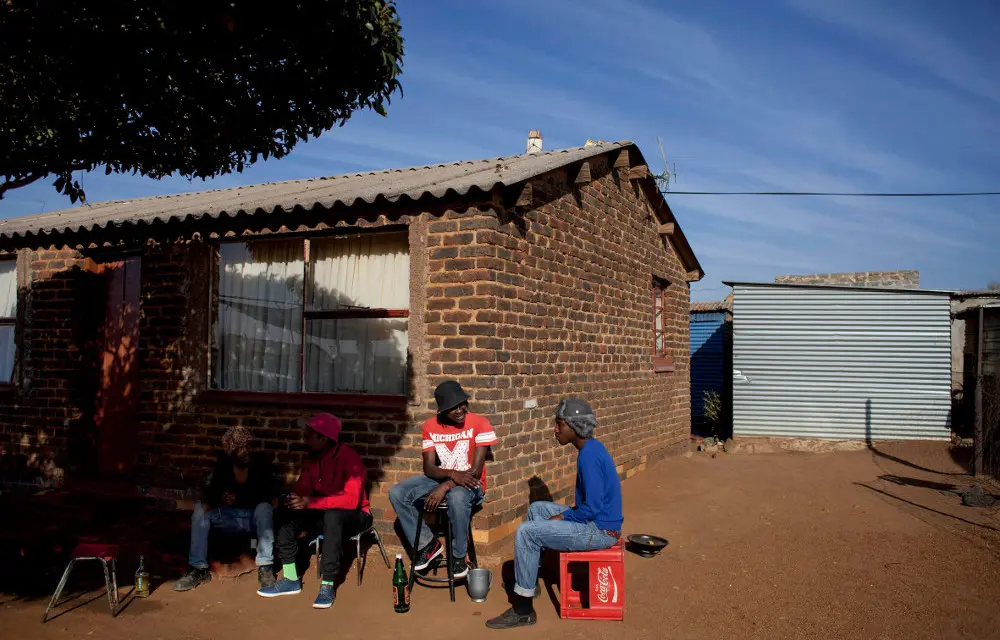


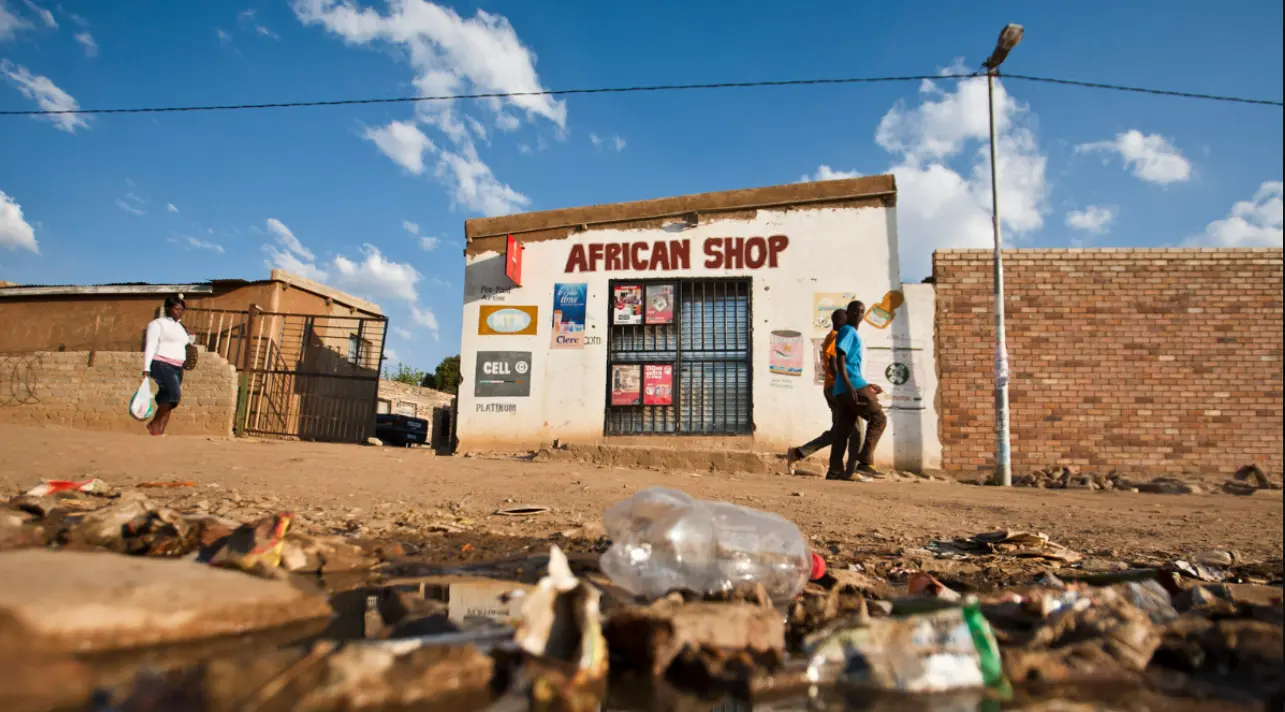

In many regions, human–water systems are already in a post-crisis state of failure. Photo: Delwyn Verasamy
The world has entered a dangerous new era of “global water bankruptcy” — one in which rivers, aquifers, glaciers and wetlands have been damaged and depleted beyond realistic recovery, a major new report from the United Nations University has warned.
The report released by the UN University Institute for Water, Environment and Health (UNU-INWEH) argues that the familiar terms “water stress” and “water crisis” are inadequate as they no longer capture today’s reality.
“The language of crisis — suggesting a temporary emergency followed by a return to normal through mitigation efforts — no longer captures what is happening in many parts of the world,” it said.
In many regions, human–water systems are already in a post-crisis state of failure. Over decades, societies have withdrawn more water than climate and hydrology can reliably provide, drawing down not only renewable flows but also the “savings” stored in aquifers, glaciers, soils, wetlands and river ecosystems.
At the same time, pollution, salinisation and other forms of water quality degradation have reduced the fraction of water that is safely usable.
The consequences are visible on every continent: rivers that no longer reach the sea, shrinking lakes, wetlands and glaciers, aquifers pumped down until land subsides and salt intrudes, forests and peatlands drying and burning, deserts and dust storms expanding, as well as cities repeatedly pushed to the brink of Day Zero.
The report said these were not simply signs of stress or episodes of crisis but “symptoms of systems that have overspent their hydrological budget and eroded the natural capital that once made recovery possible” with knock-on effects for food prices, employment, migration and geopolitical stability.
“This report tells an uncomfortable truth: many regions are living beyond their hydrological means and many critical water systems are already bankrupt,” said Kaveh Madani, the lead author of the report and director of UNU-INWEH, known as the UN’s think tank on water.
What is water bankruptcy?
Water bankruptcy, the report explains, happens when long-term withdrawals exceed renewable inflows and safe depletion limits, causing irreparable or prohibitively costly damage to rivers, lakes, aquifers, wetlands, soils and glaciers.
By contrast, “water stress” reflects high pressure that remains reversible while “water crisis” describes acute shocks that can be overcome.
“Water bankruptcy is not only about the ‘insolvency’ of the system but also about its ‘irreversibility’. Some damages are physically irreparable on human time scales: compacted aquifers do not rebound, subsided deltas do not rise, extinct species do not return and lost lakes cannot be restored within planning horizons,” the report notes.
It says declining stocks, polluted rivers, degrading aquifers and salinised soils mean the “truly usable fraction of available water is shrinking,” even where total volumes may appear stable.
Scope of the problem
Nearly three-quarters of the global population lives in countries classified as water-insecure or critically water-insecure.
About 2.2 billion people lack safely managed drinking water, while 3.5 billion lack safely managed sanitation. About four billion people experience severe water scarcity for at least one month per year.
Groundwater depletion and land subsidence threaten nearly two billion people in urban and densely populated areas, with some cities sinking by up to 25cm annually.
Environmental degradation is equally severe: more than half of the world’s large lakes have lost water since the early 1990s and roughly 410 million hectares of natural wetlands — almost the size of the European Union — have disappeared, with lost ecosystem services valued at more than $5.1 trillion.
Groundwater now provides about half of global domestic water use and more than 40% of irrigation, yet roughly 70% of major aquifers show long-term declining trends. Global glacier mass has declined by more than 30% since 1970.
Causes of water bankruptcy
The report emphasises that these trends are overwhelmingly human-driven. Over-extraction, agriculture (which uses roughly 70% of global freshwater withdrawals), pollution from untreated wastewater, industrial effluents and salinisation, as well as climate change, are all key drivers.
Global hotspots include the Middle East and North Africa, South Asia and the American Southwest.
“A region can be flooded one year and still be water bankrupt, if long-term withdrawals exceed replenishment. Water bankruptcy is about balance, accounting, and sustainability, not how wet or dry a place appears,” Madani said.
Risks and consequences
Water bankruptcy is a systemic risk with cascading consequences. These include food insecurity, higher food prices and pressure on farmers; social instability, displacement and potential conflict; and the loss of biodiversity and ecosystem services that support human survival.
Water bankruptcy also raises equity concerns. “The costs of overshoot and irreversibility fall disproportionately on smallholder farmers, rural and Indigenous communities, informal urban residents, women, youth, and downstream users, while benefits have often accrued to more powerful actors,” the report said.
Water bankruptcy is becoming a driver of fragility, displacement and conflict, said UN under secretary general Tshilidzi Marwala, the rector of the United Nations University.
“Managing it fairly — ensuring that vulnerable communities are protected and that unavoidable losses are shared equitably — is now central to maintaining peace, stability and social cohesion,” Marwala said.
Call to action
The report, released ahead of a preparatory UN water meeting in Dakar, Senegal, ahead of the 2026 United Nations Water Conference in December, argues that conventional water crisis management — focused on temporary mitigation or short-term emergency measures — is insufficient.
It calls for bankruptcy management, a combining mitigation and adaptation to irreversible changes, preventing further wetland loss, destructive groundwater depletion and uncontrolled pollution.
“Bankruptcy management requires honesty, courage and political will,” Madani said. “We cannot rebuild vanished glaciers or reinflate acutely compacted aquifers. But we can prevent further loss of our remaining natural capital, and redesign institutions to live within new hydrological limits.”
Water can also serve as a bridge for international cooperation, sustainable development, and climate action.
“Despite its warnings, the report is not a statement of hopelessness. It is a call for honesty, realism, and transformation. Declaring bankruptcy is not about giving up, it is about starting fresh,” he added.
“By acknowledging the reality of water bankruptcy, we can finally make the hard choices that will protect people, economies and ecosystems. The longer we delay, the deeper the deficit grows.”