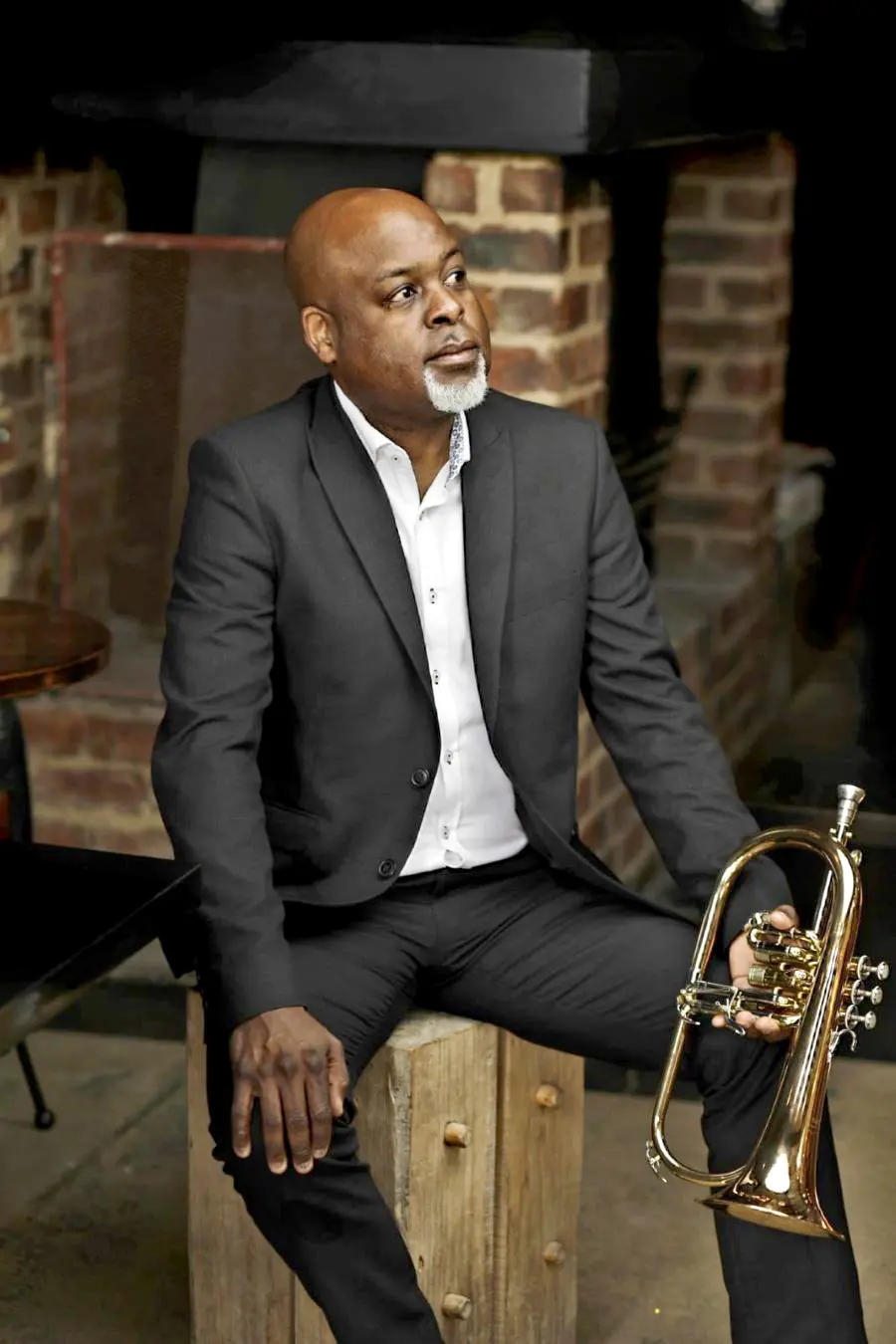











Albert Mazibuko, a member of the legendary group Ladysmith Black Mambazo, passed away on Sunday 5 April aged 77. Photo: Facebook.
The news of the passing of Albert Mazibuko (77) arrives as I am playing Frank Apollo’s Yinhle in an endless loop. If you know anything about South African traditional sampling culture, you will realise that this song is a sample of Ladysmith Black Mambazo’s Yinhle Lentombi. That song is from their sixth studio album Shintsha Sithothobala which was released in 1975. It is a strange coincidence. Perhaps, it is a gentle missive from the universe that one of the most important cultural workers in the world has transcended and has left his set of earthly descendants to make the world anew, with new stories, new idioms and a new set of sonic practices.
At 2am on Tuesday Morning, 7 April, South African Time, the BBC has already run a piece on the death of Mazibuko. They write: “The musician’s death on Sunday came after a short illness, the choral group posted on their Facebook page. Mazibuko joined Ladysmith Black Mambazo in 1969 and the collective went on to win five Grammy awards and feature on Paul Simon’s acclaimed 1986 Graceland album. Ladysmith Black Mambazo paid tribute to Mazibuko on Monday, describing him as “kind to a fault” and a “saint” who acted as a “wise elder” for the group’s younger members.”
This characterisation is true. If you live in Northern Natal in South Africa, you are acquainted with the work of Mazibuko. With his teachings, clarity and didactic spirit. Albert is considered a great tree in our community. A repository of memories, song, histories and oral cultures that predate contemporary notions of precoloniality. He is understood to carry ancient wisdom. Losing him on Easter weekend seems strangely poetic. In the absence of the appropriate words to mourn when death is so fresh, I reach back to my archives as a senior reporter at New Frame under the stewardship of Danielle Bowler’s gentle editorial eye:
“From violence, the gentle harmonies of isicathamiya”, I type on my search bar. The words come back in slow deliberate chunks.
In 1986, American songwriter and musician Paul Simon travelled to South Africa. After splitting from Art Garfunkel, with whom he had formed Simon and Garfunkel in 1956, Simon sought to steady his solo career. Despite the international cultural ban because of apartheid, Simon came to collaborate with South African artists for his upcoming Graceland album.
During this time, he met and collaborated with a young Joseph Shabalala. Having left an isicathamiya ensemble called The Highlanders, which his hero Galiyane Hlatshwayo fronted, the slightly built emerging musical genius put together a new ensemble called Ladysmith Black Mambazo.
The group quickly gained prominence. After being played on radio station Ukhozi FM, then known as Radio Zulu, Shabalala got wind of the possibility of a recording contract with Gallo Records. Producer West Nkosi offered the group a deal and Ladysmith Black Mambazo sold more than 40 000 copies of their first album, Amabutho, in 1973.
Thirteen years later, Simon would visit South Africa to collaborate with and compose the iconic 1986 hit Homeless with Shabalala and his troupe of ama’cothoza.
A story of empire and war
In March 1987, the year after Homeless was released, a replica of one of the four 155mm Creusot siege guns that the South African Republic imported in 1897 to man the four forts around Pretoria was unveiled in Ladysmith’s city centre. Dubbed “Long Toms”, the elongated barrel measured 4.2m and weighed almost 2 500kg.
The plaque says artillery of this nature was used in the siege of Ladysmith, which took place between 2 November 1899 and 28 February 1900. The story these guns tell is one of a war waged on African soil between Boer and English soldiers in the South African War. Nowhere in the recounting of this tale is an account of the black lives that were caught in the crossfire.
Shabalala’s quivering vibrato a year earlier on Homeless is a poignant reminder of the displacement and dislocation of black life, which had no voice in the grand stories of English and Afrikaner empire.
Shabalala starts softly:
Emaweni webaba
Silale maweni
Webaba silale maweni
Immediately he tells the story of displacement, of young Zulu men without homes, fast asleep on the cliffs of Ladysmith.
Homeless, homeless
Moonlight sleeping on a midnight lake
Homeless, homeless
Moonlight sleeping on a midnight lake
We are homeless, we are homeless
The moonlight sleeping on a midnight lake
And we are homeless, homeless, homeless
The moonlight sleeping on a midnight lake
Violent histories, peaceful melodies
Peacetown is 17km from the city centre. It is an idyllic part of Ladysmith, tucked in valleys through which streams trickle. A 10-minute drive on tarred and gravel roads takes you to Ephayikeni, or Watersmeet. This is where the sound of isicathamiya nestled and was nurtured in the low-lying topography.
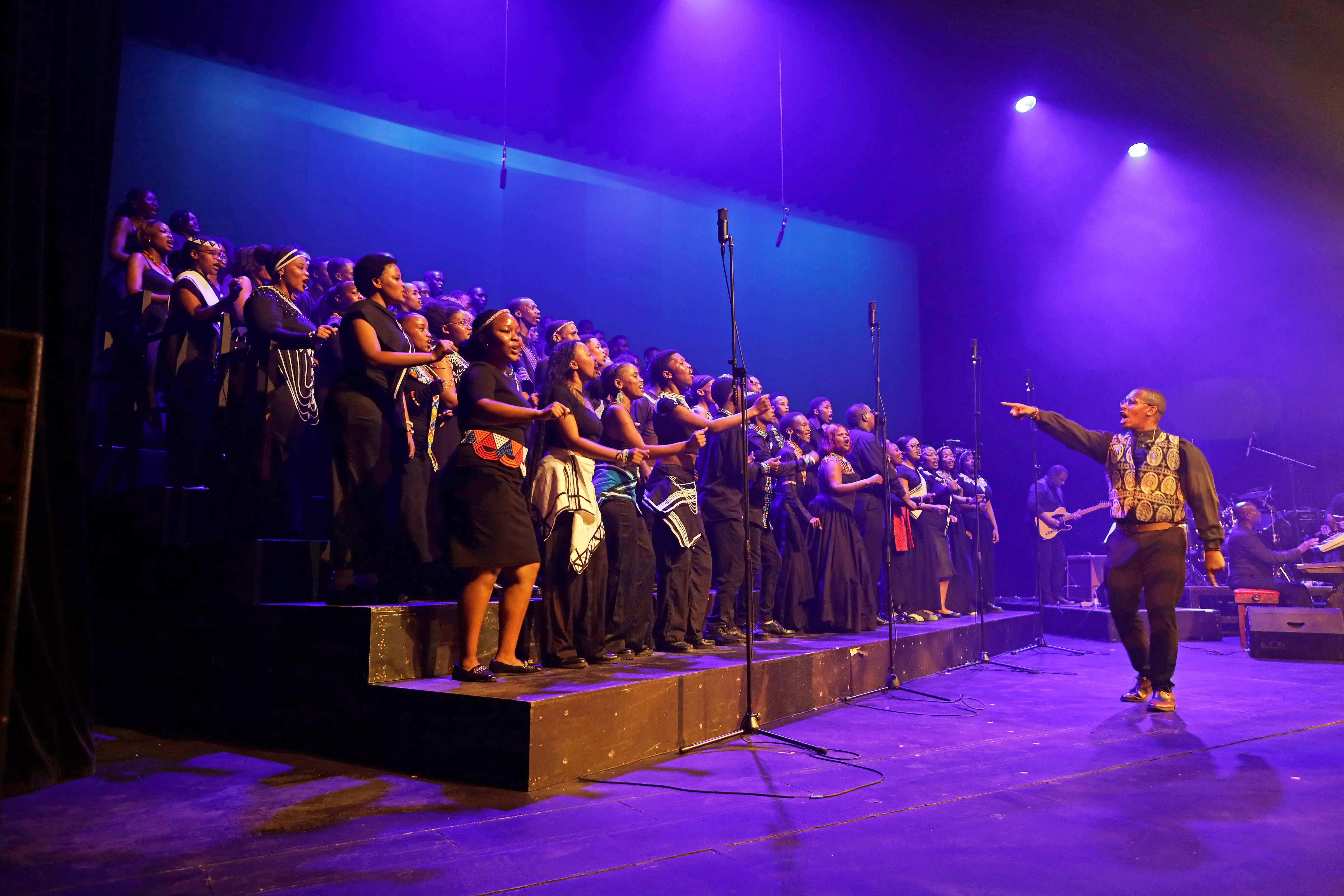
As if in spatial resistance to the city centre, which is soaked in the bloody memories of the South African War, Peacetown and Watersmeet are where amacothoza emerge. The isithululu style to which Ladysmith Black Mambazo has given global resonance is sung at a low pitch in the key of E. The sound is reminiscent of lullaby music that, if one is attentive, ebbs and flows as gently as the streams in the valleys of Peacetown. The lyricism is didactic. It is, as the Ladysmith Red Lions group leader James Vilakazi suggests, “the kind of music laden with observations”.
“It is respectful music – music that teaches our society about the dangers of the social ills that abound,” he continues. “Lomculo,” he emphasises, “ufundisa abantwana bethu ukuthi babeclean,” insisting that the music, while not entrenched in respectability politics, is about respect and cleanliness.
Coming from the same place as Shabalala, there are undeniable parallels and forms of symmetry in the sounds of amacothoza of the Ladysmith Red Lions and Ladysmith Black Mambazo. The sounds act as gentle resistance to a history imbued with the erasure of black mortality, creativity and purpose.
In African Stars: Studies in Black South African Performance, Veit Erlmann writes that “certain forms of migrant culture and migrant consciousness such as isicathamiya represent more than a historical phase, more than a passing moment in the inevitable transition of rural cultures toward the formation of urban working-class musical cultures. More specifically, it appears that the development and function of isicathamiya cannot be understood solely in terms of a rural-traditional performance style being used as a mechanism of urban adaptation.”
Mazibuko was central to these cultures, subcultures and the new and emerging cultures that are being birthed with a new generation of artists who recognise that nostalgia is a tool of meaning making and archival clarity. I hope Mazibuko, like Shabalala, like Mthonti and all the early founders of this generative genre rest in perfect harmony. May Peacetown carry the memories of their obituaries in its topography.