Polished: The Basilica of Our Lady of Peace in Yamoussoukro remains
one of Côte d’Ivoire’s most recognisable architectural landmarks. the town’s deep
cultural and historical significance. Photo: Wendy Mosetlhi
It unfolds on the road, over meals, through conversations, in old streets, coastal towns and moments you understand only afterwards.
Our week started in Abidjan, the country’s economic capital, before moving across Côte d’Ivoire in a way that few short visits allow.
From Abidjan, we flew to San Pedro, travelled along the coast to Assinie and Grand-Bassam, returned through Abidjan, then made the long road journey to Yamoussoukro and further north to Korhogo, before flying back to Abidjan for the return to South Africa.
Seven days, one country, too many layers to pretend we understood it all. But enough to feel the shifts.
 Adjamé Market in Abidjan.
Abidjan announces itself with confidence. You feel the city’s energy almost immediately: the way people move, talk, negotiate and laugh. It is not a city that lets you switch off completely. It expects you to pay attention.
For a South African, there is a familiarity there: the way people cross streets with confidence, the way taxi drivers negotiate lanes with their own private logic and the way the city somehow works even when it looks like it might not.
At traffic lights and busy corners, street vendors appear with remarkable timing, offering everything from tissues to cellphone covers, chargers and things you did not know you needed until someone held them up at your window.
Very quickly, my colleagues and I learnt that survival, charm and basic manners required a small French starter pack: bonjour (hello), merci beaucoup (thank you very much) and je m’appelle (my name is). We did not become fluent but we became enthusiastic.
Sometimes enthusiasm is enough to get a smile, directions or a little patience.
Once you leave Abidjan, the pace changes.
San Pedro offers a closer look at Côte d’Ivoire’s cocoa economy. To stand among cocoa trees is to see a global product at its source and to feel the labour, land and livelihood behind it.
From there, Assinie pulls you closer to the water. For couples, families or travellers looking for calm, coastline and comfort, Assinie is an easy recommendation.
 Palm-lined hotels and tranquil pool areas offer visitors a relaxed coastal atmosphere across parts of Côte d’Ivoire..
Palm trees, lapping waves, small hotels and a steady supply of grilled fish and attiéké (a side dish made from cassava) make it the kind of coast South Africans imagine when they talk about a proper seaside escape.
Food is one of the great pleasures of travelling through the country. Fish is served generously across Côte d’Ivoire, often paired with plantain, couscous or rice. There were conversations over attiéké, long meals by the water and seafood that felt made for the setting.
My colleagues enjoyed the local beer, while I found myself returning to the food: grilled fish, golden plantain and couscous that stayed with me long after the plate was empty.
 Fishing communities continue to play an important role along the coastline of Grand-Bassam in Côte d’Ivoire.
For travellers who want more than a beach holiday, Grand-Bassam offers something different.
Once the colonial capital, the town carries its past in its architecture, in the faded paint on colonial buildings and in the way people speak about Bassam as part of the country’s living memory.
History here does not sit quietly behind glass. It lives in the old streets, the lagoon, the coastline and the way the town carries its heritage with quiet dignity.
Grand-Bassam is ideal for history, art, architecture and heritage. The town has not been polished for visitors and that is part of its power. Walking through Grand-Bassam, you are not simply seeing a place. You are watching it remember itself.
Then there is Yamoussoukro, where the scale changes entirely.
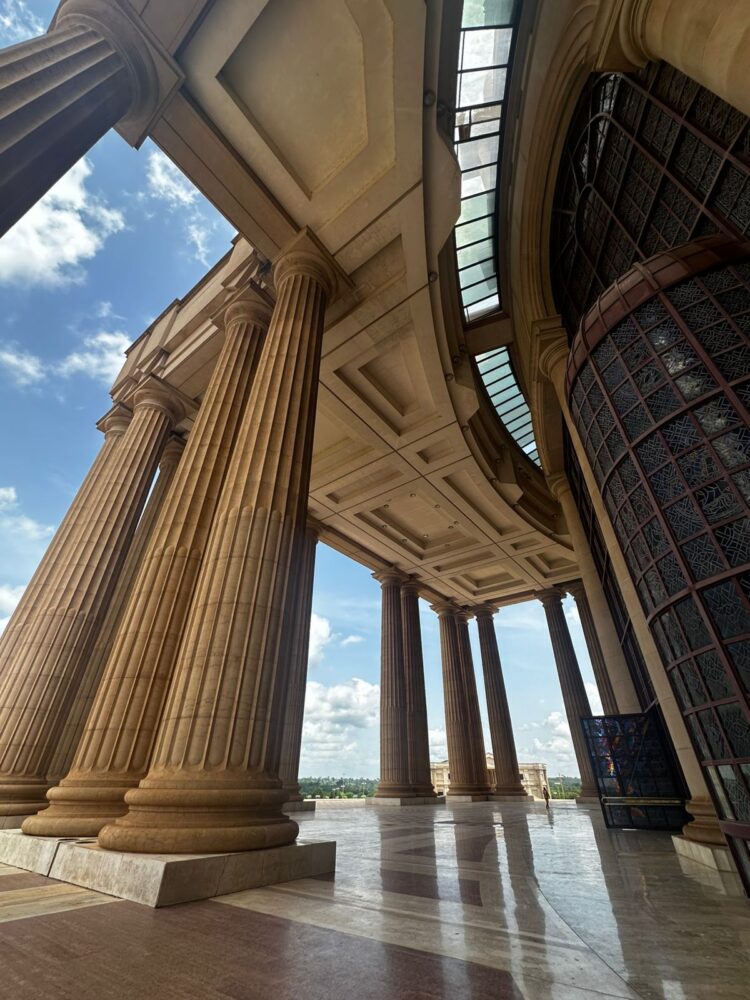 The Basilica of Our Lady of Peace in Yamoussoukro remains one of Côte d’Ivoire’s most recognisable architectural landmarks.
The Basilica of Our Lady of Peace is massive, almost aggressively symmetrical, built with a kind of ambition that feels both spiritual and theatrical. The stained-glass windows alone, made from around two million pieces of glass imported from France, tell you this was never just a church.
Inside, the light becomes part of the experience. The scale shifts your sense of yourself. Even if you are not religious, you feel the weight of the space. It is a place that forces you to think about power, faith and nationhood in the same breath.
By the time we reached Korhogo, the trip had moved into something more intimate.
 Sacred structures in a traditional Ivorian village offer insight into longstanding ancestral traditions and local customs.
For me, as someone who deeply appreciates culture, ancestry and a strong sense of place, the visit to the Sénoufo village in Niofoin was one of the most memorable moments of the trip. It was not just the beauty of the village or the craft on display but the feeling of being in a place where tradition is carried with care, respect and meaning.
In Niofoin, we visited the market, watched artisans weave fabric, string beads, paint patterns and explain traditions carried across generations. We watched traditional dancing, where rhythm, posture and gesture carried stories that would take hours to explain in words.
There were lessons in shea butter production, sacred huts and village history. At the village museum, sacred objects and respected traditions reminded us that some things are not simply there to be viewed but to be understood with care.
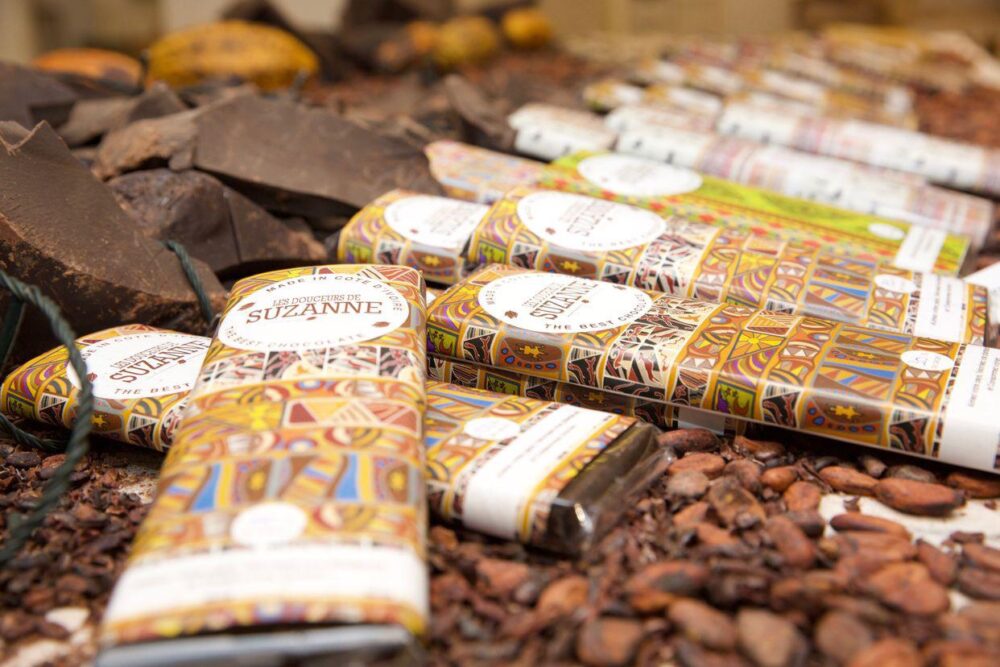 Les Douceurs de Suzanne
On our final day in Abidjan, Les Douceurs de Suzanne offered one of the sweetest endings to the trip. Suzanne Kabbani, an award-winning chocolate producer, welcomed us with hot chocolate so thick and rich it felt less like a drink and more like melted chocolate in a cup.
It was a reminder that Côte d’Ivoire’s relationship with cocoa is not only agricultural or economic. It is also creative, refined and deeply personal.
If you’re planning a trip, Côte d’Ivoire can be shaped in various ways. Assinie is best for coast, rest, seafood and romance. Grand-Bassam is for history, art, architecture and heritage. Korhogo is for ancestry, craft, traditional dance, shea butter, weaving and a deeper cultural experience.
But the real question is less “What does this place offer?” and more “What are you willing to see?” For me, it was the food that first made me feel at home: the way a plate of couscous on the coast felt like an event, the way a warm croissant at breakfast felt like a promise of a good day.
Côte d’Ivoire is worth travelling with a local guide, not only to get from A to B but to understand what is not being said: the jokes, the histories that do not make it onto brochures and the meaning that lives in the pauses between sentences.
As with any multicity trip, safety comes down to planning: trusted guides or hosts, arranged transport, situational awareness in busy areas and checking travel advisories before departure.
South Africans will need a visa, usually applied for in advance and should confirm health requirements, including a valid yellow fever vaccination certificate.
The budget will depend on how you want to move through the country.
A short stay in Abidjan or Assinie can be relatively simple, while a seven-day itinerary across coastal, central and northern regions will stretch your wallet a little more.
But if you plan properly, the country gives you far more than you expect.