


Against a background of a staggering unemployment rate, which soared to 32.7% in the first quarter of this year and black ownership of South Africa's 60 largest listed companies standing at a mere 6.9%, there is growing concern that economic transformation in the country remains at a snail’s pace.
Addressing the two-day Top Empowerment Conference at the Sandton Convention Centre in Johannesburg, speakers perceived black economic empowerment (BEE) as failing to achieve its vision.
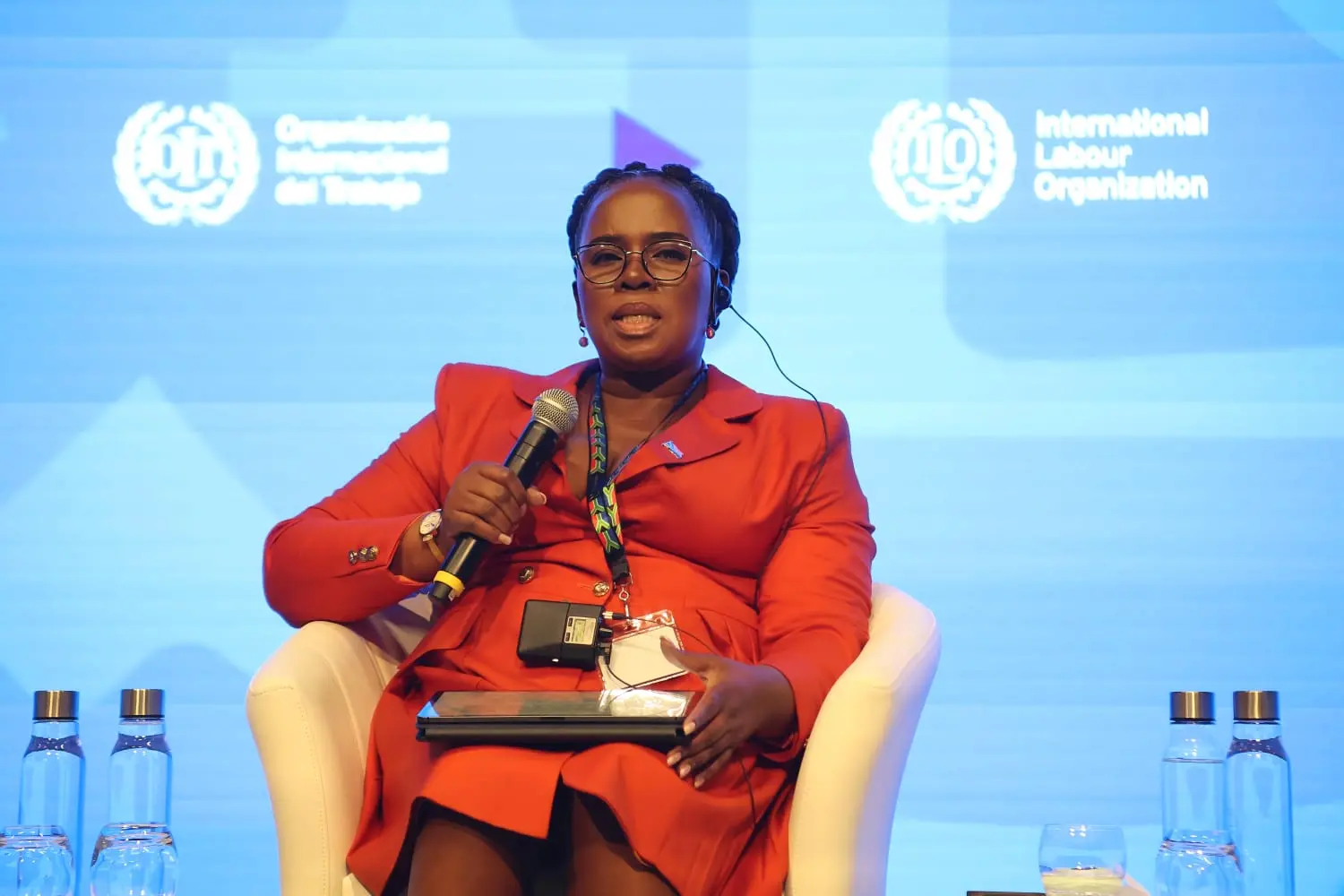
In her keynote address, Employment and Labour Minister Nomakhosazana Meth, quoting the latest research by economist Duma Gqubule, said the findings revealed a stark reality of economic disparity based on race.
“At the end of December 2024, black ownership of South Africa's 60 largest listed companies stood at R255 billion — equivalent to 6.9% of the South African assets held by those companies and just 1.5% of their total market capitalisation.”
Meth said the Broad-Based BEE Commission's claim was estimated at 29% black ownership.
“That gap between 6.9% and 29%, is not a rounding difference. Gqubule himself describes it as a ‘voodoo system of accounting’ — a system in which companies continue to count black shareholders long after those shareholders have sold their stakes — in which debt-funded ownership structures prevent any genuine transfer of wealth.
“It is also a situation in which empowerment certificates record transactions that, on closer inspection, transfer no real value at all.
“If we are serious about meaningful transformation, when shares change hands, companies must ensure that ownership is transferred in a way that broadens and deepens participation among historically disadvantaged black South Africans.
“Empowerment must not be allowed to leak out; rather, it must continuously expand the base of beneficiaries, creating lasting value, productive assets and intergenerational wealth within black communities,” Meth said.
Referring to the government's declaration of 2026 as the Year of Putting Young South Africans to Work, in honour of the 1976 activists, the minister described it as “a fitting tribute because the young people of 1976 were not asking for charity; they were demanding a future worth inheriting”.
“Half a century later, our obligation is to help build that future, in the form of real, dignified and sustainable work.
“Allow me to speak plainly about where we stand because the scale of this challenge deserves honesty rather than euphemism.
“According to the latest Quarterly Labour Force Survey from Statistics South Africa, our official unemployment rate rose to 32.7% in the first quarter of this year, up from 31.4% in the final quarter of 2025.
“More than eight million South Africans are without work. That figure is sobering on its own. But it is among our young people that this crisis cuts deepest.
“Unemployment among South Africans between the ages of 15 and 34 stands at close to 46%. Each year, an estimated 1.2 million young people enter our labour market and more than six in every 10 of them find no foothold at all — not in employment, not in education and not in training.
“Behind every one of those statistics is a person, a graduate who has sent out a 100 applications and received no call-backs.
“We are referring to a school leaver with ambition and no entry point, a young woman with a business idea and no access to capital or markets.
“We are not simply managing a labour market statistic. We are managing the patience of a generation and that patience is not infinite.”
The conference is being held under the theme “The Next Phase of Transformation: Inclusive, Investable, Impactful”.
Trade, Industry and Competition Minister Parks Tau said BEE was launched 25 years ago as “a platform built on the simple and accurate idea that South Africa's economy could not remain the property of a minority”.
“Wealth generated by this country's people, from this country's resources, on this country's land, had to be shared more broadly. That idea was correct then. It remains correct today.
“But 25 years of implementation has also taught us that good intentions do not compound.
“A landmark study conducted by the B-BBEE Commission, drawing on over 28 000 certificates across a decade, shows measurable progress.Black ownership achievement rose from 50% of target in 2013 to 86% in 2023. Enterprise and supplier development, rose from 19% to 66%. Skills development from 17% to 61%.
“Those numbers represent real movement in a framework that was not built overnight and is not being dismantled on a policy whim,” said Tau. “And yet, when you look at who owns productive capital in this economy — who controls strategic infrastructure, who leads the companies driving industrial output — the picture remains incomplete.
“Black ownership on the JSE sits at just 31%. Black women's ownership across the economy is around 12%.
“More than R100 billion has been spent on skills development under B-BBEE frameworks in the past three years alone. Six-hundred-billion rand in transformation transactions have been recorded — in a framework that has moved money. The question is whether it has moved the economy.
“There is a gap, a persistent, structural gap between what the scorecards say and what you see when you look at who owns what in South Africa. It is the gap between compliance and competitiveness and closing that gap is the work of this next phase.”
Nedbank COO Mfundo Nkuhlu said South Africa stood at a critical juncture in its economic journey.
“As we reflect on the twin imperatives of transformation and economic growth, it is increasingly clear that neither objective can succeed in isolation.
"For too long, the national conversation has often framed growth and transformation as competing priorities but they are deeply interconnected. Sustainable economic growth requires meaningful transformation, while transformation itself can only be sustained through a growing and expanding economy.”
Transformation, Nkuhlu said, “cannot be reduced to compliance targets, scorecards or ownership statistics alone”. “Its true measure lies in its ability to improve lives, expand opportunity, broaden participation and create pathways to prosperity for all South Africans.”