


South Africans placed bets worth R1.5 trillion between April 2024 and March 2025, according to the National Gambling Board. Yet on 4 November, every registered voter gets a free ticket in a draw that decides whether the traffic light on your corner works and whether the home you spent a decade saving for holds its value.
The Electoral Commission of South Africa says fewer than half of registered voters bothered to use theirs in the 2021 local government elections. Let me explain why the ballot can affect the value of your property as hard as any interest rate move from the Reserve Bank this year.
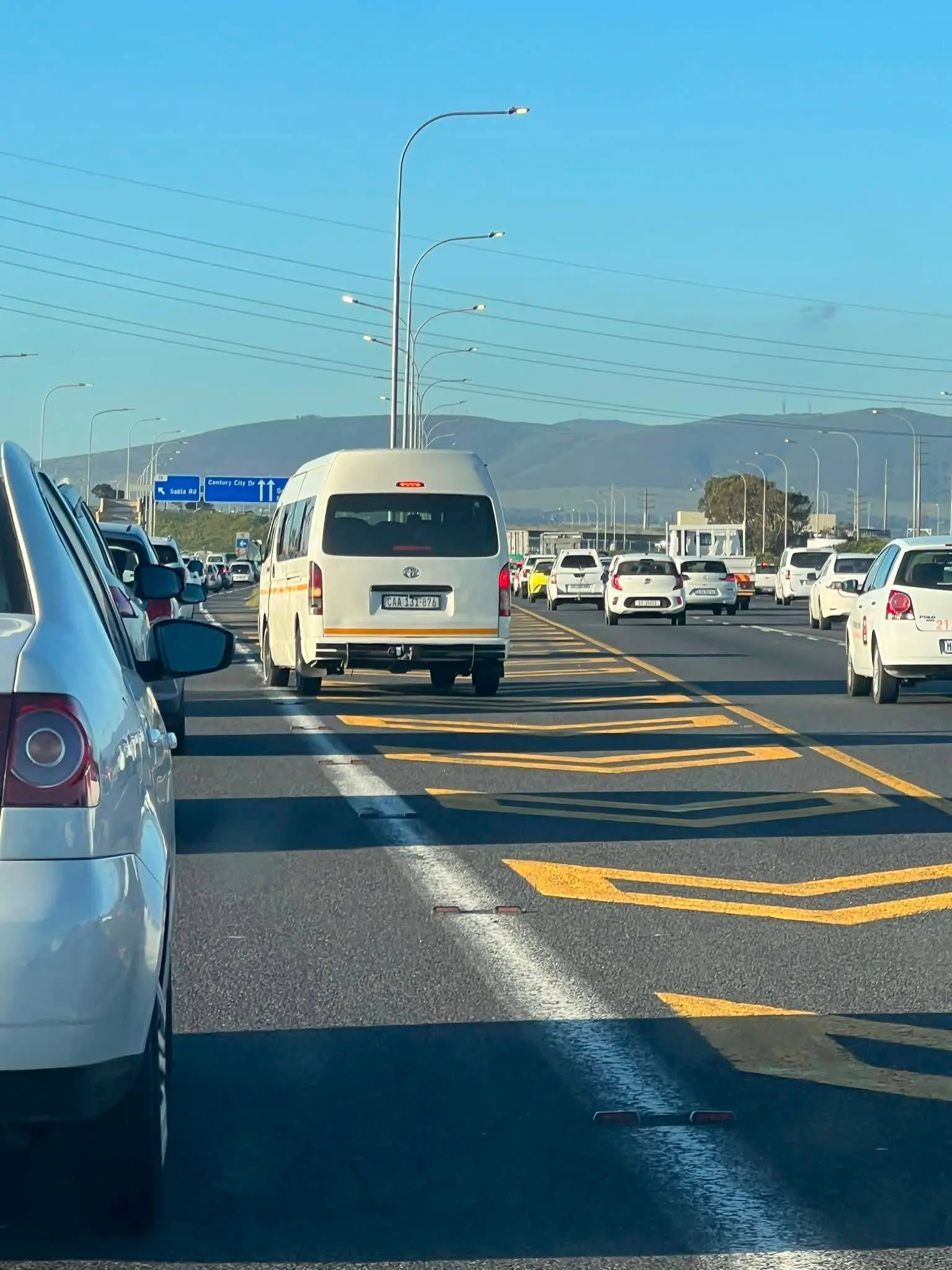
Start with Cape Town. You can’t get through a coffee date in this city without someone moaning about traffic on the N1 or what a two-bedroom flat in the CBD costs. People keep moving here from other provinces (we call it semigration). Every new arrival needs a home to live in and a road to drive on.
All that demand pushes prices up. The average property in the Western Cape sold for about R3.36 million in the first quarter of 2026, which is 72% more than the national average of R1.95m (Re/Max’s National Housing Report — Q1 2026).
Buy that average home with a 10% deposit and at today’s prime rate of 10.75%, the bond costs roughly R30 700 a month over 20 years. Banks generally cap repayments at about 30% of gross income, so you’d need to earn around R102 000 a month before tax.
Getting to work doesn’t help. The City’s transport Mayco member has said the poorest households spend 43% of their income on transport.
Schools are full too. In January, about 7 200 learners were waiting for a place, partly because more than 13 000 had arrived from the Eastern Cape. A new school takes years to plan and build, while a family can arrive over a weekend.
Cape Town obviously needs more affordable homes and better public transport. But it would also help to fix the cities people are leaving.
Most people don’t pack up and leave Johannesburg or Gqeberha because they dislike the place. In fact, most Joburgers I know are die-hard Jozi fans. They leave because the taps run dry and the streetlights stay off. If those cities worked, a big portion of the people squeezing into Cape Town would happily stay home or move back. That takes pressure off Cape Town’s roads and schools.
The cities they return to win too, thanks to property rates. Property rates are the amount you pay your municipality every month based on what your property is worth. For a city, it is about as close to free money as it gets. Unlike electricity, which the city first has to buy from Eskom, rates cost it nothing to produce.
Johannesburg expects to collect about R18.8 billion in property rates in 2026/27, roughly R1 in every R5 it earns to run the city (City of Johannesburg 2026/27 budget).
Joburg is also far cheaper to get into. Average rent in Gauteng was R9 600 a month in the first quarter of 2026, against R12 125 in the Western Cape (PayProp Rental Index), and buying is no different. You’re lucky if you sell a Sandton mansion today for what you paid for it 10 years ago. The same goes for a townhouse in Honeydew.
Lack of capital growth hurts sellers but it makes Joburg a buyer’s market. Every buyer who moves back brings a property rates payment with them and that money is supposed to fix the next pothole, which attracts the next buyer. Unfortunately, nobody moves back on a promise. The city has to deliver first and that is a big ask of councils that have let residents down for years.
Which brings me to Adrian Saville’s morning run on Sunday, 11 October. Saville, an economist I respect a great deal, jogged past a row of Johannesburg shops with leading national brands as tenants and tweeted about the rubbish strewn along the verge.
His post ended: “Johannesburg votes on 4 November — and we are expert at pointing out what ‘the city’ needs to do. This is our city. Evidently, we choose this.”
I see hundreds of posts like his every day, about traffic lights that have been dead for weeks and potholes big enough to swallow a Hyundai i10. Get me some aloe vera for the burn of his last line, because it points the finger at the council and at us.
In 1982, American researchers James Q Wilson and George Kelling wrote about an idea called broken windows theory in The Atlantic. Picture an empty building with one broken window. If nobody fixes it, everyone walking past gets the message that nobody is in charge. Soon someone breaks a second window. Then graffiti appears and rubbish piles up. Before long people avoid that street altogether.
The theory has critics, mostly because New York used it to justify heavy-handed policing of minor offences but its basic point, that neglect is contagious, will resonate with any property manager.
That is why I keep going on about service delivery and infrastructure maintenance, the two most basic jobs a municipality has, which we pay for through our rates and taxes. They also affect your investment’s value, even though your title deed covers only what sits inside your boundary wall. What a tenant is willing to pay to rent an office or a flat depends on what surrounds it. A tenant judges the building from the pavement before they see inside. When the street outside is clean and well lit at night, crime tends to drop and people will pay more to live or work there.
Higher rent makes the building worth more. That’s your capital growth. Cape Town shows this at city scale. The basics mostly work here, from bins that get collected to potholes that get patched, and property owners have been rewarded for it.
In January, the Western Cape was responsible for more than half the country’s 7.8% house price growth, while Gauteng contributed only about a fifth (Statistics SA). Cape Town isn’t perfect and that success is what’s pricing locals out.
At the South African Property Owners Association’s 60th annual convention at Sun City last month, Saville described our online betting habit as a metric of hopelessness, built on the belief that “there is only one way of getting out of this hole and that is by winning 1 million bucks”. Gambling companies kept R74.5bn after paying out winnings through March 2025, up 25.6% from the year before (National Gambling Board). That R74.5bn is what South Africans lost.
I’m reading Do Lunch or Be Lunch by Harvard Business School professor Howard H Stevenson. One passage could have been written about us. Stevenson, a former mathematician, works out that his home state’s lottery has odds of about 12 million to one, roughly the same as flipping a coin and getting heads 23 or 24 times in a row.
Our national Lotto asks you to pick six numbers out of 58, which works out to one in 40 475 358. That makes your odds more than three times worse than his.
Stevenson doesn’t call a flutter shameful. “Spending a buck a week is OK, if it’s for fun — and if you’re not dipping into the rent money to do it.” Too many South Africans dip into rent money and every rand that disappears into a betting app is a rand that never becomes a deposit on a home.
In his keynote at the same convention, Saville urged us to get off the dance floor and onto the balcony, to step back far enough to see the whole room. From the balcony, a municipal election stops looking like a sideshow to the national drama.
The vote decides who fixes the light on your corner and, in the end, what your property is worth.
Stevenson puts it best: “When we have major life decisions to make, we can’t afford to play the slots.” A Lotto ticket gives you a one-in-40-million shot. Your vote in a local election costs nothing and gives you odds no betting app will ever offer.
Saville looked at a verge full of rubbish and tweeted: “Evidently, we choose this.” On 4 November, we get to choose again.