


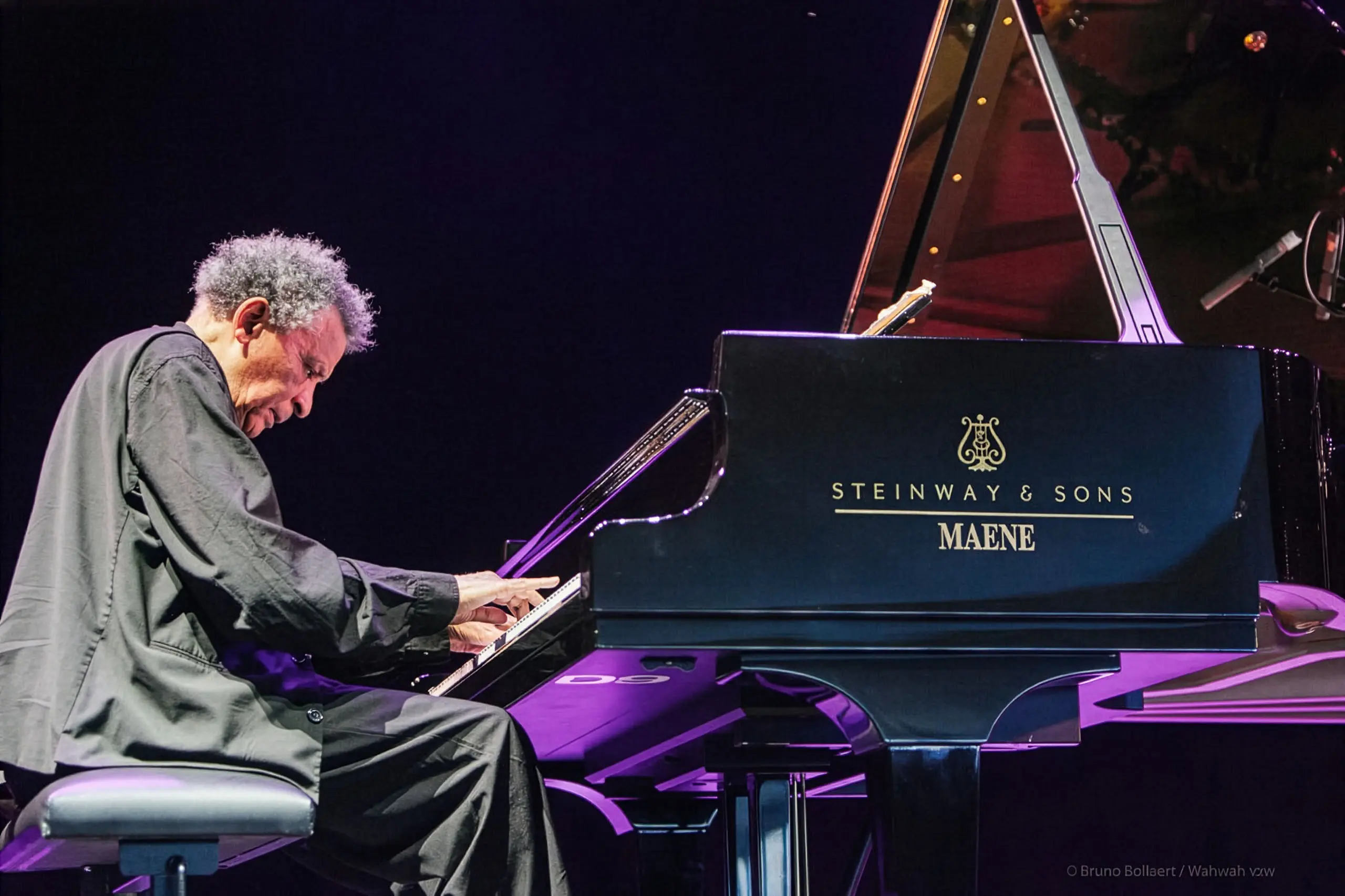
South Africa has lost the man Nelson Mandela once called "our Mozart". Pianist and composer Abdullah Ibrahim, the towering figure of Cape Jazz and one of the most influential voices in international jazz, died peacefully in Germany on Monday after a short illness, surrounded by his family.
His death brings to a close a career spanning more than seven decades. One that carried the sound of the Cape Flats, the gospel of the AME Church and the spirit of Duke Ellington and Thelonious Monk to stages across the world, while never losing its roots in the streets of District Six and Mannenberg.
Ibrahim's partner, Dr Marina Umari, said he died "with South Africa and its people in his heart". "His love for his country never wavered, no matter where in the world he found himself," she said.
Born Adolph Johannes Brand in Cape Town on 9 October 1934, Ibrahim began piano lessons at seven and made his professional debut at 15, immersed from childhood in the marabi, mbaqanga and jazz of the city's multicultural port areas. By the late 1950s he was playing alongside Kippie Moeketsi, Hugh Masekela and Jonas Gwangwa in the Jazz Epistles, the group behind the first full-length jazz LP recorded by black South African musicians in a moment of defiance the apartheid state would not forgive.
He left for Europe in 1962 and it was there, in a Zürich club in 1963, that his wife-to-be, singer Sathima Bea Benjamin, persuaded Duke Ellington to come and hear him play. The encounter changed his life, leading to a recording session with Reprise Records and a friendship with Ellington that shaped the rest of his career.
After converting to Islam in 1968 and taking the name Abdullah Ibrahim, he returned periodically to South Africa through the 1970s and it was during one of these visits, in June 1974, that he recorded Mannenberg, cut in a single take of collective improvisation with saxophonists Basil Coetzee and Robbie Jansen. The track, born from the township where so many families displaced from District Six had been dumped, would become the unofficial anthem of the liberation movement.
Ibrahim spent much of the apartheid years in exile in New York, returning to South Africa in the early 1990s to a country eager to embrace him and performing at Mandela's 1994 inauguration. He went on to found the M7 academy for young South African musicians in 1999 and launched the Cape Town Jazz Orchestra in 2006, ensuring his influence would outlast his own performing career.
His final South African performance came at the Cape Town International Jazz Festival in March this year, where, by all accounts, he played with the same artistry and grace that defined him.
Ibrahim's honours include the Order of Ikhamanga, an honorary doctorate from the University of the Witwatersrand, the South African Music Lifetime Achievement Award, and a 2019 NEA Jazz Masters Fellowship in Washington, DC. His burial will take place in the Bavarian town in Germany where he had made his home.