


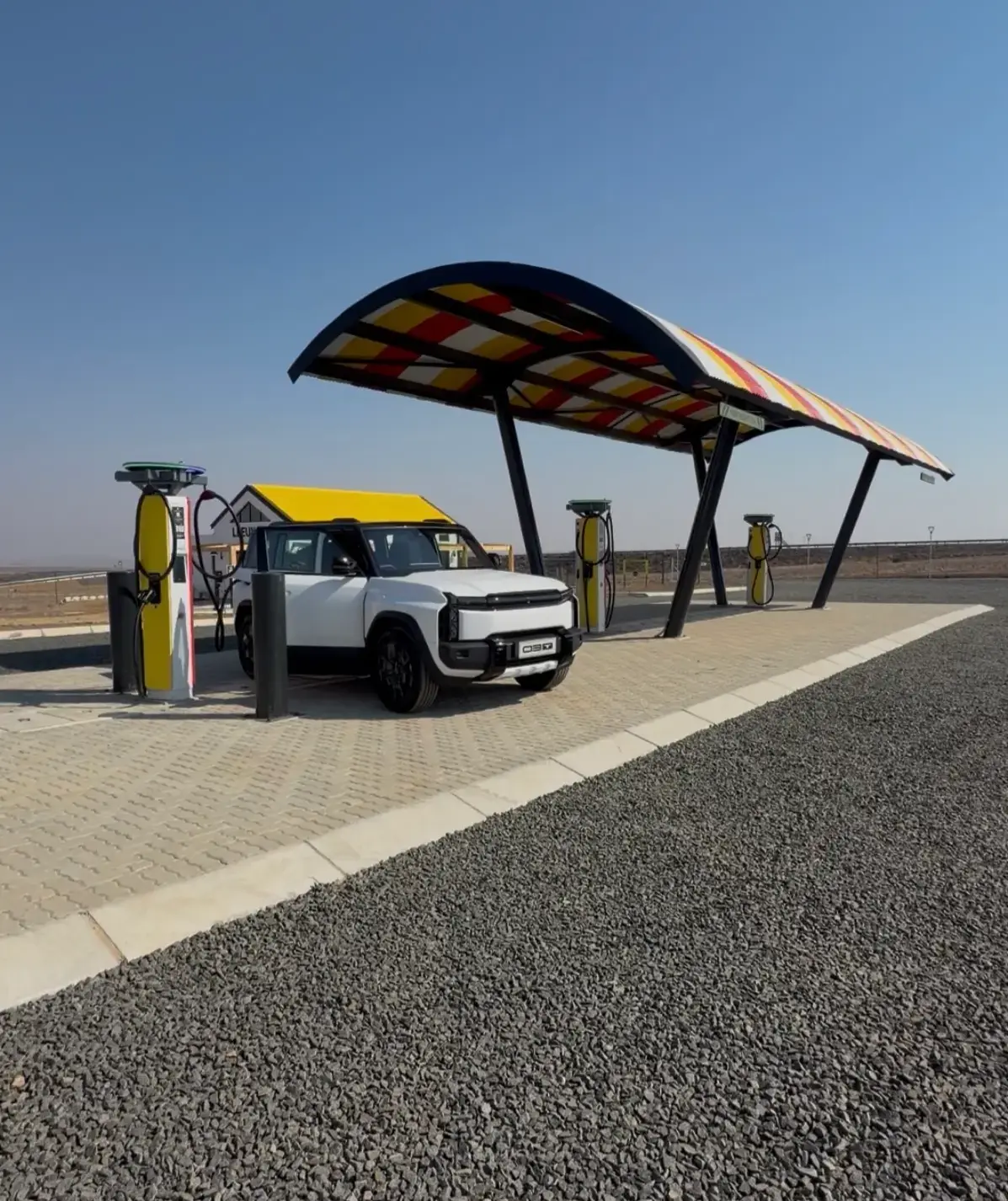
It has been a tough year for my wife and me. Between the relentless pace of work, balancing family life and navigating the chaotic hum of Johannesburg, we needed an escape.
For her 30th birthday, I decided that she deserved a retreat to Durban. My four-year-old son was over the moon. With our baby securely strapped into a car seat, we were ready for a family road trip.
Our chariot for the grand expedition was the fully electric 2WD iCAUR 03T. Taking an electric vehicle on a 600km cross-country dash is a daunting prospect for many motorists but I was determined to prove it could be done effortlessly.
I mapped out the route and convinced myself I would have zero range anxiety. The plan was simple: we would stop at the off-grid Zero Carbon Charge station at Reitz/Leeukop, then hit the Bergview 1Stop in Harrismith and finally top up again at the Tugela Zero Carbon Charge station. I wanted to ensure that when we rolled into our hotel in Durban, I wouldn’t immediately have to abandon my family to go hunting for an available public charger.
The journey began the night before we departed. The iCAUR 03T 2WD features a 65.69 kWh battery. I was sitting at a paltry 10% battery. Using the standard GridCars DC fast-charging tariff of R7.35/kWh at a mall, that late-night top-up cost me R434 — cheaper than filling a combustion SUV from empty.
The next morning, loaded with luggage, kids, and snacks we hit the N3. We left Johannesburg at 8.30am. The distance to our first scheduled stop at the Zero Carbon Charge Reitz/Leeukop site is about 190km. The digital readout on the iCAUR 03T claimed we had 400km of range.
However, highway driving is the Achilles heel of any electric vehicle. By the time we pulled into Leeukop, the battery had plummeted to 31%. Even though the car initially promised 400km, I arrived with less than 150km of estimated range. We plugged in to charge up to 80%, a process that took 25 to 30 minutes.
It is worth pausing to appreciate the Zero Carbon Charge stations. They are a brilliant addition to South Africa’s EV infrastructure, running off the grid using solar and massive battery backups. However, premium off-grid infrastructure comes at a premium price. Unlike the standard R7.35/kWh, they charge upwards of R9/kWh. Taking the battery from 31% to 80% cost R290.
Back on the road, we cruised comfortably toward Harrismith. By the time we reached the Bergview 1Stop, the battery was sitting at 40%. I plugged into the GridCars fast charger and topped up to 87%, adding 30.9kWh at a cost of R227.
Our final pitstop was the Tugela Zero Carbon charging station. We arrived with a healthy 60% battery but I charged to 100% here. Pushing an EV battery from 60% to 100% is notoriously slow because the charging system throttles the power to protect the cells. It took more than 40 minutes at a cost of R236.
From Tugela down to uMhlanga is about 250km. The N3 heading into KwaZulu-Natal is largely downhill, so the iCAUR 03T’s regenerative braking system works overtime, capturing kinetic energy and feeding it back into the battery.
The car loved this topography. We sailed into our hotel in uMhlanga with more than 150km of range, arriving at 5.30pm.
A trip that usually takes about six hours in a petrol car took us nine hours. Our total charging cost came to R1 187.
For the return trip, I followed the same methodology. I topped up the battery back to 100% before leaving Durban. It cost about R290.
We left at 10am but the trip back to Johannesburg was a different beast — a relentless uphill climb. To make matters worse, there was heavy rain and cold — which saps battery efficiency.
By the time the Tugela Zero Carbon station appeared through the rain, we were limping in with just 13% battery remaining. Charging cost me R1 017 to come back to Johannesburg.
We arrived home at 7pm — another nine-hour journey.
When you add every kwh drawn across the return trip, the calculations reveal an interesting picture:
Outbound charging: R1 187. Durban Coastal Top-Up: R290. Return Charging: R1 017. Total: R2 494
For context, doing that same trip in a similar-sized petrol family SUV averaging 8.5 litres/100km would consume roughly 102 litres of unleaded fuel, which is about R2 609, effectively matching the cost of petrol.
Aesthetically, iCAUR 03T is a triumph. The boxy design turns heads. I love the small theatrical details, like the musical chime that plays when you lock and unlock the doors and the way the “i” logo illuminates on the headlights.
It is comfortable and spacious. The extra storage compartment mounted behind the boot is a brilliant touch.
On the road, the drive is smooth, quiet and wonderfully firm.
However, it is not without its flaws.
While the manufacturer claims impressive figures on paper, the reality of cruising at highway speeds is starkly different. Even without a heavy foot, you can get less than 280km on a full charge.
My biggest frustration is the cabin’s minimalism. There are virtually no physical buttons. Everything is packed into the infotainment system. When we hit that terrible weather on the return trip, I needed to turn on the rear wiper. Because I was using Apple CarPlay for navigation and music, I had to exit CarPlay, dig through the car’s native menus and toggle a digital switch just to clear the rear glass.
Doing this while navigating slick roads at 100 km/h is not just annoying; it feels unsafe.
Priced from R639 900 for the 2WD model, the iCAUR 03T represents a competitive entry point into the fully electric crossover market. This journey made one thing clear: for now, the financial and practical benefits of EVs remain rooted in daily urban driving and home charging.