


South Africans woke up to a brutal reality this week. Inland 95 unleaded petrol has officially breached the R30 mark, while the wholesale price of 50ppm diesel has climbed past R33.
Driving a thirsty, heavy vehicle is no longer a minor inconvenience; it is a crippling monthly financial liability.
If you are looking to restructure your garage to survive this economy, here is the definitive breakdown of exactly where you should be spending your money across the eight primary vehicle categories in South Africa.
We have tiered the market into Budget, Mid-Tier, and Premium price points, factoring in real-world running costs and fuel consumption figures, while exposing the common consumer traps you absolutely must avoid.
Hatchbacks
The traditional hatchback remains the purest expression of cost-effective motoring. In stop-start traffic, shedding weight is the easiest way to save fuel.
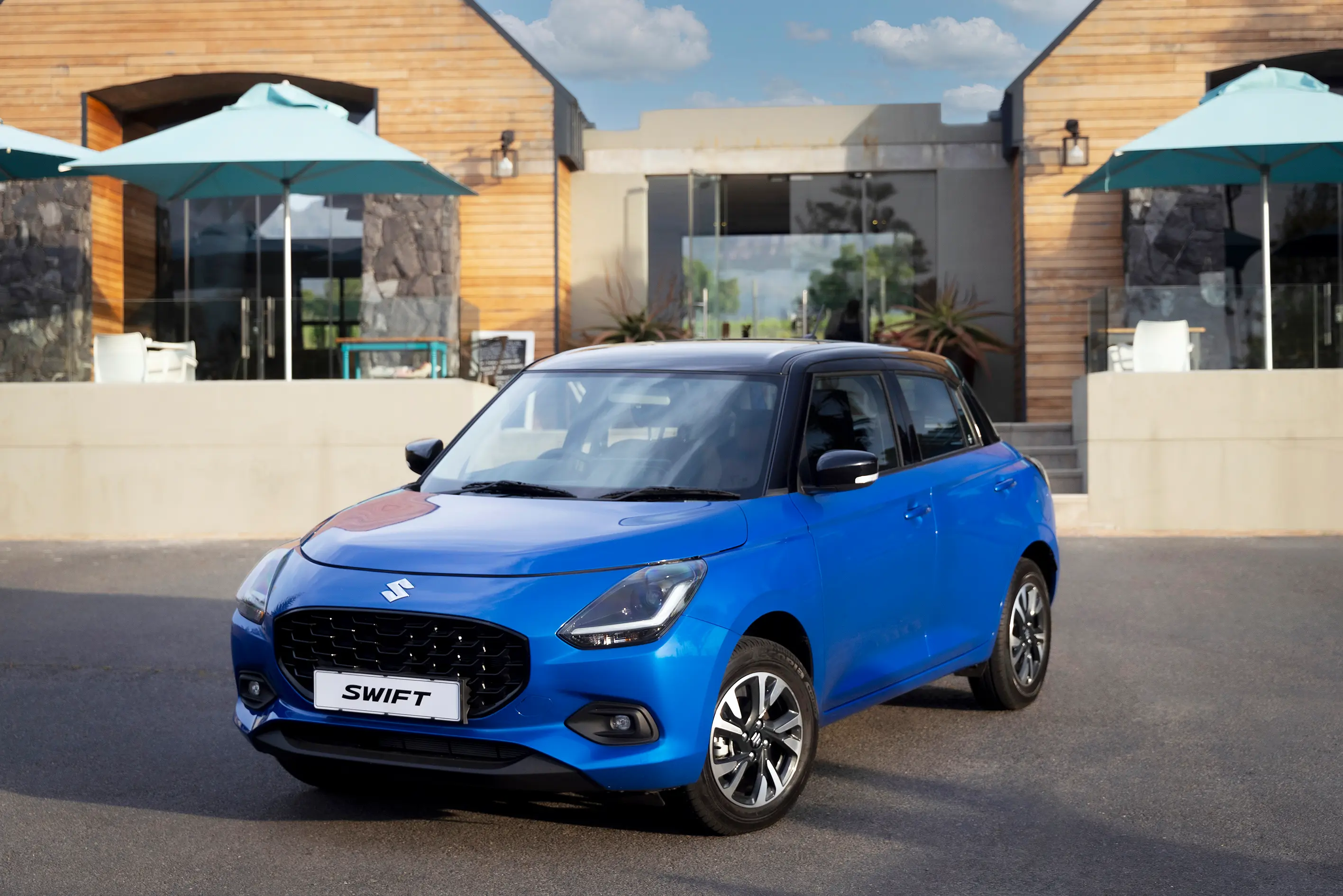
Budget (Sub-R250k): Suzuki Celerio 1.0 or Suzuki Swift 1.2. The Celerio is incredibly light, achieving an astonishing 4.2 L/100 km. Paired with a naturally aspirated engine, it practically runs on fumes, while the new Swift manages a highly respectable 4.4 L/100 km, making R30 per litre petrol entirely manageable for the daily commuter. The Swift is also incredibly tech savvy.
Mid-Tier (Sub-R400k): Volkswagen Polo 1.0 TSI. When you step up a bracket, you want forced induction. The 1.0-litre turbocharged engine gives you the low-down torque needed for effortless high-way overtaking while sipping just 5.4 L/100 km.
Premium (R600k+): Audi A3, BMW 1 Series, or Volkswagen Golf 8.5. This is where premium hatchbacks shine. You secure exceptional German cabin refinement and brilliantly calibrated turbocharged powertrains that all operate comfortably between 5.5 and 6.0 L/100 km on the open road.
Avoid this: The cheap, heavy, second-hand 1.6-litre naturally aspirated hatchback. Buyers are seduced by a low R150 000 purchase price, completely forgetting that moving older, heavy steel in stop-start traffic pushes consumption to 9.0 L/100 km. The perceived purchase savings are instantly wiped out at the petrol station.

Compact SUVs
Achieving the coveted high-riding position often comes with severe aerodynamic and weight penalties that destroy fuel economy.
Budget (Sub-R300k): Mahindra XUV 3X0, Nissan Magnite, Renault Kiger or Suzuki Fronx. The XUV 3X0 leads the pack with a punchy 1.2-litre turbo averaging 6.0 L/100 km. The naturally aspirated Suzuki Fronx sits at 5.5 L/100 km, while the turbocharged Nissan Magnite and Renault Kiger manage around 5.2 to 5.4 L/100 km.
Mid-Tier (Sub-R500k): Kia Sonet, VW T-Cross, Hyundai Venue, or Chery Tiggo 4 Pro. These vehicles represent the sweet spot of the market. The VW T-Cross 1.0 TSI excels at 5.4 L/100 km, while the Tiggo 4 Pro and Kia Sonet keep combined fuel consumption safely between 6.5 and 7.0 L/100 km.
Premium (R700k+): Volvo XC40 B4, BMW X1, Audi Q2, or Lexus LBX. Premium compact SUVs prove luxury downsizing works. The Audi Q2 delivers 6.1 L/100 km, the Volvo XC40 manages 7.3 L/100 km and the Lexus LBX hybrid is an absolute miser at an incredible 3.8 L/100 km. Avoid this: The base-spec compact SUV fitted with an ancient 2.0-litre naturally aspirated engine. These powertrains lack the low-down torque required to pull the heavier SUV body, forcing the gearbox to hunt for ratios and pushing fuel consumption dangerously close to 10.0 L/100 km.

Mid-Size SUVs
When you need to comfortably transport a family of five with luggage, you need enough power to haul the weight without resorting to thirsty six-cylinder engines.
Budget (Sub-R600k): Chery Tiggo 7 Pro. Chery has heavily refined its powertrains. The 1.5-litre turbo in the Tiggo 7 Pro delivers premium standard specifications and cabin space while averaging an acceptable 7.8 L/100 km.
Mid-Tier (Sub-R800k): Volkswagen Tiguan 1.4 TSI. The 1.4-litre TSI engine hauls a fully loaded family cabin with absolute ease on the highway, yet remains incredibly frugal at a claimed 7.0 L/100 km on the daily school run.
Premium (R1m+): BMW X3 xDrive20d. In the premium sector, diesel is still king. BMW’s 2.0-litre turbodiesel is an engineering marvel, delivering massive towing torque while returning an astounding 5.6 L/100 km.
Avoid this: Mid-size SUVs powered by heavy, older-generation 2.0-litre turbocharged petrol engines. These units were built before current emissions standards and easily push past 11.0 L/100 km in urban traffic.

Adventure SUVs
This segment is built for heavy-duty overlanding and towing. Picking the wrong engine architecture here is disastrous for your monthly budget. Budget (Sub-R700k): Mahindra Scorpio-N (Diesel). It provides serious ladder-frame 4x4 capability, powered by a highly frugal 2.2-litre diesel heart that keeps running costs completely manageable at 7.6 L/100 km.
Mid-Tier (Sub-R1m): Ford Everest 2.0 Bi-Turbo. Ford proved you do not need a massive engine block for adventure. The 2.0-litre Bi-Turbo diesel saves significant fuel on the commute, returning roughly 7.5 L/100 km.
Premium (R1.5m+): Toyota Land Cruiser 300 3.3D V6. The absolute pinnacle of cross-border travel. The V6 diesel provides monumental torque across the continent while averaging an impressive 8.9 L/100 km for a vehicle of its sheer mass.
Avoid this: Petrol-powered, heavy ladder-frame SUVs. The brand-new Toyota Land Cruiser FJ is the perfect example. Powered by a 2.7-litre naturally aspirated petrol engine, it has to work so hard to pull the heavy frame that it easily averages 13.0 L/100 km.

Traditional Hybrids (HEV)
For buyers who want to bypass R30/ litre petrol but cannot install an electric charger at home, a true self-charging hybrid is the ultimate sub-urban shield.
Budget (Sub-R450k): MG3 Hybrid+ or Suzuki Across HEV. The new MG3 Hybrid is a market disruptor, delivering 155 kW of power while sipping just 4.3 L/100 km. The Suzuki Across HEV is equally impressive, operating around the 4.0 L/100 km mark.
Mid-Tier (Sub-R550k): Chery Tiggo Cross Hybrid or Toyota Corolla Cross 1.8 Hybrid. The Chery Tiggo Cross Hybrid solves the Chinese crossover fuel consumption problem, operating at 5.4 L/100 km. The Toyota Corolla Cross practically subsidises its own price tag in stop-start traffic via regenerative braking, returning 4.3 L/100 km.
Premium (R900k+): Lexus NX 350h. Lexus has perfected the hybrid powertrain. The NX 350h delivers seamless electric-petrol transitions, wrapped in Japanese luxury, while sipping a mere 5.0 L/100 km.
Avoid this: The 48-volt “Mild Hybrid" illusion. A mild hybrid system cannot drive the wheels on pure electric power. It barely moves the needle on real-world fuel consumption, often still returning figures between 7.0 and 8.5 L/100 km in heavy traffic.

Bakkies (The Double Cabs)
Bakkies are inherently aerodynamically compromised and heavy, meaning your engine choice dictates your financial survival.
Budget (Sub-R500k): GWM P-Series Commercial or Mahindra Pik Up 2.2CRDe. These workhorses deliver honest utility. The Mahindra Pik Up manages a respectable 7.9 L/100 km, while the heavier GWM sits closer to 9.4 L/100 km.
Mid-Tier (Sub-R800k): Ford Ranger 2.0 SiT (Single Turbo). You get all the advanced cabin technology of the new-generation Ranger, paired with a lighter single-turbo diesel engine that is highly efficient for urban driving, sitting around 6.9 L/100 km.
Premium (R1m+): Toyota Hilux 2.8 GD-6 RS or VW Amarok 3.0 V6. The Hilux 2.8 GD-6 RS delivers legendary reliability and averages around 8.0 L/100 km, while the Amarok’s buttery-smooth V6 trades a slight efficiency drop (8.4 L/100 km) for effortless torque.
Avoid this: High-output petrol bakkies. While they offer thrilling straight-line acceleration, a heavy petrol bakkie towing a load will easily breach 14.0 L/100 km, bankrupting you at the pumps.

Plug-in Hybrids (PHEV)
The PHEV allows you to run purely on electricity during your weekly commute, while keeping a petrol engine ready for a December road trip to the coast.
Budget (Sub-R600k): BYD Sealion 6. BYD has completely disrupted the market by bringing PHEV tech to the middle class. While claiming an astonishing 1.4 L/100 km with a full battery, even when the battery depletes on long trips, it sips a highly reasonable 5.4 L/100 km.
Mid-Tier (R700k - R800k): Jetour T2 PHEV. Priced at R779 900, the T2 PHEV brings serious 265 kW hybrid muscle to the adventure segment. It claims 1.3 L/100 km with battery power, and a tested 6.0 L/100 km in real-world hybrid mode.
Premium (R1m+): Omoda C9 PHEV or Volvo XC60 Recharge. The R999 000 Omoda C9 PHEV throws 440 kW and a claimed 1.4 L/100 km at the German luxury brands. The Volvo XC60 Recharge similarly delivers massive performance with a claimed 1.6 L/100 km.
Avoid this: The ‘‘Unplugged" PHEV. If you lack the discipline to plug it in every night, you are simply carrying around a heavy, dead battery pack. Running a depleted PHEV forces the petrol engine to work harder, pushing consumption back up to 6.9 – 8.5 L/100 km.

Electric Vehicles
When you charge a compact EV at home on a standard Eskom tariff, your running costs drop to a fraction of a petrol equivalent.
Budget (Sub-R400k): BYD Dolphin Surf, Geely E2, or Chery Q. These vehicles permanently break the reliance on Sasol and Engen. With power consumption sitting roughly between 12.5 and 14.0 kWh/100 km, they bring pure, highly refined electric commuting to the middle class for mere cents per kilometre.
Mid-Tier (Sub-R850k): Volvo EX30 or BYD Atto 3. The EX30 is the ultimate premium compact EV commuter, running at a highly efficient 15.7 kWh/100 km. The BYD Atto 3 provides larger family SUV space while maintaining an impressive 16.0 kWh/100 km.
Premium (R1.5m+): BMW iX or Porsche Taycan. Vehicles like the iX prove that you can move a massive, ultra-luxurious SUV with staggering efficiency, averaging around 19.8 kWh/100 km without emitting a single gram of tailpipe carbon.
Avoid this: Over-buying for the hypothetical road trip. Do not spend R2.5-million on a massive electric SUV with a 600 km battery simply because you drive to Durban once a year. Buy a highly efficient compact EV suited to the 350 days a year you actually spend in city traffic.