


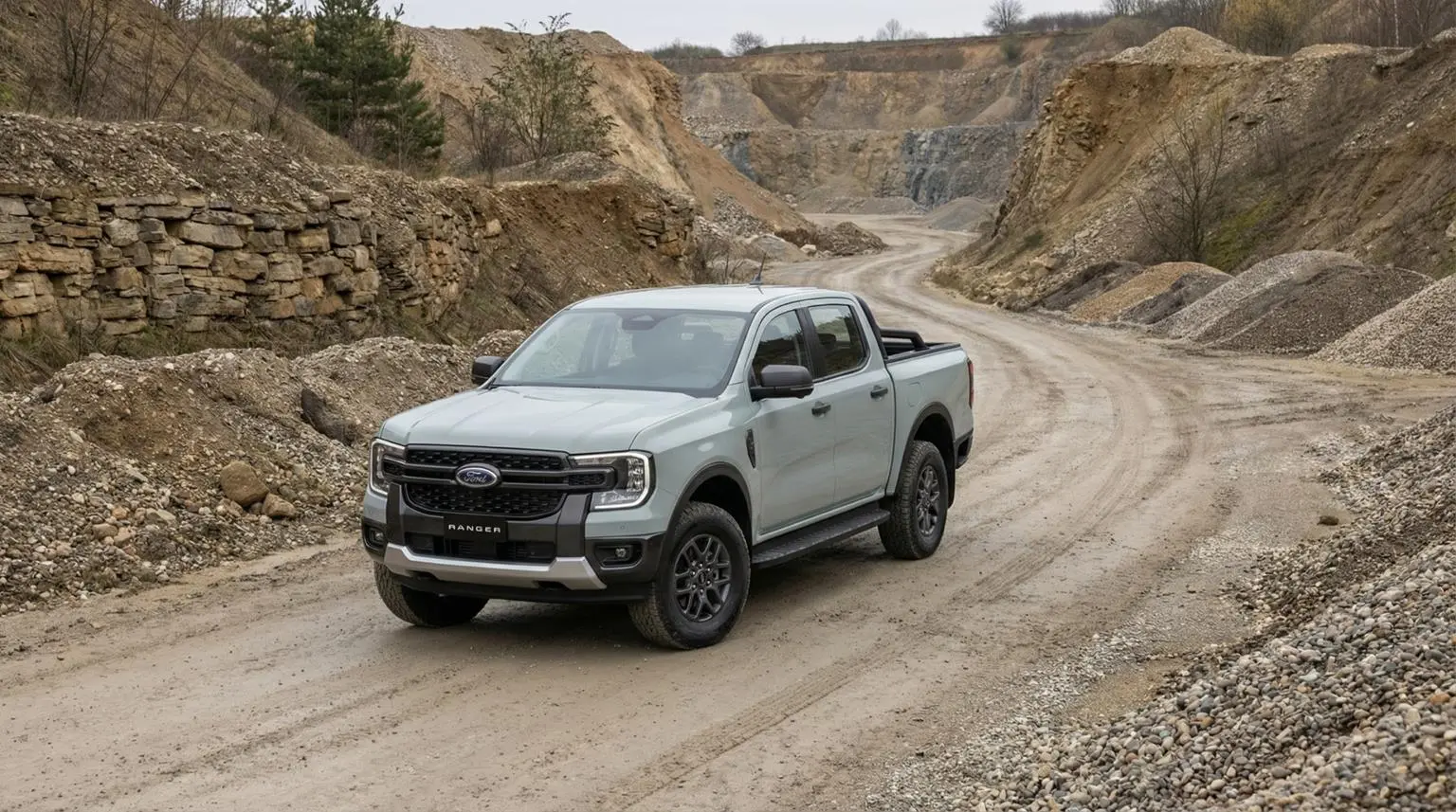
Since Ford updated the Ranger series earlier this year, we knew that we were going to get every variant of the popular bakkie on test. While we were excited for the enthralling Raptor and the Sport with the 2.3 litre ecoboost engine, we could have not predicted that the Ranger XLT could have been improved so drastically.
For years, the XLT badge has served as the sensible middle child in the Ford Ranger lineup. It was the bakkie you bought with your head rather than your heart. It offered enough comfort for the family run and enough rugged capability for the worksite.
Yet, stepping into the updated 2026 model feels like a completely different ballgame. The changes are not just cosmetic tweaks to keep the brochure looking fresh. They fundamentally alter how this vehicle behaves on the tarmac.
The most immediate revelation from behind the wheel is the transmission. Ford has finally ditched the old six-speed unit in favour of their much smoother 10-speed automatic gearbox.
In a heavy double cab, gear ratios matter immensely. The old setup often felt like it was searching for the right cog on steep inclines or when attempting a quick highway overtake.
The new 10-speed is a masterclass in calibration. It shuffles through the gears seamlessly, keeping the engine in its optimal power band without any jarring shifts. It makes the daily commute in stop-start traffic surprisingly relaxing and transforms open-road cruising into a truly refined experience.
That gearbox is mated to a heavily revised version of the familiar 2.0-litre Single-Turbo diesel engine. On paper, the figures remain untouched at 125 kW of power and 405 Nm of torque. That torque still arrives at a low 1750 rpm to provide excellent pulling power off the line.
However, the biggest news lies deep within the engine bay.
Ford engineers have listened to the vocal concerns of long-term owners and completely scrapped the wet timing belt system. The 2.0-litre unit now relies on a highly durable timing chain. Coupled with a revised fuel injection system, this update brings massive peace of mind to anyone planning to keep their bakkie well past the standard warranty period.
It feels just as punchy as before but there is an underlying sense of mechanical solidity that you can genuinely appreciate on the road.
This brilliant pairing of the revised engine and the 10-speed gearbox yields another astonishing result. During my time with the XLT, I managed to get the fuel consumption down to an impressive 8.5 litres per 100 kilometres.
Achieving that sort of frugality in a bulky double cab is incredibly rare. It turns this large lifestyle vehicle into a highly practical daily driver that will not constantly punish your wallet at the fuel pumps.
Inside the cabin, the utilitarian roots of the workhorse have been well and truly buried. You are greeted by a massive 12-inch colour touchscreen that dominates the centre console, operating alongside a crisp 8-inch digital instrument cluster. It is the kind of digital real estate you expect in a luxury SUV. The premium cloth seats offer fantastic support for longer journeys while the vinyl and leather accents on the steering wheel make the touchpoints feel distinctly upmarket.
Ford has also been generous with standard safety tech. With adaptive cruise control, a rear-view camera, rear parking sensors and an array of airbags, the XLT is a fortress for the family.
When you look at the pricing, the whole package starts to make a lot of economic sense.
The Double Cab XLT 10AT 4X2 comes in at R699 500 while the 4X4 version sits at R788 500.
In a market where flagship bakkies easily breach the one million rand mark, the XLT offers almost all the everyday comfort, technology and capability you could ever realistically need. With the new timing chain addressing long-term reliability and that 10-speed gearbox drastically improving the drive, the Ranger XLT is no longer just the sensible choice. It is arguably the smartest buy in the entire range.