


It’s no secret that Mazda is one of the legacy brands desperately trying to navigate through the onslaught of the new-school Chinese brands in South Africa.
However, it all goes back to a decision that Mazda made back in 2019 when they decided to position themselves as a premium brand, which didn’t really resonate with the public.
For years, we’ve all known the “zoom zoom” slogan from Mazda. That was intended to capture the emotion of motion, but it was never about premium positioning. We never found ourselves talking about how plush a Mazda was, but their cars always provided an excellent drive and in most cases, a reliable set of wheels.
When they launched the new CX-5 in South Africa however, they opted for a brand campaign of “Wonderrr Awaits”.
Last year, when the Mail & Guardian spoke to the former managing director, he acknowledged that Mazda faced a generational challenge where new buyers are more interested in technology rather than powertrains. He said that the brand needed to adapt.
I first saw signs of a new brand in the CX-60 which I tested last year, where Mazda started transitioning to a more luxurious and tech-filled cabin, while still excelling when it came to driving dynamics.
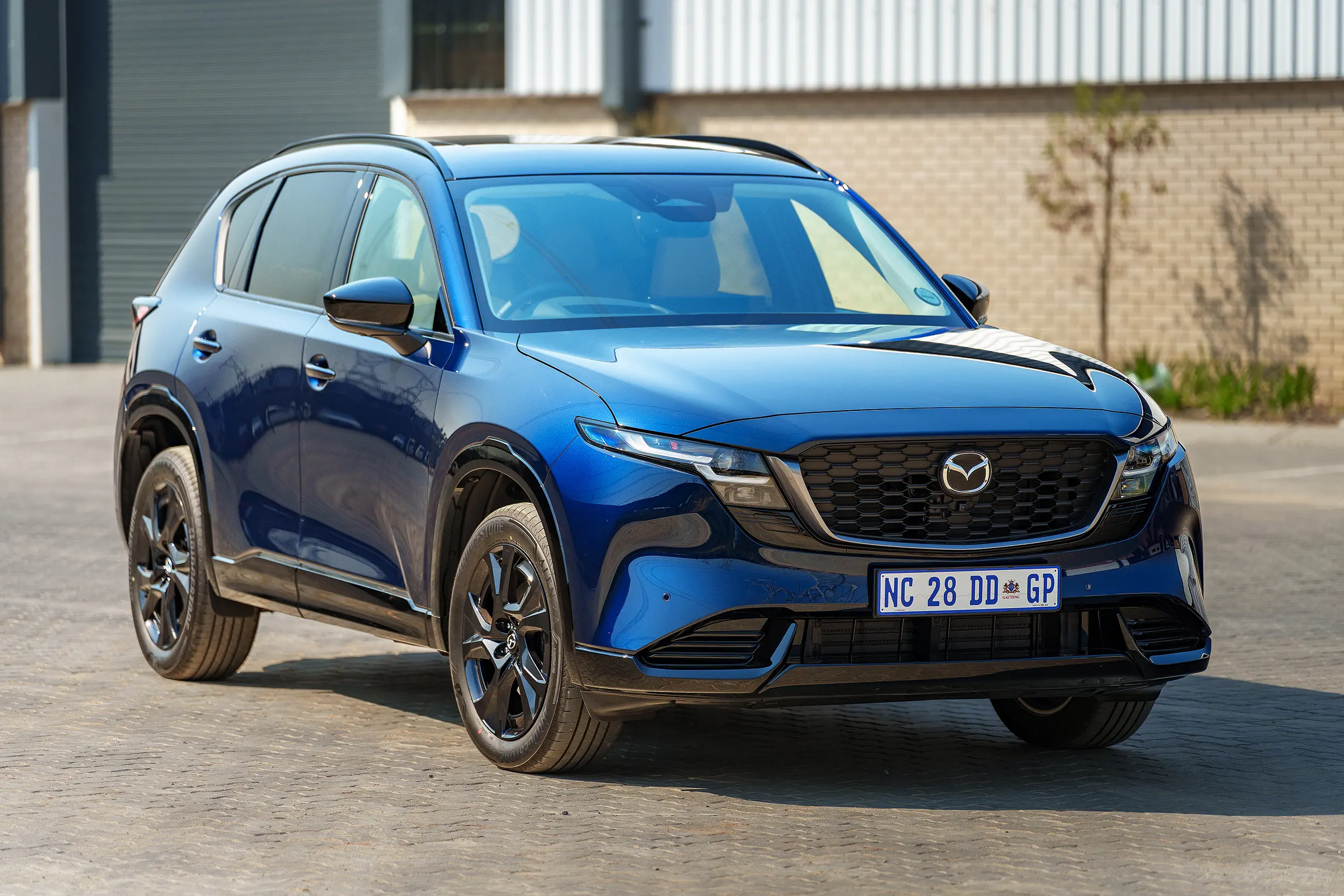
However, the new CX-5, which is their best-selling car globally, has taken Mazda’s new ideas to another level.
I had the top-spec Homura trim on test for a week. Externally, there’s subtle changes to make the car look more aggressive than its predecessor.
But where the magic happens on the new CX-5 is on the inside.
Mazda has followed the trend of a minimalist interior with a huge 15.6 inch infotainment display that is the centralised heartbeat of the vehicle.

Everything from entertainment to climate is controlled on that screen which is extremely responsive, but can become slightly distracting when you are driving.
However, the colour scheme of the interior which is tan and black just makes the interior a place of serenity.
Above that, the front seats are heated and ventilated and the back seats are also heated.
Mazda has also increased the size of the vehicle by roughly 11cm in length so the backseat passengers now enjoy a lot of legroom compared to the previous model.
That is where the changes stop though.
The new CX-5 still utilises Mazda’s tried and tested 2.5 litre naturally aspirated engine that delivers 132kW of power and 240Nm of torque.
It delivers a smooth drive with a great sense of linear delivery. I actually feel like that gradual increase of power coupled with the peaceful interior just makes the CX-5 such a lovely place to be in.
The Japanese automaker has clearly poured a significant amount of resources into refining the noise, vibration and harshness levels as the cabin feels immensely silent.
It feels mature and perfectly suits the serene vibe of the interior.
The steering retains that signature Mazda weighted feel, proving that a hint of the old ‘‘zoom zoom" driving dynamic still lives on underneath all the new screens and leather.Of course, this definitive shift upmarket comes with a price tag to match.
While you can get into a Mazda CX-5 from R578 250, you will not get all the premium features with it.
However, the top-spec Homura (tested) will cost R749 100. It’s costly in a competitive segment, but the Mazda CX-5 has gone from a practical SUV to the cusp of luxury.
A few years ago, asking consumers to pay a premium price for a Mazda would have been a tough sell. Today, when you factor in the sheer volume of standard technology, the immaculate build quality and the vastly improved practicality, it starts to look like a highly strategic purchase.
When you sit inside the new CX-5, touch the materials and experience the quiet refinement on the road, it no longer feels like a brand simply pretending to be premium. It feels like it has actually arrived. The price actually feels like a bargain.
If Mazda can market this product correctly, the new CX-5 could be a game changer for the brand. I’d even be so bold to say that it might be a car that can give the BMW X3 a run for its money.