


I am a child of Tembisa, born, bred and buttered in a township that has shaped almost every part of how I understand people, community and the country itself, because no matter how far life takes me or how many gallery openings, theatre productions and carefully curated cultural events I attend in Johannesburg's wealthier suburbs, it is always Tembisa that pulls me back and reminds me where my understanding of South Africa was first formed.
Perhaps that is why June 16 has always felt more complicated to me than it often appears in official speeches, commemorative events and social media tributes.
Growing up in the township, Youth Day was never simply about remembering the students who marched against the apartheid regime in 1976, nor was it solely about honouring the courage of young people who stood against an education system designed to limit their possibilities and determine their futures before they had even begun imagining them for themselves.
It was also about the present moment. It was about how young people were living now, what they were experiencing now and whether the freedom so fiercely fought for decades ago had ultimately translated into something tangible in their daily lives.
Every June 16 there was a rhythm that felt familiar and almost predictable. A group of young people would pull their school uniforms from the backs of cupboards, iron them carefully and wear them proudly.
The uniform became something different on Youth Day. It was no longer a symbol of classrooms, homework and examinations. It connected one generation of young people to another across decades of South African history.
They would gather at the local park, a public space that was originally intended to serve as a recreational hub for the community but which, through years of neglect and abandonment, had become something else entirely. The grass was rarely maintained, playground equipment often stood broken and rusted, and many residents associated the area more with crime than recreation.
Yet every June 16, young people reclaimed that space and transformed it into something meaningful.
There would be music blasting from portable speakers, impromptu dance battles between neighbourhood crews, poetry performances delivered with youthful conviction and long conversations about life, ambition and possibility.
At the same time, there would always be another gathering taking place somewhere nearby.
The older generation, the church mothers, retired workers, community activists and township elders would sit together under tents or trees and give an account of their own experiences. Some had witnessed the events of June 1976 firsthand. Others had not marched themselves but had nonetheless lived through the suffocating realities of apartheid.
As children, we listened to those stories only partially, our attention drifting between history lessons and the excitement of the festivities taking place around us. It is only now, as an adult, that I understand what those conversations represented.
Both groups were participating in the same act of remembrance, just from different points in their lives.
On Tuesday, after spending part of the day in swanky Sandton looking at art I decided to drive through Tembisa.
I wanted to see what the township looked like. I wanted to witness the familiar rituals I had grown up with. I wanted to see young people dressed in school uniforms, gathering in parks, celebrating their place in a history that belongs to them as much as it belongs to anyone else.
What I found instead was silence.
Not the complete absence of people, because townships are rarely truly quiet, but a noticeable absence of the energy that usually accompanies Youth Day commemorations. The streets felt ordinary. The atmosphere felt subdued. The spaces that would normally be occupied by groups of young people appeared almost abandoned.
I drove past the usual gathering spots where, in previous years. The corners that typically carried music into the surrounding streets stood quiet.
For a moment I wondered if perhaps I had arrived too early, but the longer I drove, the more obvious it became that something had shifted.
Eventually I stopped at Tsalanang, one of the township's most recognisable social spaces, hoping to find some sign of activity or perhaps someone willing to explain what I was seeing.
As I stepped out of my car and began walking around, I heard someone call my name.
I turned around but could not immediately identify the person calling me.
The voice came again.
"It's Sbusiso, Poyo."
My heart sank.
Not because I did not know who he was, but because I could not recognise him.

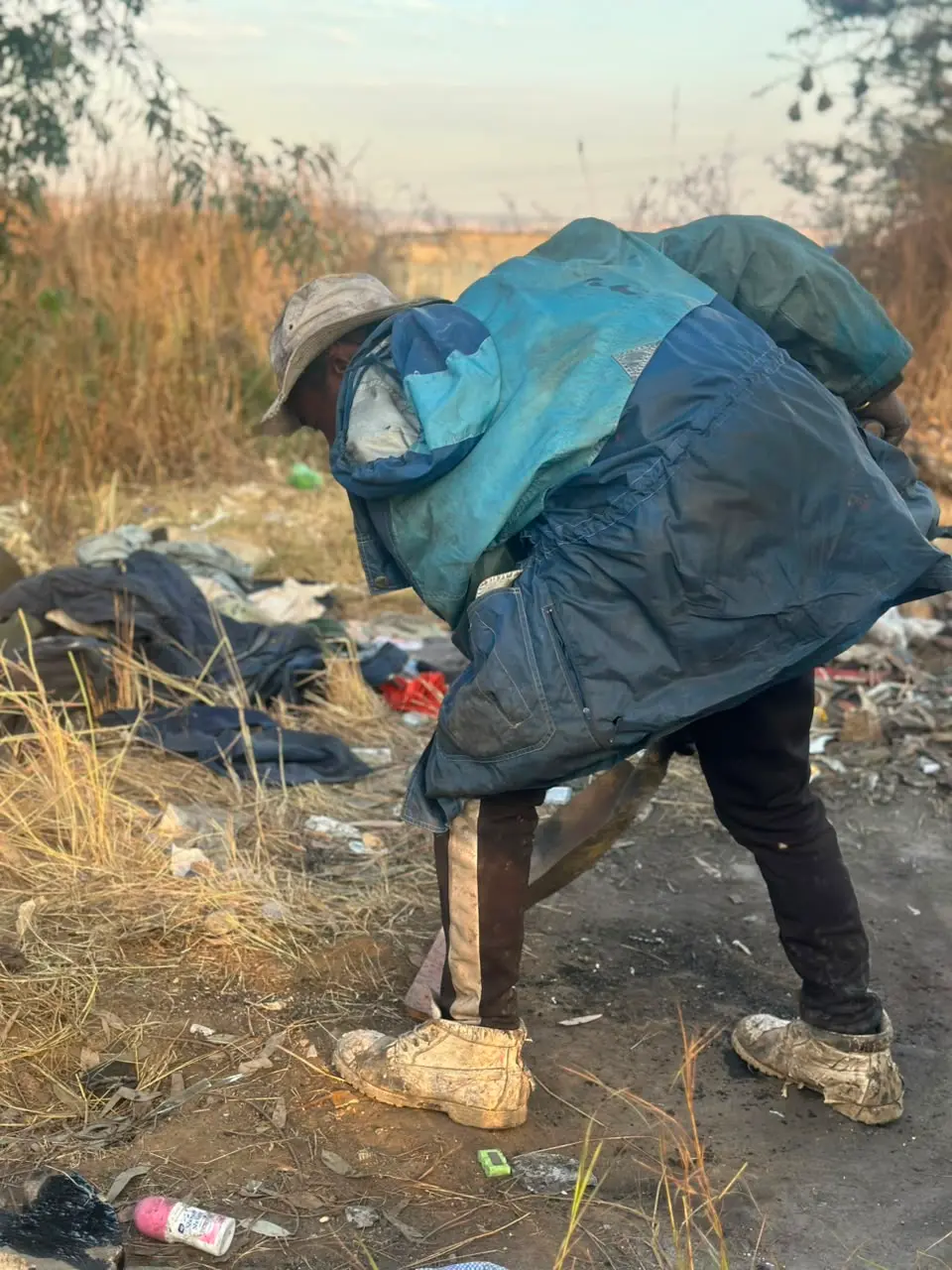
There are moments in life when the passing of time reveals itself with such force that it becomes difficult to hide your reaction. Standing in front of me was someone I had known during our school years, someone whose identity in my memory was tied to movement, creativity and possibility, yet the person before me appeared burdened by something much heavier.
I greeted him warmly and did my best not to allow my surprise to show.
Back in school, Sbusiso Thwala was known throughout our circles as a poet and dancer. He belonged to one of those dance crews that travelled across Tembisa competing against boys from different neighbourhoods.
It was the kind of weariness that settles into a person after years of disappointment, rejection and deferred dreams.
Trying to lighten the mood, I asked him why he was not dressed in his school uniform and enjoying the festivities.
More importantly, I asked him where everybody was.
His response came quickly.
"Look around you, Lesego," he said. "There is nothing to celebrate."
The words landed with a weight I was not prepared for.
He told me that he understood the significance of June 16 and appreciated the sacrifices made by previous generations, but that it was difficult to celebrate when the realities facing young people felt so overwhelming.
He spoke about unemployment, about opportunities that seemed permanently out of reach and about the frustration of watching years pass without meaningful change.
"There are very few opportunities," he told me. "No jobs. No work. We are in a prison and we cannot come out."
For several seconds I struggled to respond.
Part of my shock came from the visible changes in someone I had once associated with limitless potential, but another part came from recognising how many young people across South Africa would probably identify with what he was saying.
The youth of 1976 fought against a system that openly declared its intentions.
They knew who the enemy was.
They knew what they were resisting.
Today's youth face something far more complicated.
The enemy is unemployment.
The enemy is poverty.
The enemy is addiction.
The enemy is a lack of opportunity.
The enemy is watching promise slowly transform into frustration while politicians continue offering speeches that rarely translate into meaningful change.
I asked him again where everybody was.
Why was the park empty?
Why did it seem as though nobody wanted to commemorate the day?
His answer was devastating in its honesty.
"Some have become homebodies," he said. "Others are drinking their lives away at the tavern. Some, like myself, are chasing the next high."
Then he paused before delivering a sentence that has stayed with me ever since.
"We are definitely a disgrace to the youth of 1976."
I understood the sadness behind his words, but I could not agree.
The youth of 1976 were not extraordinary because they were perfect.
They were extraordinary because they responded to the conditions that surrounded them.
In many ways, today's youth are doing exactly the same thing, even if their responses sometimes manifest as withdrawal, frustration, despair or self-destruction.
And yet, despite everything, hope remains.
We saw it in the thousands of young people who gathered at political rallies across the country over the Youth Day. We see it in student activists, community organisers, artists, entrepreneurs and ordinary young South Africans who continue refusing to accept that things must remain as they are.
There is still a generation willing to imagine a South Africa that works for them.
As I drove away from Tsalanang later that afternoon, I realised that the mission I had set for myself had failed completely.
I had gone looking for school uniforms, celebration and nostalgia.
Instead, I found a conversation that forced me to confront the realities of contemporary youthhood in South Africa.
I found a former poet carrying the disappointments of an entire generation.
I found a reminder that freedom is never a destination reached once and for all, but a continuous struggle that each generation must define for itself.
The students of 1976 fought for political freedom because that was the battle history had handed them.
The youth of today are fighting for economic freedom, social freedom and the simple freedom to imagine a future that extends beyond survival.