

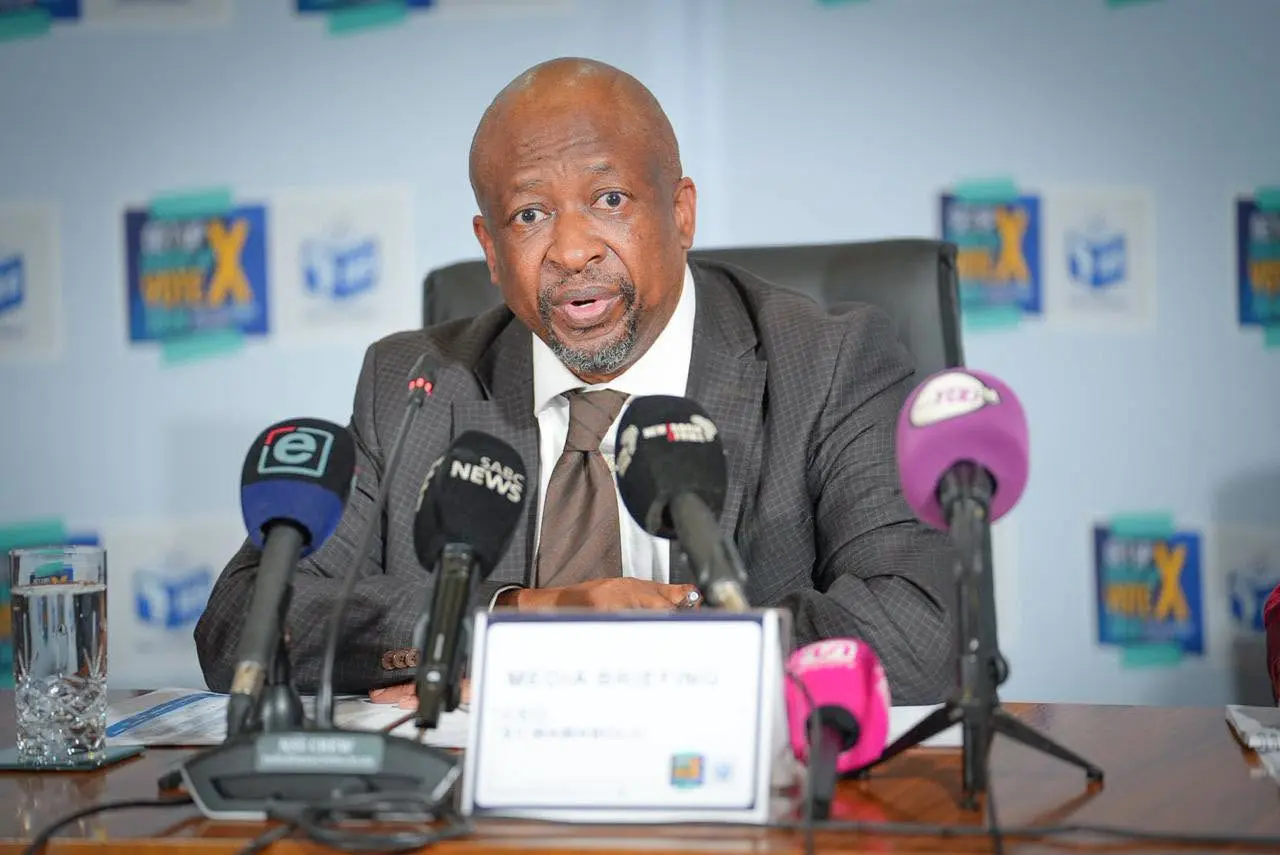
The Electoral Commission of South Africa (IEC) has defended the performance of its voter registration technology after nearly three million voter registration transactions were processed during the weekend registration drive before the 2026 local government elections.
The commission was responding to questions about the reliability of its Voter Management Devices (VMDs), which were the subject of scrutiny after challenges were experienced with the scanners used in previous elections.
Addressing a media briefing on Monday, IEC CEO Sy Mamabolo said the commission had taken "extraordinary measures" to ensure the devices functioned smoothly during the registration weekend.
"Among the measures that the commission took was to include one-dimensional barcode scanners, which work in conjunction with the VMDs and assist with the seamless scanning of IDs. The code used for registration has been optimised and the bugs that were previously identified have since been remediated."
Mamabolo said the IEC had also commissioned independent reviews to test the system's ability to cope with high registration volumes and verify the integrity of the registration software.
"On this occasion, the VMDs performed near perfection," he said.
The IEC said 2.9 million registration transactions were recorded during the 20 and 21 June registration weekend, an increase from the 1.7 million transactions recorded during a comparable registration drive before the 2021 local government elections.
The commission said the registration campaign had achieved two key objectives: growing the voters' roll and increasing participation among younger South Africans.
The total number of registered voters now stands at 28.5 million, up from the 27.7 million voters on the roll used during the 2024 national and provincial elections.
Of the 2.9 million transactions recorded, 477 174 were first-time registrations, while about 2.4 million voters used the opportunity to inspect, confirm or update their registration details.
Young people accounted for a significant share of the activity. The IEC said 785 078 transactions were recorded among people aged between 16 and 29, representing 27% of all registration activity. The same age group accounted for 379 767 of the new registrations, or 80% of all first-time registrations.
Mamabolo rejected suggestions that political parties influenced the voter registration process.
"The IEC does not register voters on the basis of the party they come from. Of course, political parties run their own campaigns and encourage people who are disposed to their message to register and be on the voters' roll. But the authority responsible for the registration of voters is the Electoral Commission and no one else," he said.
KwaZulu-Natal recorded the highest number of registration transactions, at 691 504, followed by the Eastern Cape with 534 773 and Gauteng with 502 229.
Most voters opted to register in person, with more than 2.5 million transactions, representing 88% of the total, processed through VMDs at registration stations. A further 362 296 transactions were completed through the online registration portal.
The commission acknowledged that some registration stations were affected by community protests linked to service delivery concerns and dissatisfaction with municipal decisions. However, Mamabolo said the disruptions were limited.
"We experienced situations where there were community protests, either due to service delivery issues or because people were dissatisfied with municipal decisions. Those voting stations may not have opened at eight o'clock but ultimately they did open. Put that into perspective nationally: those stations were not more than 20 against 23 776 voting stations," he said.
The IEC also confirmed the arrest of a person accused of damaging commission banners during the registration weekend.
"The material of the IEC is protected in law because it facilitates the conferral of political rights. No person, whether they like what is happening or not, is entitled to destroy the material of the IEC," Mamabolo said.
The commission announced that its online voter registration portal has been zero-rated, allowing citizens to register, verify or update their details without incurring data costs. It also confirmed that a second voter registration weekend would be held on 1 and 2 August.