

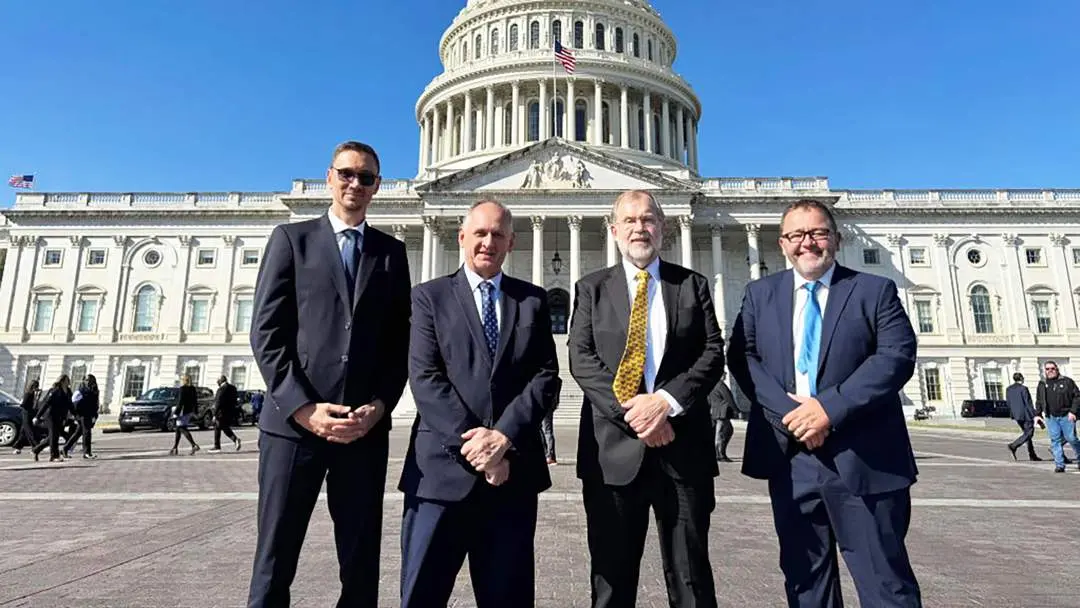
- AfriForum lost its bid to overturn a Press Council ruling, with retired Judge Bernard Ngoepe dismissing its application for leave to appeal on 24 June, finding it had “no reasonable prospects of success.”
- The dispute centred on an opinion piece published by the Mail & Guardian on 17 April, which stated that AfriForum presented targeted violence against white farmers in international advocacy as a form of “white genocide.”
- AfriForum argued the statement was false and said it had never explicitly claimed a white genocide was occurring in South Africa.
AfriForum has lost its bid to overturn a Press Council ruling on “white genocide” statements attributed to the lobby group in an op-ed in April.
The chairperson of the Press Appeals Panel found that the lobby group had “itself to blame” for making statements that could be interpreted as a suggestion that there was a “white genocide” in South Africa.
In a decision on 24 June, retired Judge Bernard Ngoepe dismissed AfriForum and campaigns officer Louis Boshoff’s application for leave to appeal a ruling by Acting Press Ombud Johan Retief, finding that the application had “no reasonable prospects of success”.
The dispute stemmed from the opinion piece the Mail & Guardian published on 17 April, which stated that “AfriForum and their allied organisations frame their position through claims of targeted violence against white farmers, which they present in international advocacy as a form of ‘white genocide’”.
AfriForum argued that the statement was false because it had “not claimed that there is a white genocide occurring in South Africa” and contended that it breached the Press Code.
It also sought a Tier 3 sanction against the publication, which is usually given for serious journalistic misconduct, arguing that it had previously apologised for similar errors.
But Retief dismissed the complaint in May, finding that the article was clearly an opinion piece protected under Section 7.2 of the Press Code rather than straight news reporting governed by factual accuracy provisions.
AfriForum then sought leave to appeal.
In dismissing the application, Ngoepe endorsed Retief’s reasoning in strong terms.
“I agree with the Ruling of the Acting Ombud for the reasons he gave after a thorough analysis of the complaint and the defence. The applicant has itself to blame; if you say things which are open to all sorts of interpretations, you cannot complain later.”
Ngoepe said both the opinion writer and US President Donald Trump had reached similar conclusions based on AfriForum’s messaging.
“President Trump concluded from what AfriForum had said that there was white genocide in South Africa; the opinion piece came to the same conclusion.”
He said AfriForum had repeatedly failed to dispel the impression that it was advancing such a narrative.
“As the acting ombud indicated, Afriforum has had the opportunity on many occasions to dispel any impression that they were conveying that there was white genocide. AfriForum kept on saying things capable of suggesting white genocide, but complains when so interpreted or understood.”
The judge added that after an AfriForum delegation visited the United States, Trump publicly accused South Africa of committing “white genocide”, and said the organisation should reasonably have foreseen that its statements could be interpreted that way.
“AfriForum ought to have reasonably realised that what it said was capable of carrying an interpretation by others that it conveyed that there was a white genocide; it can therefore hardly blame the opinion piece or perhaps even President Trump.”
Ngoepe concluded: “The application has no reasonable prospects of success, and it is therefore dismissed.”
In his original ruling, Retief found the article did not state as fact that AfriForum had explicitly declared a white genocide was taking place, but instead offered an interpretation of how the organisation presented its advocacy internationally.
Retief said AfriForum’s own conduct created ambiguity over its position.
He referred to an interview in which AfriForum CEO Kallie Kriel declined to reject Trump’s claim that a white genocide was taking place, instead saying South Africans should be grateful Trump recognised the country’s problems.
“I therefore do not blame him if he thought that AfriForum’s position on white genocide was ambivalent,” Retief wrote.
The acting ombud also found that Trump’s reaction following AfriForum’s visit to Washington reinforced the columnist’s interpretation.
“Considering that the article does not explicitly say that AfriForum calls farm murders a genocide but instead states that the organisation ‘presents’ it as a white genocide, the statement in dispute is reasonable as it accurately reflects the outcome of AfriForum’s visit to Trump.”
Retief also questioned why AfriForum had not corrected Trump’s understanding if it believed he had misunderstood its position.
“If AfriForum did leave a wrong impression with Trump, as it says, one would expect it to correct that misunderstanding, especially because of the repercussions that followed. Why not correct the matter?”
He ultimately dismissed the complaint, finding the opinion piece complied with the protections afforded to comments under the Press Code.
This article was published by News24