


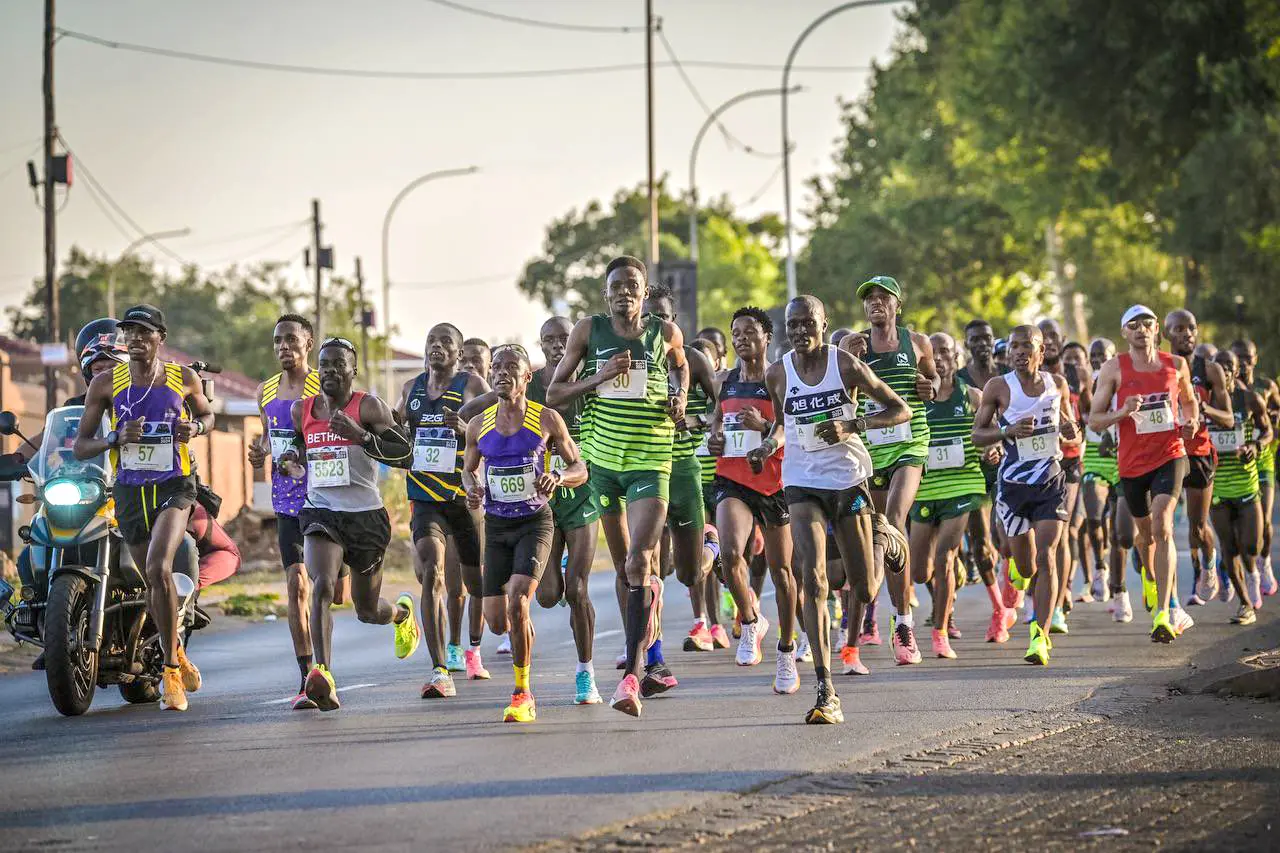
The streets of Soweto, usually alive with the thunder of thousands of feet on the last Sunday of November, will lay quiet this year. No starting gun. No sea of fluorescent vests. No songs rising from the hills of Orlando or the flats of Diepkloof. The 2026 Soweto Marathon, the People’s Race, has been cancelled again! What now?
It is not the first time the event has collapsed under its own weight. In previous years, disputes over broadcast rights, frozen bank accounts and allegations of mismanagement had already forced postponements and cancellations.
But this time the wound feels deeper. The 2025 edition had taken place under a new structure, the Soweto Marathon Non-Profit Company, after clubs in the township pushed aside the long-standing Soweto Marathon Trust. Almost a year later, the elite athletes who had crossed the finish line still waited for their prize money.
Five-time Comrades Marathon champion Gerda Steyn confirmed that she has still not received her prize money after finishing third at last year's edition of The People's Race, which took place on 29 November. She expected to receive R90 000 for her efforts but neither she nor any of the other athletes who finished in the top three in the women's or men's races received their prize money.
‘‘There has been absolutely no communication about the payments. I don't even know if it's a discussion we should have. The way we've been forgotten without any communication about the prize money is incredibly disappointing. I don't know what to say. We were hoping there would be people bigger than the race who would step in.”
Central Gauteng Athletics (CGA) has refused to sanction another race until the debts were settled and the governance war ended. In July CGA announced that winners of the 2025 Soweto Marathon would receive a partial payment of their outstanding prize money, However, the release of those funds, which are being held by the Gauteng Sports Confederation, have been delayed, leaving athletes in limbo.
According to Mandla Radebe, CGA general manager, the body had planned to award R740,000 in surplus funds linked to the 2024 race to make interim payments to athletes owed a share of roughly R1.2-million in outstanding prize money. “The proposed partial payment was being considered as an interim measure while the broader governance and financial matters surrounding the Soweto Marathon are being addressed,” said Radebe.

According to Radebe, the process has since hit a screeching halt by delays in the release of funds by the Gauteng Sports Confederation.
By mid-November 2026, the calendar simply had a blank space where the marathon should have been. The factions remain locked in open conflict.
A statement issued by the Soweto Marathon Trust captured the bitterness that had poisoned the event. “This race belongs to the people of Soweto and to the Trust that has protected it for decades,” the statement read. “What happened in 2025 was a hijacking by a group that had no right to organise under our name. Until the courts and the provincial body recognise the true custodians, there can be no legitimate race. We will not allow the People’s Race to be stolen.”
From the other side came an equally sharp reply. A spokesperson for the non-profit company that had staged the 2025 event said the Trust had lost the confidence of the clubs and the runners long ago. “For years the Trust failed to produce clean financial reports. Athletes were left waiting. Sponsors grew wary. The clubs of Soweto chose a new structure precisely because the old one had failed them. We organised a successful race in 2025. The outstanding payments are being addressed through the proper channels.”
Sponsors who had once attached their names to the race quietly stepped back. African Bank, which had supported the 2025 edition, confirmed its contractual obligations had ended. Without sanction and without funding, the roads stayed closed. The athletes are feeling the cost most directly.
Margaret Jepchumba of Kenya had won the women’s race in 2025 and was owed R250 000. Joseph Seutloali of Lesotho had taken the men’s title for the same amount. Runners-up and lower placers waited for smaller but still significant sums. Almost twelve months later, the money had not arrived.
Irvette van Zyl, a four-time winner of the race and one of South Africa’s most respected road runners, spoke with quiet anger. “There is no feeling worse than crossing the finish line first and walking away empty-handed,” she said. “These athletes trained for months. Some of them left families behind and travelled long distances. The prize money is not a luxury. For many it is the difference between being able to keep training and having to stop. The organisers must pay what is owed. The reputation of the race is already damaged. Continuing to withhold the money only makes it worse.”
Nick Bester, manager of the Nedbank Running Club, echoed the frustration. Several of his athletes, including Jepchumba, remained unpaid. “We have tried every channel,” he said. “Letters, meetings, public appeals. There has been no proper response. Athletics South Africa needs to step in.”
Local club runners felt the absence in a different way. For many, the Soweto Marathon was more than a race. It was the one day of the year when the township’s streets belonged to ordinary people in running shoes. Street vendors prepared for the crowds. Schoolchildren lined the route with handmade signs. Families set up chairs along the pavement to cheer relatives and neighbours. That entire ecosystem disappeared with the cancellation.
The deeper damage may be long-term. Sponsors hesitate to attach their brands to an event repeatedly dragged through public disputes. Elite athletes begin to mark the date as unreliable. Young runners in Soweto lose a local goal that once inspired them. The race that once symbolised resilience and community now risks becoming a symbol of division.
Officials from the provincial sports department had met with clubs earlier in the year, promising to help find a way forward. Those meetings produced statements of concern but no lasting solution. A court judgment in October clarified some governance questions yet left the prize-money issue unresolved. The Trust insisted it bore no responsibility for the 2025 debts. The non-profit company pointed to delayed doping results and frozen processes. Meanwhile the athletes waited.
The People’s Race was always meant to belong to the people who ran it. Right now those people are standing on empty pavements, watching the calendar turn, and wondering if the race will ever return.
Lelo Mzaca is an award-winning multitalented journalist, copywriter and presenter of The Big Breakfast Show on Radio 2000. He has an overwhelming passion for sport, lifestyle, music, arts and culture.