

South Africans are answering fewer spam calls, even as the number reaching their phones continues to climb and fraudsters use artificial intelligence and automated systems to make them more convincing.
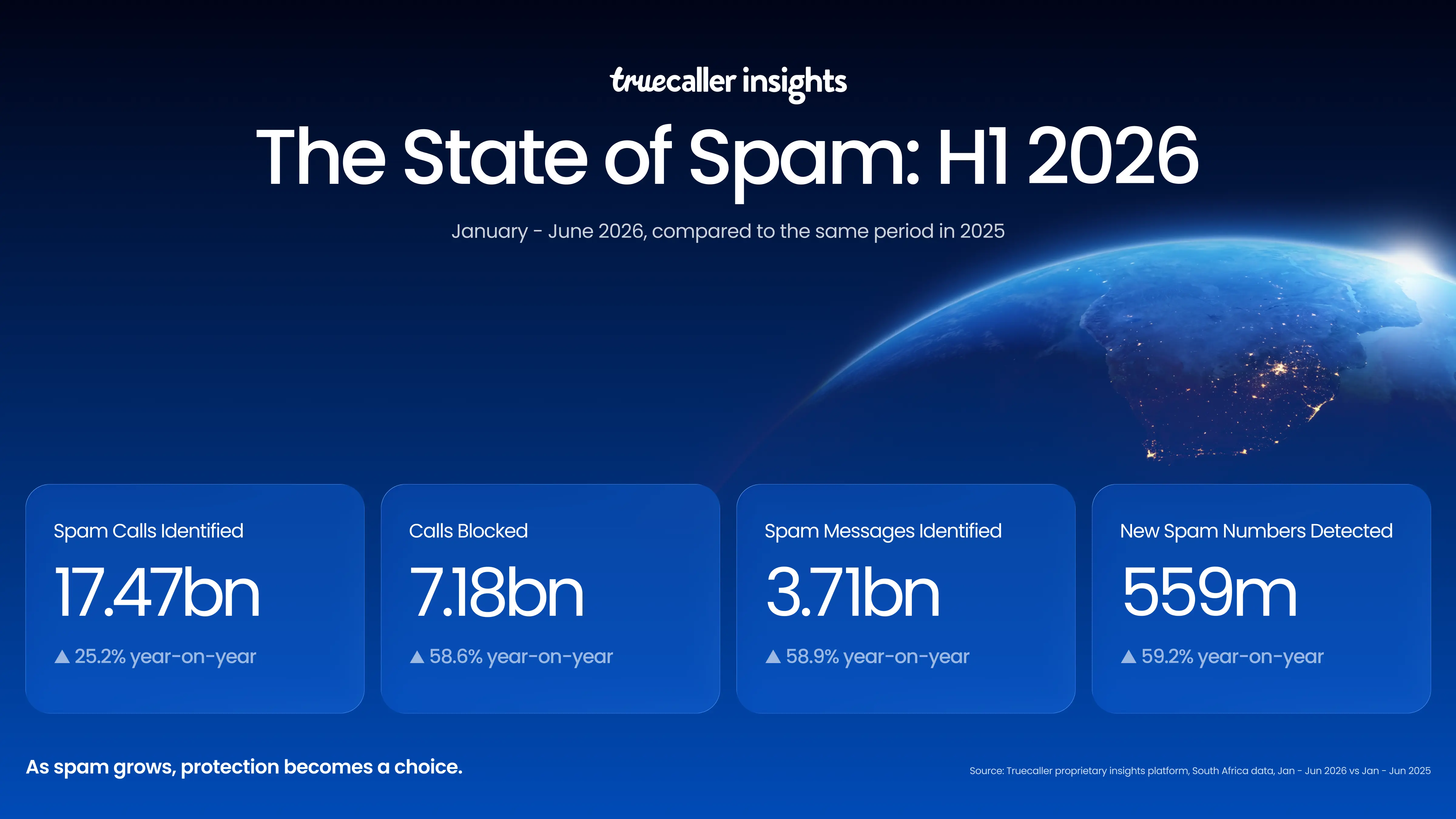
Truecaller estimates that its platform identified 17.47 billion spam calls in South Africa between January and June 2026, 25.2% more than the 13.96 billion recorded during the same period last year.
Its users blocked 7.18 billion calls, an increase of 58.6%. The platform also identified 3.71 billion spam messages, up 58.9%, while reports from users helped it detect 559 million new spam numbers between March and June.
“Scam networks are not slowing down. If anything, they are becoming more sophisticated, using spoofing and AI-driven tactics to appear legitimate,” said Mmathebe Zvobwo, Truecaller’s director of market development for South Africa.
Truecaller’s estimate is drawn from activity among its South African users and extrapolated across the population. It indicates the scale and growth of spam activity, rather than providing a precise count of every unwanted call received in the country.
The proportion of identified spam calls answered by South Africans fell from 10.2% in the first half of 2025 to 7.8% this year. What this data tells us is that South Africans are starting to fight back with better information. Better information means that South Africans are aware of scam, fraud, and spam behaviour.
Spam is also a broad category. It includes unsolicited sales and automated commercial calls, as well as numbers reported or detected as possible fraud. Not every call classified as spam is part of a criminal scam.
What has changed is the speed and sophistication with which criminals can operate.
Caller-ID spoofing allows a caller to change the number displayed on someone’s phone. A call can appear to come from a local number, a bank or another trusted organisation when it originates somewhere else entirely.
Generative AI has removed many of the spelling mistakes and clumsy phrases that once gave scams away. It can produce polished scripts and messages within seconds. Voice-cloning technology can imitate bank officials, company executives or relatives, while automated systems allow one operation to target thousands of people at once.
The South African Banking Risk Information Centre has also warned that criminals are using AI-generated emails, WhatsApp messages and voice-cloned deepfakes to make fraud more believable.
Digital banking fraud cases almost doubled from 31,612 in 2023 to about 64,000 in 2024. Losses increased from R1 billion to more than R1.4 billion. Sabric said most of the cases relied on social engineering and human error, rather than breaches of banks’ technical systems.
Spam operations no longer depend on individual callers working through lists of telephone numbers. Automated systems can test large volumes of numbers, change their approach and move between calls, SMSes and messaging platforms.
South Africa ranked ninth in the world for spam intensity, with about 30% of calls from unknown numbers classified as spam or fraud. In the worst affected countries, more than seven out of every 10 calls from unfamiliar numbers were identified as spam.
Truecaller uses both automated detection and reports from its users. When a suspicious number is reported, that information becomes part of a wider pool of community data. Machine-learning systems assess the reports together with calling patterns and other signals to identify new threats.
A number attracting suspicious activity can then be flagged or filtered, giving other users information about the caller before they decide whether to answer.
Truecaller has more than 500 million active users worldwide and says its community-reporting network allows new spam numbers to be identified within hours.
The growth in spam has also changed the way people use their phones. Calls from unfamiliar numbers are increasingly ignored, whether they come from a fraudster, a doctor, a school, a bank or a delivery driver.
For legitimate businesses, the loss of trust creates its own problem. A company may have a valid reason to contact a customer but still struggle to get through because its number is not recognised.
The government is seeking to address unwanted direct marketing through a national Opt-Out Registry administered by the National Consumer Commission.
Trade, Industry and Competition Minister Parks Tau gazetted amended regulations under the Consumer Protection Act on 15 April. Businesses engaged in direct marketing will have to register with the NCC and renew their registration every year.
Consumers will be able to block an individual marketer or the entire direct-marketing industry. Marketers must check their databases against the registry and remove the details of people who have opted out before contacting them.
Companies that ignore the registry could face an administrative penalty of up to R1 million or 10% of annual turnover, whichever is greater.
The registry was expected to start accepting registrations in July, but the NCC subsequently said it was still finalising the system and would launch it soon.
Truecaller has welcomed the regulations, saying they are the kind of intervention that can make a difference over time.
The registry should give consumers greater control over calls from identifiable businesses. Its effect on criminal operations will be more limited. Fraudsters impersonating banks, hiding their locations or moving between spoofed numbers are unlikely to register or honour an opt-out request.
Regulation will therefore have to be backed by fraud detection, enforcement, cooperation between industries and better public awareness.
The Protection of Personal Information Act offers another form of recourse. It regulates how companies collect, store and use personal information for direct marketing. Consumers can approach the Information Regulator when their details are used without permission or a company continues contacting them after they have opted out.
Technology and regulation can reduce the risk, but they cannot make every unfamiliar caller trustworthy.
Consumers should never give an unexpected caller a PIN, password, one-time password or banking details. Anyone claiming to call from a bank or another institution can be checked by ending the call and dialling the organisation’s official number. Links and applications sent during an unsolicited call or message should be treated with the same caution.
For now, the clearest sign of progress is that fewer South Africans are answering calls already identified as spam. In a market flooded with automated calls and increasingly polished scams, choosing not to pick up may be the simplest protection available.