

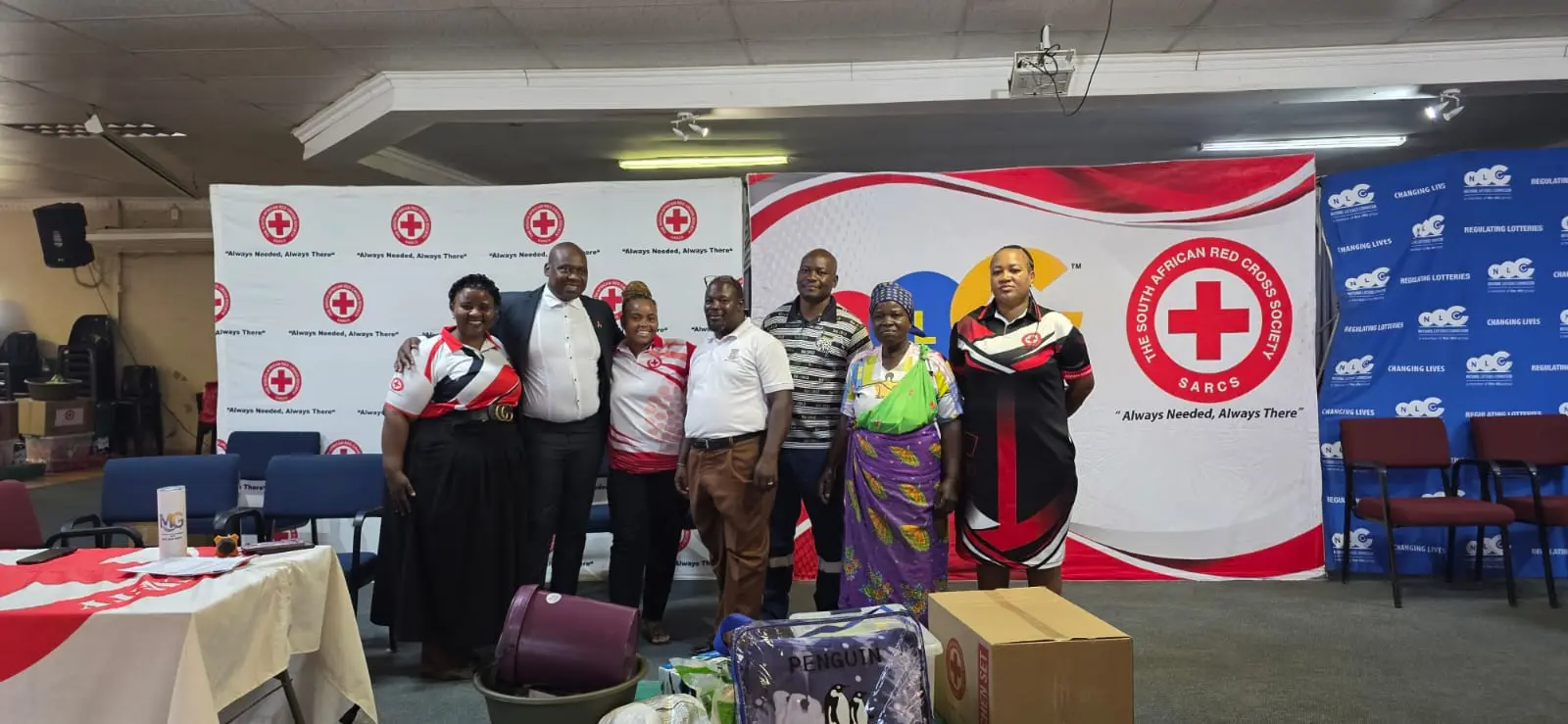
The National Lotteries Commission (NLC) is changing lives in Limpopo and Mpumalanga by distributing humanitarian relief parcels to households hit by the severe floods of mid-January 2026. On 17 and 18 January, the government declared a national state of disaster after lives were lost, 3,900 households affected and over 400 schools closed. When the floodwater receded, the hardship remained, as many families had lost their homes and food. Communities reached in the two provinces include:

- Mpumalanga (Gert Sibande District): Ermelo (Msukaligwa Local Municipality) and Kwa- Ngema Village (Mkhondo Local Municipality); Hluvukani (Bushbuckridge Local Municipality).
- Limpopo (Vhembe District):
Musina Local Municipality:Tshikhundini, Madimbo, Bale, Gumbu, Tshenzhelani, Masisi,
Tshivaloni, Dovho, Tshilamusi, Duluthulu, Bennde-Mutale, Mutele, Malale, Muswodi Dipeni and Gumela Village Chavani Village (Makhado Local Municipality) Ha-Begwa Village (Thulamela Local Municipality)
- Limpopo (Sekhukhune District):
Mashabela Village (Makhuduthamaga Local Municipality).
More than 1,000 beneficiaries have received parcels so far, and distribution continues in other areas. For each family, a parcel means a meal, warmth through a cold night, and the assurance that they have not been forgotten. The NLC’s funding shows what lottery proceeds can achieve when they reach communities in their hour of need. Long after the floodwaters have gone, it is restoring dignity and rebuilding hope.

Through research-based funding to the South African Red Cross Society (SARCS), the NLC is returning lottery proceeds through the National Lottery Distribution Trust Fund (NLDTF) to the people who need them most. The funding has made it possible to deliver humanitarian relief materials to flood-affected families. This month, October 2026, SARCS and the NLC are joining local municipalities, government departments and provincial disaster management teams to hand over the parcels, showing how partnership turns funding into relief
NLC-Funded Astroturf Pitch Gives 927 Learners and the Letlhabile Community a Safe Place to Train, Play and Dream!

Tshenolo Primary School in Letlhabile, Brits, North West, is a women-led school
headed by Principal Ms Salome Motsepe. It serves a community with few safe, well-kept sporting facilities where young people can build their skills and their love of the game. Through the National Lotteries Commission (NLC) funding, Tshenolo now has an astroturf soccer pitch. It serves the school’s 927 learners, its primary beneficiaries, as well as the wider Letlhabile community.
“The reason we needed the sports field so much,” the school explains, is that young people in the area had nowhere safe to train or to develop an interest in sport. The NLC’s funding answered that need directly.

The impact reaches well beyond the school gates. Community tournaments now travel to Tshenolo to play on its pitch, and local clubs book it for coaching and practice. What was once an unmet need has become an asset for the whole neighbourhood. The NLC funding also put money in local pockets. When the school’s Combi court was developed, about five community members found work, and when the astroturf pitch was built, around 12 more were employed. For those households, the NLC’s funding meant income as well as infrastructure. On tournament days, the field demonstrates a benefit that funding alone cannot create. Teams gather, collaborate and play together for the benefit of the youth and the entire community. The pitch has become a community hub, bringing together neighbours who might otherwise never meet.

The school’s women leadership is determined that this will last. Together with the School Governing Body (SGB), it has agreed that local clubs using the pitch for tournaments, coaching and practice will contribute a minimum of R300 towards its sustainability. The school is also running its own fundraising activities to maintain the pitch. The NLC provided the foundation, and the school and community are committed to protecting it.
For the children of Tshenolo and the community of Letlhabile, the astroturf soccer pitch is a safe place to train, play and dream. Guided by strong women's leadership, the school is ensuring that this impact will endure for generations to come.
FUNDRAISING LOTTERIES: Regulated Way for NPOs to Raise Funds for Good Causes

Fundraising remains one of the most challenging tasks for non-profit organisations, educational institutions and other not-for-profit entities seeking to sustain their work for the greater good. While many rely on corporate social investment and funding from entities such as the National Lotteries Commission, fundraising lotteries offer another legitimate and regulated avenue for raising funds.
As the regulator of lotteries in South Africa, the NLC is mandated to create awareness about this mechanism and to ensure that it is conducted with integrity, transparency and player protection at its core.
What is a Fundraising Lottery? In terms of the Lotteries Act No. 57 of 1997, a society lottery – commonly referred to as a fundraising lottery – is a scheme where participants donate to a good cause for a chance to win a prize. These schemes are typically conducted through the sale of tickets or monthly contributions. Any lottery scheme that raises funds through a game of chance and offers prizes must be registered with the NLC. It is unlawful to operate a fundraising lottery
without such registration.

Who Can Apply?
All registered non-profit organisations and educational institutions intending to raise funds for good causes are eligible to apply, provided the purpose is charitable, supports participation in sport or cultural activities, or is otherwise approved by the Commission – and is not for private gain or commercial undertaking.
A Simple Registration Process
Registering a fundraising lottery is straightforward. Application forms and detailed registration guidelines are available on the
NLC website at www.nlcsa.org.za
Organisations are advised to apply at least two months before the intended start of ticket sales. Once registered, the scheme remains valid indefinitely, unless cancelled by the organisation or revoked by the Commission for non-compliance.
Regulating to Protect Players and Ensure Fairness
To uphold integrity and protect both the organisation and the player, the Lotteries Act sets clear limitations:
Use of proceeds: The total proceeds, after deductions for prizes and expenses, must be used solely for the declared good cause.
Frequency and value: An organisation may not conduct more than six lotteries per year. The total value of tickets sold per lottery may not exceed R2 million. Prizes: The total value of prizes may not exceed R1 million per lottery. Expenses: Where proceeds are R1 million or less, a maximum of 15% may be used for expenses. Where proceeds exceed R1 million, the allowable percentage is 10%