

Employee insurance has traditionally been associated with financial protection when an employee dies, becomes disabled or is unable to work due to illness. However, YuLife is exploring how insurers can extend their role beyond providing financial assistance when something goes wrong, using technology to encourage healthier habits and improve access to support services.
The global group risk insurer operates in South Africa, providing life, disability and related cover to employers. Its products are underwritten by Guardrisk and reinsured by Munich Re. Alongside its traditional insurance offering, the company has developed a digital platform that allows employees to engage with their benefits through everyday activities, health resources and rewards.
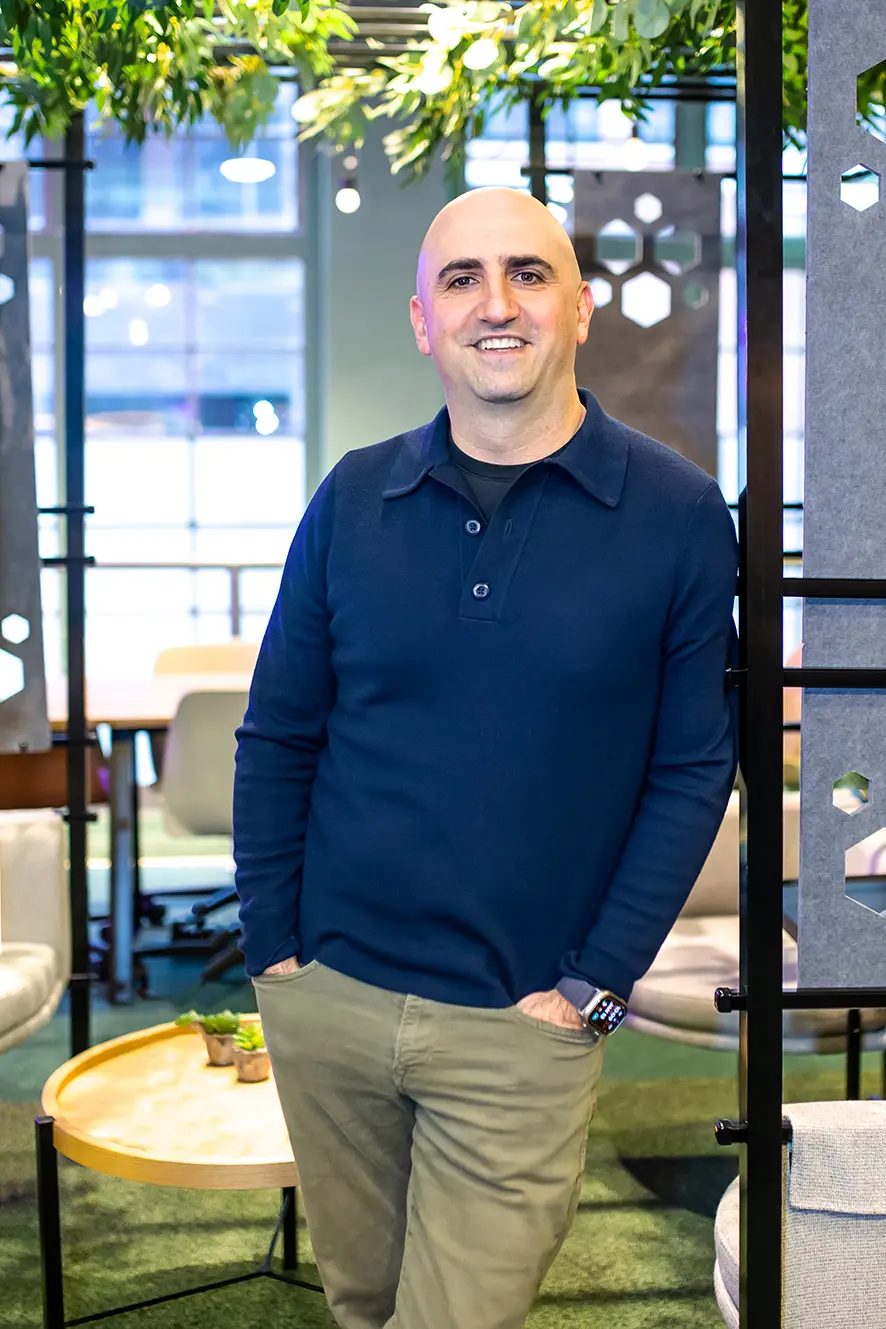
For YuLife Global CEO Tal Gilbert, the intention is to change how employees interact with insurance, moving away from a relationship that is largely activated when a claim is made. “Group insurance has always been something employees only encounter at the worst moment, a claim. We have turned it into something people engage with every day,” he says.
At the centre of this approach is the YuLife app, which uses gamification and behavioural science to encourage participation in activities associated with physical and mental wellbeing. Employees can earn YuCoin, an in-app currency, by completing activities such as walking, taking moments of calm, getting enough sleep and completing daily check-ins. The currency can then be redeemed for rewards through the platform’s rewards store.
The idea is to make healthy activities easier to incorporate into everyday routines by introducing achievable goals and incentives. Gilbert says the company has relied on behavioural science and game design since its early development, recognising that people are less likely to maintain habits when they feel they have additional responsibilities. “At our core we’re a behaviour-change company, and the hard truth is that people avoid things that are good for them if they feel like a chore,” he says.
However, the platform’s use of technology extends beyond rewarding employees for completing activities. Their engagement also provides information that helps YuLife understand behavioural patterns and personalise the support it offers. This is where its artificial intelligence (AI) capabilities, particularly its Yunity intelligence engine, come into play.
According to the company, Yunity uses information from daily check-ins, healthy habits and wearable devices to develop an evolving picture of employee wellbeing. It is designed to identify changes in areas such as stress, energy, and general well-being, and then guide employees towards relevant support, including virtual GP consultations and mental health resources.
The system also provides employers with anonymised, aggregated information about workplace wellbeing, rather than individual employee responses. YuLife says participation is voluntary and that individual responses are not made visible to employers.
This distinction is important when considering how AI can be used in workplace environments, particularly when the information being processed concerns people’s health and personal circumstances. While such technology may help identify patterns and direct employees towards support, it also places responsibility on businesses to ensure that personal information is handled appropriately.
Gilbert says the value of AI lies in its ability to help businesses better understand employees and respond to their needs, rather than adopting technology simply because it is available. “What changes is not AI on its own. It starts with genuinely understanding people, their behaviour and their culture, and AI then accelerates and sharpens what that understanding makes possible,” he says.
In South Africa, where access to healthcare and mental health services remains uneven, the availability of workplace support is another important part of YuLife’s offering. Through its partnership with Lyra Wellbeing, employees can access mental health support through an Employee Assistance Programme. The platform also provides virtual GP consultations through Carefirst and access to a digital will through QuickWill, with these services included in the cover at no additional cost to employees.
The inclusion of these services broadens the conversation about what employee benefits can offer. Mental health, in particular, is an important consideration in workplace wellbeing, as employees may experience personal, financial and work-related pressures that affect their ability to function. Having access to professional support through a digital platform may make it easier for some employees to seek assistance, particularly where cost or accessibility would otherwise be a barrier.
However, providing access to these services is only one part of the equation. Employees also need to know what is available and feel comfortable using it. The effectiveness of digital wellbeing programmes therefore depends not only on the technology but also on whether the services respond to people’s actual needs.
YuLife has also incorporated a social responsibility component into its platform, allowing employees to donate their YuCoin to charitable causes. This links participation in individual well-being activities to contributions to community initiatives, adding a collective dimension to the company’s rewards model.
Its approach forms part of a wider discussion about the role of AI in the future of work and how businesses can use technology to improve employee experiences. As more organisations consider data-driven approaches to workplace management, questions about privacy, accessibility and responsible implementation become increasingly relevant.
For YuLife, these considerations are also reflected in its sponsorship of the inaugural South African AI Awards. The awards are being held under the theme of inclusive socio-economic prosperity, recognising the role of AI and innovation in South Africa’s economic and social development.
Gilbert says the partnership reflects the company’s interest in supporting local innovation and encouraging the development of technology that addresses practical challenges. “We’re proud to sponsor the South African AI Awards, the country’s first national awards of their kind,” he says. “This year’s theme, inclusive socio-economic prosperity, could not sit closer to what we believe: the technology that matters most is the technology that reaches everyone and genuinely improves lives.”
He believes that AI should be measured not solely by its ability to improve efficiency but also by its contribution to people’s lives. This includes considering who has access to the benefits of technological development and whether those benefits can reach beyond traditionally privileged groups.
In South Africa, YuLife says it works with an increasingly varied range of employers, extending its wellbeing offering to employees across different income bands and living standards. The company wants to expand this reach while continuing to develop its digital platform and AI capabilities.
Gilbert says the longer-term opportunity lies in using technology to help employers move away from responding to employee wellbeing challenges only once they become serious. Through continued engagement and the information generated by the platform, YuLife hopes to make support more responsive and encourage earlier intervention.
The company also points to independent research and a university trial as evidence of the potential health benefits of its engagement model. It has not, however, provided further details of the trial in the interview.
As AI becomes more integrated into workplace systems, YuLife’s approach raises questions about how businesses and insurers can use technology to complement traditional employee benefits. Its model brings together financial protection, digital rewards and access to health resources, placing greater emphasis on the relationship between insurance and everyday wellbeing.
For Gilbert, the ambition is to make that relationship less dependent on the moments when employees need to claim. “We are not just here to protect lives when things go wrong. We want to help people across this country live better, every single day,” he says.