Mail & Guardian
Mail & Guardian
global fundlatest news & developments
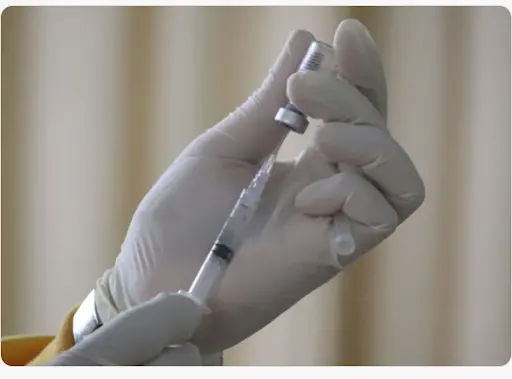
South Africa’s first consignment of lenacapavir (LEN), the twice-yearly anti-HIV injection, arrived at OR Tambo International Airport last week. Photo: Mufid Majnun/Unsplash

SA’s first batch of LEN jabs will arrive in February. Use Bhekisisa’s dashboard to find out who should get them

Who should get what slice of the pie once the medicine is available in public clinics? And are numbers alone what would drive decisions?

To end Aids by 2043, the South African government says it could get a group of local pharmaceutical companies to make generic shots of lenacapavir from 2027 onwards. There is, however, a hitch. None of the companies that will be involved have a licence to make the jab. (Julia Koblitz/ Unsplash)

SA wants to make its own six-monthly HIV prevention jabs by 2027. But there’s a hitch

None of the companies that will be involved have a licence from the inventor of Lenacapavir, Gilead Sciences, to make the jab

One in 10 clinics in South Africa will start to hand out a twice-a-year anti-HIV jab as early as February. The country’s medicines regulator, Sahpra, says it’s on track to announce its registration decision within the next few days, by the end of October. So who should get LEN first? (Anna-Maria van Niekerk)

The six-monthly anti-HIV jab could be in 360 clinics by February. Who should get the first doses?

The country’s medicines regulator Sahpra says it’s on track to announce its registration decision by the end of October

Two Indian generic drugmakers — Hetero and Dr Reddy’s — will be funded by the Gates Foundation and Unitaid, respectively, to produce and sell the twice-a-year anti-HIV shot around R692 per person per year. (Anna-Maria van Niekerk)

Two drugmakers will sell the 6-monthly anti-HIV jab for the price of the daily prevention pill

Hetero and Dr Reddy’s will be funded by the Gates Foundation and Unitaid to produce and sell the twice-a-year anti-HIV shot around R692 per person a year

Nompilo Mdluli — in brown jacket — and Simphiwe Matsebula — in black jersey are worried that the Pepfar pause on HIV services in eSwatini could negatively affect the lives of people living with HIV especially daily access to antiretroviral treatment which helps keep their virus under control.

People living with HIV in fear as impact of donor funding cuts begin to show in eSwatini

HIV prevention services have been heavily affected by the pause on the US President’s Emergency Plan for Aids in the country, with remote mobile clinics that served hard-to-reach…

US President Donald Trump (Flickr)

Small win for activists, but SA’s HIV projects won’t reopen

The $400 million the United States congress removed from a list of funding programmes the Trump administration wants to cut doesn’t cancel the cuts to HIV and TB programmes made…

Sign outside the offices of an organisation in Mozambique that was defunded by USAid. Photos: Jesse Copelyn

Mozambican children die after US funding cuts: Who bears responsibility?

The least the Trump administration could have done was provide ample warning that it was going to cut aid

Research indicates the anti-HIV jab, lenacapavir, protects women completely and works almost as well for men, transgender and nonbinary people. Photo: Marko Milivojevic/Pixnio

SA gets R520 million to buy the twice-a-year anti-HIV jab – but there’s a snag

The country isn’t getting extra money from the Global Fund to Fight Aids, TB and Malaria; it has to use cash from a grant it has already been awarded and was cut by 16% in June

HIV treatment has, for the first time, been made in Africa.

The Global Fund has just made history – now it must start a revolution

Africa’s first locally made HIV treatment is more than a milestone, it’s a political, economic and moral turning point in the fight for health sovereignty

Twenty years of hard lessons — with a dose of good luck and a lot of persistence — has helped Hlokomela Clinic to prepare for the US funding cuts crisis. (Zano Kunene)

How this Limpopo NGO prepared for Trump’s funding cuts

The Anova Health Institute, which received the lion’s share of the US President’s Emergency Plan for Aids funding in South Africa, had its support halted in February along with…

Lenacapavir could end Aids in South Africa by 2032. How much should we pay for it? (Canva)

The six-monthly anti-HIV jab could end Aids in SA by 2032

A modelling study released in March gives a clue at which price the jab, lenacapavir, would be worth the health department’s while

The Global Fund for HIV, TB and Malaria says it will fund the roll-out of the twice-yearly anti-HIV jab, lenacapavir, for poorer countries, including South Africa, with or without the help of the US government’s Aids fund, Pepfar

The Global Fund will roll out the twice-yearly anti-HIV jab — with or without Pepfar

In December, the Global Fund and the US President’s Emergency Plan for Aids Relief committed to funding the roll-out of lenacapavir in countries they support

A volunteer demonstrates an HIV screening test. (File photo)

Trump’s funding cuts hit HIV, GBV services hard

The US president’s cutting of financial support has cut life-saving treatment for many in SA

The original grants of Pepfar-funded organisations who are funded through the Centres for Disease Control have been reinstated after a federal judge enforced a temporary restraining order blocking US President Donald Trump’s administration from freezing federal grants. (Shealah Craighead/Flickr)

Some Pepfar projects can now restart in full, without a waiver

A federal judge has enforced a temporary restraining order blocking Donald Trump from freezing federal grants

US President Donald Trump said this week that the tariff is meant to address the trade imbalance between South Africa and the US. (Photo: Evan Vucci/AP/picture alliance)

UPDATE | Embassy confirms Pepfar projects will restart, despite Trump aid ban

Such programmes still qualify for a limited waiver, which will expire towards the end of April, but only for approved activities

Excessive force: Men protest while pulling a cart carrying the body of Vitallis Ochilo Owino in the Mathare slums of Nairobi on May 4. He was allegedly beaten to death by police officers while walking in the streets after curfew hours imposed during the Covid-19 pandemic. (Photo: Luis Tato/AFP)

Put human rights at the centre of our battle against Covid-19

Government and civil society must develop a rights-based response to Covid-19, because epidemics are won by strengthening rights, not trampling on them

Drug patents are beside the point

This week Switzerland will become ground zero for the future of health policy in Africa. The World Health Organisation’s intergovernmental working group is meeting in Geneva to…

Bush plays healer-in-chief in rural Tanzania

United States President George Bush handed out hugs and bed nets to battle malaria in Tanzania’s rural north on Monday, saying the US is part of an international effort to…

Bono and Hirst head art sale to fight Aids

An extraordinary array of contemporary art will go under the hammer next week for Red, the brand created by U2 star and activist Bono, to raise money to combat the Aids epidemic…

Signs of progress on World Aids Day

Activists on Saturday sought to keep the battle against HIV in the public eye on World Aids Day in the face of growing complacency amid progress in treating and slowing the…