Mail & Guardian
Mail & Guardian
sahpralatest news & developments
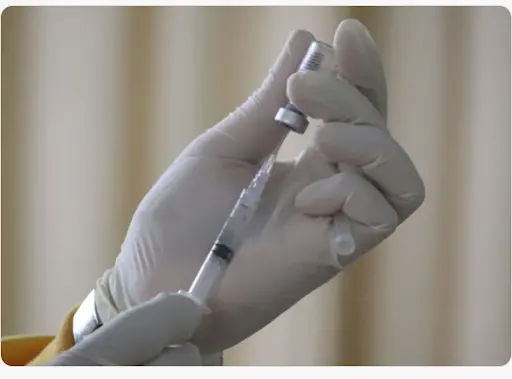
South Africa’s first consignment of lenacapavir (LEN), the twice-yearly anti-HIV injection, arrived at OR Tambo International Airport last week. Photo: Mufid Majnun/Unsplash

SA’s first batch of LEN jabs will arrive in February. Use Bhekisisa’s dashboard to find out who should get them

Who should get what slice of the pie once the medicine is available in public clinics? And are numbers alone what would drive decisions?

To end Aids by 2043, the South African government says it could get a group of local pharmaceutical companies to make generic shots of lenacapavir from 2027 onwards. There is, however, a hitch. None of the companies that will be involved have a licence to make the jab. (Julia Koblitz/ Unsplash)

SA wants to make its own six-monthly HIV prevention jabs by 2027. But there’s a hitch

None of the companies that will be involved have a licence from the inventor of Lenacapavir, Gilead Sciences, to make the jab

One in 10 clinics in South Africa will start to hand out a twice-a-year anti-HIV jab as early as February. The country’s medicines regulator, Sahpra, says it’s on track to announce its registration decision within the next few days, by the end of October. So who should get LEN first? (Anna-Maria van Niekerk)

The six-monthly anti-HIV jab could be in 360 clinics by February. Who should get the first doses?

The country’s medicines regulator Sahpra says it’s on track to announce its registration decision by the end of October

Two Indian generic drugmakers — Hetero and Dr Reddy’s — will be funded by the Gates Foundation and Unitaid, respectively, to produce and sell the twice-a-year anti-HIV shot around R692 per person per year. (Anna-Maria van Niekerk)

Two drugmakers will sell the 6-monthly anti-HIV jab for the price of the daily prevention pill

Hetero and Dr Reddy’s will be funded by the Gates Foundation and Unitaid to produce and sell the twice-a-year anti-HIV shot around R692 per person a year

The health department anticipates that it could start to use government money to buy cheaper generics of anti-HIV jab the lenacapvir by April 2027. (Unsplash)

SA plans anti-HIV jab roll-out at hundreds of clinics by April

The health department hopes to make the twice-a-year anti-HIV injection lenacapavir available soon and to be buying generics by 2027

Research indicates the anti-HIV jab, lenacapavir, protects women completely and works almost as well for men, transgender and nonbinary people. Photo: Marko Milivojevic/Pixnio

SA gets R520 million to buy the twice-a-year anti-HIV jab – but there’s a snag

The country isn’t getting extra money from the Global Fund to Fight Aids, TB and Malaria; it has to use cash from a grant it has already been awarded and was cut by 16% in June

Attention deficit and hyperactivity disorder affects 5% to 7% of schoolgoing children, but doctors can only prescribe treatment for a month at a time

Monthly prescription rule blocks ADHD treatment for South African children

Attention deficit and hyperactivity disorder affects 5% to 7% of schoolgoing children, but doctors can only prescribe treatment for a month at a time, so don’t get too much…

South African healthcare workers say the country’s regulations stop them from finding alternative, more climate-friendly ways of running hospitals and dealing with waste. (Canva)

Waste, food and power: How hospitals fuel climate change

Almost 5% of the world’s carbon emissions come from the healthcare sector. Rethinking how hospitals run can get this down. But healthcare workers say regulations stop them from…

During the Covid-19 pandemic, the South African Health Products Regulatory Authority had to speed up its approval of new medicines while still ensuring that they were safe and effective.
(Photo by Dinendra Haria/SOPA Images/LightRocket via Getty Images)

Three ways Covid sped up SA’s medicine approvals process – and how it can help the National Health Insurance scheme

During the Covid-19 pandemic, the South African Health Products Regulatory Authority had to speed up its approval of new medicines while still ensuring that they were safe and…

Boitumelo Semete-Makokotlela leads the South African Health Products Regulatory Authority (Sahpra). Image: Saphra.

‘Call me Tumi’: Meet the young woman who heads SA’s medicines regulator

Boitumelo Semete-Makokotlela leads the South African Health Products Regulatory Authority (Sahpra) — a public entity few people knew about until the Covid-19 pandemic hit

(Photo by Mahmoud Issa/SOPA Images/LightRocket via Getty Images)

Burn them — that’s what happens to expired Covid vaccines

Vaccines don’t last forever. When they reach their expiration date, the jabs need to be disposed of in a way that ensures they aren’t retrievable. A waste management company…

Bhekisisa director Mia Malan speaks on The Science Inside show about ARV shortages on Voice of Wits radio station.

HIV prevention should be like fast food. This data shows why

KwaZulu-Natal’s state facilities are in the lead when it comes to stocking HIV prevention medicines — 97% of them do — and the Western Cape is the only province where men use HIV…

Bitter pill for complementary medicine sector

Here’s who is in charge of buying medicines in South Africa

South Africa’s public hospitals and clinics won’t be getting a new Covid-19 treatment called molnupiravir. The tablets have regulatory approval but they aren’t the right fit for…

Laboratory technicians wearing full face masks and protective suits work to produce molnupiravir, the first tablet drug used to treat coronavirus disease (COVID-19), at Eva Pharma in Cairo, Egypt, February 10, 2022.
 (Ziad Ahmed/NurPhoto via Getty Images)

Why South Africa won’t be using the Covid-19 pill

South Africa is unlikely to buy a new oral Covid-19 pill called molnupiravir, despite the drug having been approved for use in the country. That’s because deciding to spend money…

Used vials of the Johnson & Johnson Covid-19 vaccine. (Photo by Michael Ciaglo/Getty Images)

Wait, donate, demolish: Why millions of South Africa’s vaccines will never be used

Children aged five to 11 get smaller doses of the Pfizer vaccine than adults. That means the government will have to buy new vials to vaccinate this age group but the health…

How South Africa’s ivermectin use slips through the cracks

There is less demand for ivermectin when South Africa is between Covid-19 waves. But nobody is tracking how many people may be using the animal formulation

(Photo by Mahmoud Issa/SOPA Images/LightRocket via Getty Images)

Russia’s Sputnik V Covid-19 vaccine turned down over HIV concerns

The Russian-produced vaccine might increase the risk of vaccinated males getting HIV, says South Africa’s health products regulatory authority

South Africa’s first paediatric vaccine trial participant received the first shot of the Sinovac Covid-19 vaccine
 (Photo by Darren Stewart/Gallo Images via Getty Images)

South African adolescent receives first shot in Sinovac trial

The youth is the first of 2 000 South African children taking part in the global trial to test the CoronaVac vaccine

A healthcare worker acknowledges a boy during a COVID-19 vaccination outreach program on September 08, 2021 in Kampung Lok Urai, a remote village at Gaya Island outskirt of Kota Kinabalu, Sabah, Malaysia. Malaysia’s vaccination efforts have started to reach the country’s remote islands such as Gaya Island, off the coast of eastern Sabah state, which is located in Borneo. Better known for their white sand beaches and pristine waters, which were major attractions for divers and tourists before the COVID-19 pandemic struck, the vaccination of populations in remote locations in Eastern Malaysia has been gathering pace as officials reach far-flung islands not often visited by teams of health workers. (Photo by Annice Lyn/Getty Images)

As CoronaVac trials kick off children talk about their views on Covid-19 vaccinations

Children from the age of six months to 17 years will take part in vaccine trials

No link found between deaths and Covid-19 vaccine, health regulator says

Side-effects are common when you receive any type of vaccine, a senior vaccine researcher says