


South Africans are being called on to become citizen scientists this weekend as conservationists revive the country’s first national crane census in two decades, hoping to uncover the true state of the iconic birds amid worrying declines in some populations.
The four-day count, running from Friday to Monday, comes as South Africa’s national bird, the blue crane, has been uplisted to vulnerable after its numbers fell by almost 40% since 2010.
The Endangered Wildlife Trust (EWT) and the International Crane Foundation (ICF) have revived the National Crane Census, last held annually between 1998 and 2006, to update population estimates and map the distribution of the country’s crane species.
The information will help scientists verify whether apparent population trends are accurate and guide future conservation efforts.
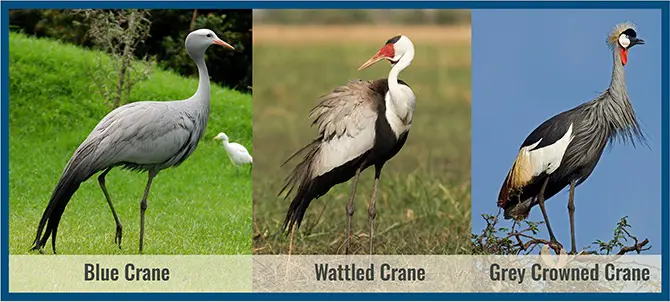
South Africa's three crane species — blue, wattled and grey crowned cranes — tell different stories. While targeted conservation work has helped the endangered wattled crane recover in parts of KwaZulu-Natal, the country’s endemic blue crane has suffered sharp declines. Conservationists need a clearer picture of where all three species are thriving or disappearing.
Lara Fuller, the Drakensberg project manager of the African Crane Conservation Programme, said the crane census was being restarted, using modern technology — in this instance WhatsApp — to make it easier than ever for people across the country to participate.
Fuller said the EWT and the ICF partnership had been working on crane conservation alongside Ezemvelo KwaZulu-Natal Wildlife, the KwaZulu-Natal Crane Foundation and Eskom for the past 30 years. The collaborations had resulted in significant advances in crane conservation across the country.
“Crane conservation in South Africa relies on the information submitted by landowners and the public in order to monitor numbers and localities of all three species. You are our citizen scientists.
“We are, therefore, calling on all South Africans to assist us in this important citizen science initiative to verify whether observed increases and declines in crane populations are accurate. By working together, we can better understand these trends and contribute to meaningful conservation action.”
She said each crane species had unique ecological requirements and expanding understanding of the needs was essential for their long-term survival.
The EWT said the Drakensberg was a global hotspot for the three crane species, which were regarded as flagship species for conservation and indicators of healthy wetlands and grasslands. They faced growing threats from habitat loss caused by mining, development and land-use changes as well as collisions with powerlines and other infrastructure.
It said cranes were among the world’s most culturally significant birds, including in South Africa. They were widely associated with longevity, wisdom, fidelity, peace, vigilance and hope, making them “powerful ambassadors for both natural and cultural heritage”.

Last year, the wattled crane in South Africa was downlisted from critically endangered to endangered, with an estimated population of about 288 individuals, primarily in KwaZulu-Natal. Fuller noted that it represented a significant conservation success.
“However, this population remains critically small and the increase has been largely
confined to KwaZulu-Natal. In Mpumalanga, the breeding population has declined dramatically from 45 pairs in the 1990s to just four pairs in 2025.
“Understanding the current distribution of wattled cranes across South Africa is essential to ensure continued conservation success and to support future range
Expansion,” Fuller said, adding that the national crane census would play a key role in identifying populations outside KwaZulu-Natal.
The country’s grey crowned crane population is considered stable, with an estimated 7 000 individuals, although the species remains classified as endangered.
“Notably, South Africa hosts the only population in Africa that is not in decline,” Fuller said. “Annual aerial surveys conducted in KwaZulu-Natal show steady population growth. However, outside this province, very little is known. Existing data suggests that declines may be occurring elsewhere in the country.”
The census will help determine whether the suspected declines are real and where conservation efforts should be focused.
The blue crane has been uplisted to vulnerable because of population declines in the Western Cape and potentially in the Karoo. The population is estimated at about 30 000 individuals, reflecting a 39% decline since 2010.
As this species is endemic to South Africa, its global survival depends entirely on conservation efforts within the country.
“There is also evidence that the blue crane’s range is shifting northwards from the Western Cape and westwards in the Karoo, highlighting the need to better understand how this species is adapting to changing landscapes,” Fuller said.
Citizen scientists can WhatsApp the number of cranes spotted, the species of cranes and their location to 060 086 9053.
The information gathered during the survey will be kept confidential, including the contact details of participants. The results of the survey will be communicated once the information has been analysed.