


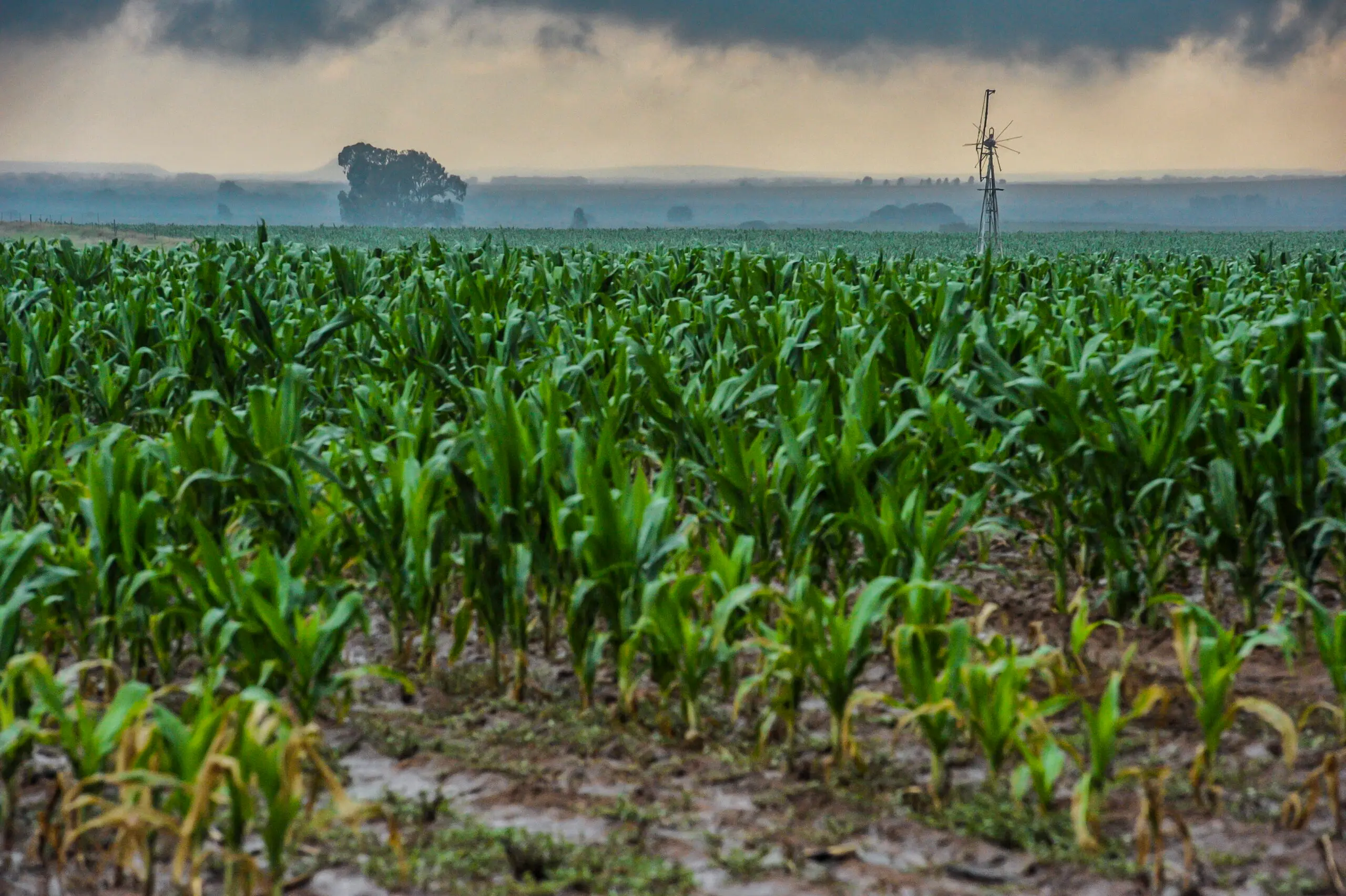
An exceptionally early and rapidly intensifying El Niño could bring a hotter, drier summer to South Africa, with scientists warning of unprecedented heatwaves even as relatively healthy water reserves and food supplies provide some protection against the impacts.
The El Niño is no longer a looming threat, said local scientists at an ENSO Reference Group summit on Thursday. It is already established and intensifying, with ocean temperatures in the central and eastern equatorial Pacific rising at an unusually rapid rate.
“People are asking what about this coming El Nino, so the news is that there’s no more coming El Nino, it’s here,” said University of Pretoria meteorologist professor Willem Landman, “and it’s just intensifying. There’s no doubt that there’s an El Nino already happening…”
The ENSO group, which brings together scientists from South African research institutions and agencies, said the 2026/27 event was developing into an exceptional El Niño in both its timing and magnitude.
Forecasts from the University of Pretoria’s CSIRiMM model and the international CCSR-IRI multi-model ensemble indicate a peak towards the end of 2026 or early 2027.
Landman said Niño-3.4 sea-surface temperature anomalies had exceeded 2°C in August and were warming at an unusually rapid rate, with the event potentially becoming one of the strongest on record.
The 2025/26 summer produced record crop yields, according to the ENSO Reference Group, providing a buffer for food supplies. But the scientists warned that these buffers did not eliminate the risks posed by an unusually strong El Niño combined with a warming climate.
Professor François Engelbrecht, the director of the Global Change Institute at Wits University, said the event was unfolding in the warmest world humans had measured.
The year 2024 was the warmest calendar year on record, at about 1.6°C above pre-industrial levels, while 2023 to 2025 averaged about 1.5°C above.

The latest European Centre for Medium-Range Weather Forecasts ensemble showed almost every member predicting a Niño-3.4 anomaly above 3°C. If this materialises, Engelbrecht said, 2027 could reach about 1.7°C above pre-industrial levels and become the warmest year on record
“If the El Niño is going to bring its normal signal of below-normal rainfall, then it’s at the same time going to bring the warmest summer on record with unprecedented heatwaves. I think this is likely and we have to prepare for this risk,” Engelbrecht said.
The ENSO Reference Group said forecast models were projecting a higher likelihood of a warmer and drier summer in South Africa, although they could not yet say how large the rainfall or temperature anomalies would be.
Strong El Niños generally tend to produce drier conditions over eastern South Africa, but the relationship is far from uniform. The very strong 1997/98 El Niño, for example, had relatively little influence on central South African weather and crop yields, the scientists said.
Engelbrecht said uncertainty was particularly pronounced over South Africa’s eastern escarpment and the Integrated Vaal River System.
Climate models broadly retain the El Niño drying signal over southern Africa, but agreement breaks down over eastern South Africa. In about one-third of models, the relationship reverses over the Integrated Vaal River System, with El Niño becoming wetter rather than drier; about two-thirds retain the drying relationship.
“The most likely outcome for this summer is one of below normal rainfall associated with above normal temperatures, possibly unprecedented heatwaves, temperature records being broken,” he said.
Engelbrecht said the 2021 Intergovernmental Panel on Climate Change (IPCC) assessment had found insufficient evidence to conclude that stronger El Niño events or more frequent La Niñas would occur in a warming world. But evidence had accumulated since then that stronger El Niños could occur more frequently.
“There is growing evidence that strong and very strong (super) El Nino events will occur more frequently in a warmer world,” he said.
He said the next IPCC assessment could conclude that there was medium confidence in this trend.
A recent study using 1 000 years of coral temperature records from the eastern Pacific found that El Niños over the past four decades were 46% stronger than those earlier in the proxy record. Other modelling studies point in the same direction.
Heatwaves are already becoming more dangerous in a warming world, Engelbrecht said.
“These unprecedented heatwaves in Europe have now been shown to have caused 35 000 excess deaths this summer. That’s people with co-morbidies and older people dying prematurely because of heat stress.
“And, for me, this is the biggest risk we are heading towards this summer in South Africa. The two warmest summers in South Africa’s history with the severe heatwaves are the summers of 2015/2016 of the super El Niño and the summer of 2023/2024 with the strong El Niño.
“So we should be absolutely prepared for the possibility that this super El Niño will bring unprecedented heatwaves.”
South Africa is extremely vulnerable. “We have millions of people in informal housing. Now if you’re an elderly person and you live in an informal house and now there’s water cuts - and we are all used to these water cuts in Tshwane and Johannesburg - and you don’t have easy access to cool water … It’s life-threatening.
“Heatwaves are, in general, becoming unprecedented in a warmer world and these unprecedented heatwaves in Europe have now been shown to have caused 35 000 excess deaths this summer. That’s people with co-morbidies and older people dying prematurely because of heat stress. That is a major risk for South Africa this summer.”
“And then, of course, heatweaves are really harmful for our maize crop and for our water resources via enhanced evaporation so it’s a summer of major risk we have to look in the eye at this point in time.”
The ENSO Reference Group said water-resource officials should anticipate increased demand from households and agriculture.
Relatively good water reserves from the previous two seasons could cushion the effects of a drought, but drawing them down could affect water security in subsequent seasons. They also do not resolve persistent water-reticulation and supply problems.
Record 2025/26 crop yields and reduced exports have also left surpluses of some products, providing a buffer for food supplies. But production losses may not be absorbed, with geopolitical and economic conditions, heat and livestock-feed shortages posing additional risks and wider economic implications.
Despite these buffers, the group urged households, businesses and organisations to consider the risks to their livelihoods and assets, and to follow weather forecasts and warnings. The National Disaster Management Centre and provincial structures have already begun planning, it said.
“We should anticipate that the 2026/27 El Niño event will breach records and emerge as the strongest such event on record. This is based on its trajectory and stage of development and on model projections,” the group said.
It acknowledged that South Africa was entering an unprecedented situation, but said the likely impacts could be inferred from similar past events.
The combination of those historical impacts and current model projections suggests that a drier summer, with less rainfall across the summer rainfall region, and a warmer summer across the country should be anticipated.
But the group stressed that relatively healthy water and food supplies should not be mistaken for immunity from the risks. “While water and food supply are in relatively good shape, the risks of severe drought and heat events are not offset,” it said.
For now, the scientists' advice is to watch how the event develops, follow short-term weather forecasts and warnings and prepare for what could be a very challenging summer.