


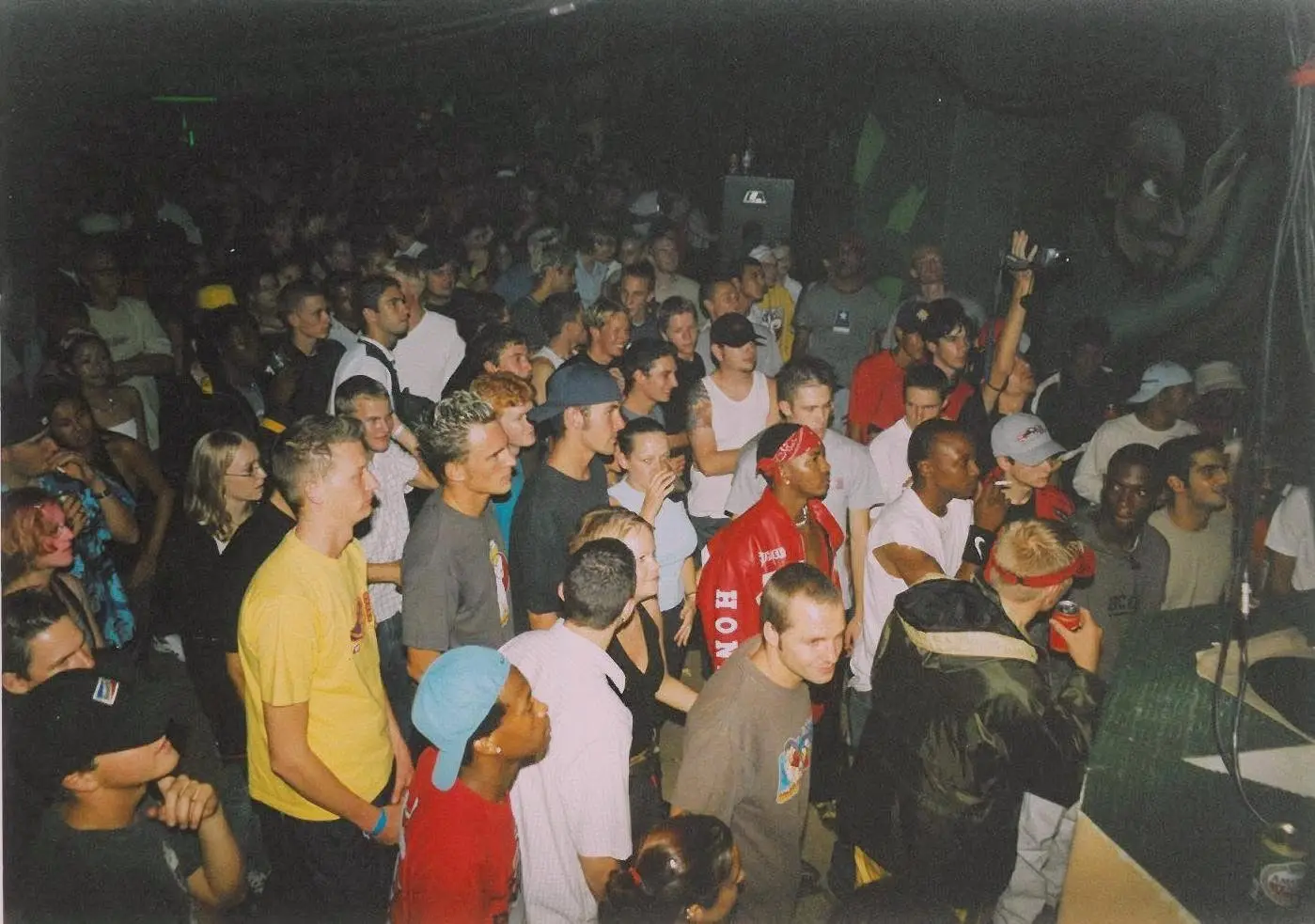

There was a time when a night out was not planned in a WhatsApp group. It just happened. You heard about a place from a friend of a friend. You arrived late and you left later.
Somewhere between the sticky floor, the flashing lights and that one song everyone somehow knew the words to, you felt like you were exactly where you were meant to be.
South Africa had some iconic nightlife scenes a few years back.
Entire subcultures were built around a dancefloor. That world now feels like it belongs to another era. I want to spend a few minutes there before it disappears completely and then talk about what has replaced it.
If you wanted to understand Johannesburg nightlife in the 1980s and early 1990s, you started in Hillbrow. Much more than just a party district, it was a cultural melting pot at a moment when the country badly needed one.
Chelsea Underground was less a club than a creative sanctuary, where jazz spilt into the early hours and nobody much cared who you were once you walked through the door.
A few blocks away, Colours and Skyline were doing the opposite: big dancefloors, flashing lights and pure escapism — rooms where Madonna and disco ruled and the outside world switched off for a few hours.
The Electric Workshop blurred the line between club and live venue.
If you wanted something darker, you went looking for The Dungeon in Yeoville: all goth and industrial, with a cult crowd who practically lived there. There was no single Hillbrow and that was the appeal.
By the mid-1990s, everything got louder, bigger and more electronic.
Carfax in Newtown became the heartbeat of underground Joburg: raw, industrial and unapologetic. It was a music crowd, not a scene crowd.
Out at the old Randburg Waterfront, Thunderdome had the lasers, the multilevel floors and the Eurodance anthems — suburban rave culture at its absolute peak.
In Rosebank, James Velvet offered something slicker, with funk and soul and a crowd that dressed for
the occasion.
Cape Town, as always, did its own thing. Club Eden was ahead of its time, with acid house and a warehouse feel that mirrored what was happening overseas.
The Fringe and the Dorp Street Theatre Cafe leaned into the creative crowd: indie, alternative and cabaret — the sort of places where the musicians and the audience blurred into one another.
Later, The Waiting Room gave Long Street its rooftop identity: messy, vibrant and unpredictable. The Heidelberg Tavern kept the live music scene loud and consistent.
Durban came with a sea breeze. Joe Cool’s is probably the best-known survivor, a spot where the line between day drinking and nightclubbing never existed.
Before that, there was Magoo’s Bar at the Parade Hotel, a popular beachfront venue that became part of the country’s history for the worst possible reason after the 1986 bombing.
Then came Ruby Tuesday, Zanzibar and Rockafellas: packed floors, holiday crowds and that lekker Durban energy.
Inland, the student cities had their own legends.
If you studied in Pretoria, you probably have a story about Zeplins or Cool Runnings.
In Bloemfontein, the Mystic Boer became a rite of passage.
In East London, the institution known as Numbers remains a favourite.
In Plettenberg Bay, The Cave will bring back many good memories.
In Gqeberha, the Boardwalk Club carried the coastal party energy into the Eastern Cape.
The nightclubs form part of many nostalgic stories across the country.
What happened? When did clubbing stop being cool?
The all-night, lose-yourself, no-phones version of nightlife has been replaced by something more curated, more controlled and far more visible. People arrive later, leave earlier, spend more and dance less.
Part of that is economic because a night out is properly expensive now. Part of it is digital because the moment is no longer the moment unless it is documented. Just think of the value of a Strava screenshot versus a picture of a tequila shot. Part of it is generational and this is where changing consumer tastes and preferences come in.
Young people are drinking much less. In 2024, a quarter of American adults of legal drinking age did not consume alcohol, according to a Circana survey.
Morgan Stanley research suggests Gen Z drinks about 30% less than millennials did at the same age, although other analysts put the gap closer to 20%, so the exact figure should be treated with caution. Either way, the generation filling bars is the one least interested in them.
They have not stopped socialising but the environment for socialising has changed. They have swopped the dancefloor for the start line.
Strava reported that running clubs recorded on its platform grew three-and-a-half times in 2025, part of a near-quadrupling of clubs on the platform overall. When the company surveyed its users, 37% said they saw running clubs as good places to meet new people.
People are joining a 6am run to do what their parents did at midnight in Hillbrow. They are meeting partners, making friends, finding their crowd and getting their social fix while getting their dopamine fix: socialising sober, in daylight and in running shoes.
The infrastructure is following the behaviour, as it always does. The global sauna and spa market was valued at $11.8 billion in 2025 and is forecast to roughly double to $22.4bn by 2034, according to an industry report, although market-sizing studies define the category differently and estimates vary.
Whatever figure you prefer, the sector is growing rapidly. Bathhouses, cold plunges, run clubs and wellness retreats: a whole economy is being built on the assumption that the next generation wants connection without the hangover.
Nostalgia is a tricky thing because, when we talk about Chelsea Underground or Joe Cool’s, we are not really talking about venues. We are talking about who we were when we walked into them: carefree, curious and slightly reckless.
Clubbing was about music but it was also about freedom, discovery and finding your people in a room full of strangers. The run club promises some of that too, in its own bright and sober way. We want the same thing. We are just looking for it somewhere else.
Something has been lost and it is worth highlighting.
The old nightlife asked nothing of you except that you show up and let go. There were no personal bests or kudos to collect. The post-party, post-alcohol economy rising in its place is healthier, cheaper to your liver and almost certainly better for you. But it is also more measured, more visible and more productive. Can a culture be wellness-tracked and free at the same time?
Somewhere out there, someone remembers the exact moment a song dropped at Colours, when they met their partner at The Waiting Room or when a 2am conversation at Numbers changed the course of their future. That is the real legacy of South African nightclub culture: not the buildings or the brands but the memories and the moments.
If that feeling of moving in the club is now moving to the running track, the sauna and the cold plunge, I hope it survives the journey. Because it was never really about the alcohol. It was about abandonment. The new generation of clean living is well rested and beautifully documented.
In the new social arena of fun and fitness, it will be interesting to see the value of this category in the retail space over the next few years.
