


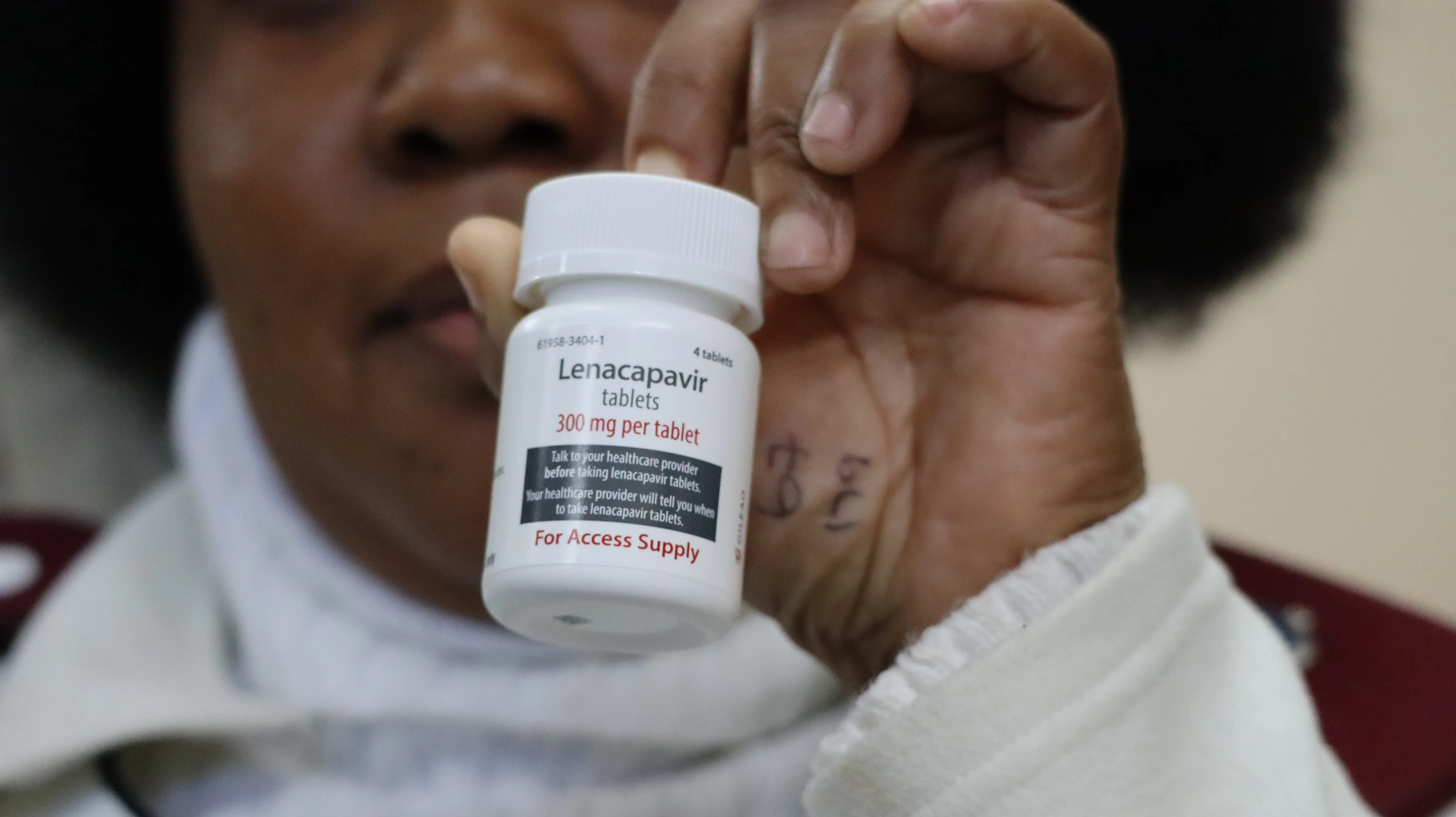
There is a photograph I keep in my mind. A young woman in Mpumalanga, walking into a clinic and receiving two injections that will protect her from HIV for the next six months. Lenacapavir. The most significant HIV prevention breakthrough in a generation. It exists because decades of science, political will, community advocacy and global investment converged at exactly the right moment.
The convergence is now under threat. And on 22 and 23 June, in New York, the world gathers with both the tools and the evidence to finish what it started. What it needs now is the will.
The UN General Assembly High-Level Meeting on HIV/Aids is where governments make binding political commitments. Commitments that determine whether clinics stay open, whether prevention programmes reach the people who need them most and whether the goal of ending Aids as a public health threat by 2030 remains achievable or quietly gets abandoned.
This is the most consequential HLM since 2001. Not because the science has failed us; it has never been more powerful. What we are losing is the political will and the funding to deploy it.
Last week, UNAids released its Global Aids Brief before this meeting. The findings demand the attention of every leader travelling to New York. Globally, development assistance from multiple countries fell by 23% in 2025 — the sharpest drop on record. HIV testing programmes dropped by 22% in high-burden settings between 2024 and 2025.
PrEP (pre-exposure prophylaxis) uptake fell by 38% across 62 countries reporting to UNAids. Funding for condoms has been cut by more than 90% in some cases. The brief also documents a dangerous rollback of rights where criminalisation of marginalised populations is increasing for the first time since UNAids began tracking the trends.
These are not bureaucratic footnotes. They are the architecture of the epidemic's return.
Winnie Byanyima, the executive director of UNAids, was unambiguous: "There is no question that this is the most serious disruption in the HIV response since the world came together to fight this disease." I see that disruption every day in the three countries I serve.
In South Africa, more than 8 000 skilled healthcare workers have lost their jobs since the Pepfar freeze, multiple clinics have closed and HIV testing, treatment and prevention services have been significantly reduced.
In Eswatini, community-led and peer-led facilities that formed the backbone of the response stopped functioning.
In Lesotho, where US funding had historically covered between 50% and 80% of HIV-related healthcare services, the impact was immediate and severe.
Without effective transition plans, modelling studies project that the withdrawal of Pepfar funding in South Africa alone could lead to 601 000 HIV-related deaths and 565 000 new infections over the next 10 years.
These are not hypothetical numbers. They are lives being lost in communities I know by name.
And yet there is also a story of resilience that must be told. Eswatini has achieved the 95-95-95 targets — meaning 95% of people living with HIV know their status, 95% of those are on treatment and 95% of those on treatment have suppressed viral loads.
South Africa and Lesotho were both on trajectory to reach the targets when the cuts hit. That progress was not given to us. It was built by communities, by health workers and by governments that chose to invest. It must not be dismantled by decisions made in Washington.
The Global Aids Strategy 2026-2031, adopted in December 2025, charts a clear path forward. It calls for a shift from donor-led systems to country-owned responses, from intervention-centred approaches to people-centred ones, from fragile external dependency to sustainable domestic investment. It is the right framework. The Political Declaration coming out of New York must match it — in ambition, in specificity and in accountability.

What must the HLM deliver? Three things.
Ambitious, funded targets for 2030. Not language — commitments. Not aspirations — budgets. The funding gap in the global HIV response is not a mystery. It is a choice. New York must be where that choice is made differently.
Full investment in community-led responses. When communities lose funding, the entire response loses reach, trust and effectiveness. Peer educators, women's organisations, youth networks and people living with HIV — these are not supplementary to the response. They are the response. They must be resourced as such.
A rights-based approach with no carve-outs. Every country that criminalises the communities most at risk is making itself less capable of ending Aids. The Political Declaration must name this and commit to reversing it.
The tools to end Aids exist. The science is powerful. The evidence on what works is overwhelming. What stands between where we are and where we need to be is political will — and New York is where political will is made.
The communities we serve cannot afford for the world to get this wrong.
Alankar Malviya is the multi-country director for UNAids South Africa, Lesotho and Eswatini and has more than 30 years of experience in global health and development.
This is the first of a five-part series on the High-Level Meeting on HIV (HLM)