


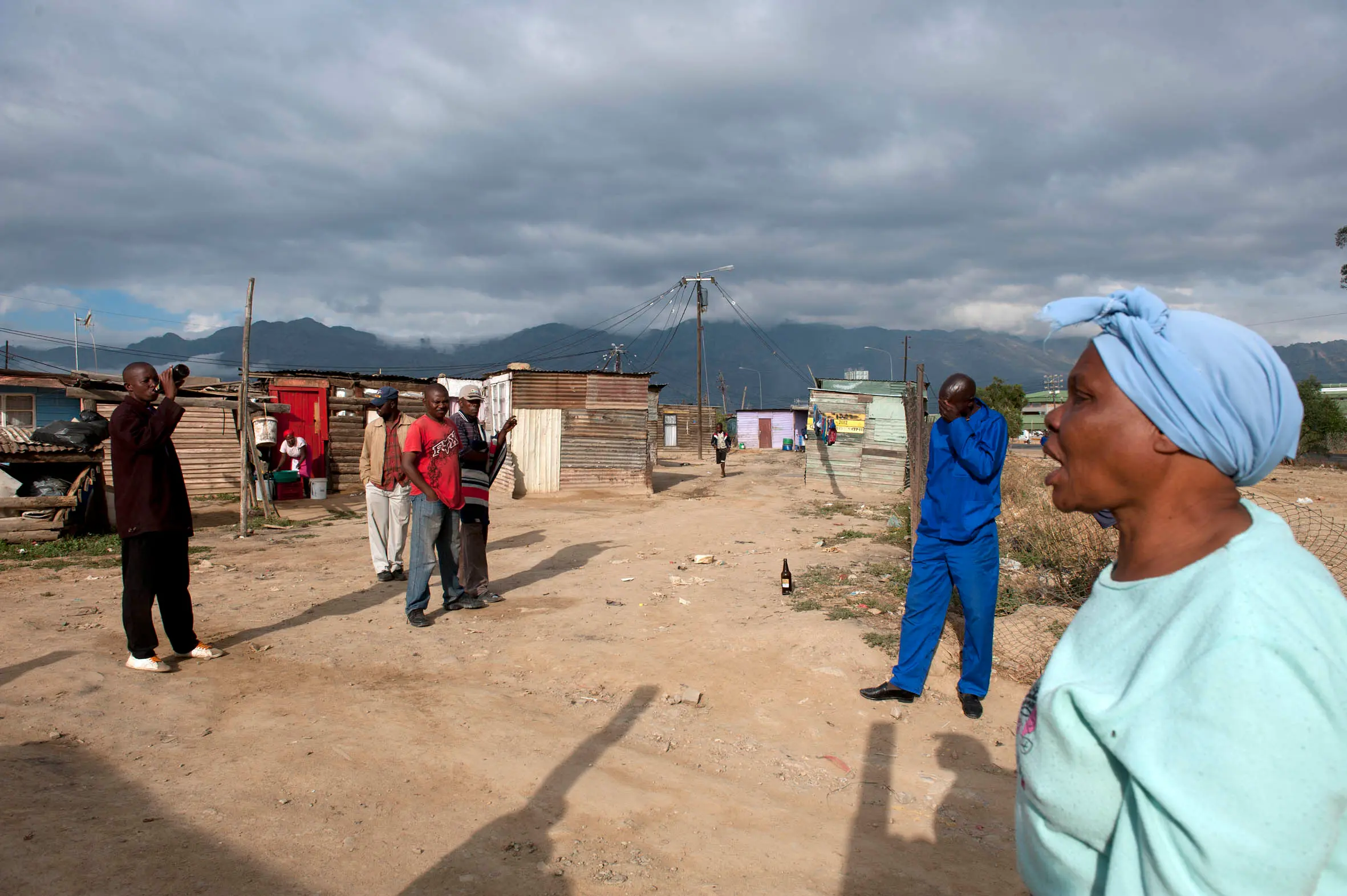
Two words: “Indoda must.” A cultural expectation so familiar in South African life that it often goes unquestioned but for many men, it has become a quiet, persistent financial burden.
Loosely translated as “a man must provide”, the phrase has come to define masculinity in relationships, reshaping how worth, love and responsibility are judged.
A man who cannot pay rent, school fees or even a dinner bill is often not just seen as struggling but as failing at being a man.
From an early age, many men in South Africa are taught, directly and indirectly, that providing is not just a responsibility but proof of masculinity.
In relationships, financial provision is framed as care.
Among peers, especially in everyday spaces like taxis, taverns, street corners and increasingly on social media, a man’s status is often measured by what he earns and what he can spend.
To “be a man” is to provide. To fall short is to be diminished.
The expectation persists even as the conditions that support it are collapsing.
In a country where unemployment remains structurally high and economic insecurity is widespread, the idea of the “provider man” is increasingly difficult to sustain in practice.
Yet the cultural script has not shifted to match the reality. Instead, it continues to demand financial performance from men in a context that often makes that performance impossible.
In the first quarter of 2026, South Africa’s unemployment rate was 32.7% and for young people aged 15 to 24 it reached 60.9%.
For millions of men willing to work but unable to secure a stable income, the expectation to provide does not weaken; it intensifies.
Sociologists describe the pattern as hegemonic masculinity, the dominant idea that a “real man” is expected to be strong, emotionally controlled and above all, financially successful.
While not all men live up to this ideal, it remains a powerful social standard. Men who fall outside it are often quietly marked as less respectable, less desirable or less authoritative, regardless of their character or effort.
This idea does not remain abstract. It shapes how men are treated and how they see themselves in everyday life. When masculinity is measured so narrowly, it produces pressure that extends far beyond income. It affects relationships, emotional well-being and the ability to ask for help without feeling diminished.
In intimate relationships, it can turn into a transaction in which financial contributions become proof of worth. And when men are unable to meet these expectations, many withdraw emotionally rather than risk being seen as inadequate.
Over time, this silence can carry real consequences for mental health, as well as for how men navigate stress, failure and identity.
The pressure is not only social, but also psychological.
As South African Depression and Anxiety Group (Sadag) board member Nkini Phasha puts it, South Africa faces a “silent pandemic” when it comes to men and mental health.
Men do not come forward. They battle with the stigma of admitting emotional distress or a psychological problem because to lose control is to risk being labelled weak or worse, “not a real man”. Phasha describes how a panic attack can feel like losing control of one’s life entirely. And so, rather than seek help, many men “suffer in silence”.
Organisation such as Sadag have repeatedly documented this pattern: men are far less likely than women to reach out, even when struggling deeply.
In a context where emotional struggle is read as failure to “hold it together”, silence becomes a default survival strategy. The result is deepening isolation and delayed access to support, especially when economic stress and identity expectations overlap.
Yet none of this is inevitable. Cultural scripts are not laws of nature. They are written by people and they can be rewritten by people.
The first step is to name the problem openly. For too long, “Indoda must” has been treated as common sense rather than a contested ideal.
In families, communities and the media, we can begin to ask a different set of questions: Must a man’s worth always be measured in rand? Does providing mean only money or can it include presence, protection, care and emotional labour?
Across South Africa, there are men who live this quieter, healthier version of masculinity. Fathers who show up to parent-teacher meetings even when they cannot afford the school fee increase.
Partners who share domestic work without calling it “help.” Young men who refuse to shame a friend for being unemployed. These acts do not make headlines but they are the seeds of a more liveable definition of manhood.
What is missing is not the existence of alternative masculinities but their visibility.
If we only celebrate the man who pays, we erase the man who stays. If we only reward financial success, we tell millions of unemployed or working-class men that they have nothing of value to offer. That is not only cruel but also wasteful of the humanity we claim to value.
This does not mean abandoning responsibility. Providing for a loved one is a good thing.
But tying that provision so tightly to masculine identity that failure to earn becomes failure as a human being helps no more. It hurts men. It strains relationships. And it quietly reinforces the inequalities that keep South African society divided.
We need a new shorthand. Not “Indoda must” as a command to earn but “Indoda stands”, a man shows up. A man listens. A man tries again after losing a job. A man asks for help when the weight becomes too much.
The measure of a man should not be the thickness of his wallet but the strength of his presence in the lives of those who depend on him.
That is a version of masculinity worth keeping. The rest can be left behind.
Oratile Mmolatlou is an MA Sociology candidate at the University of Johannesburg and an administrative assistant at the Faculty of Humanities Dean’s Office.