


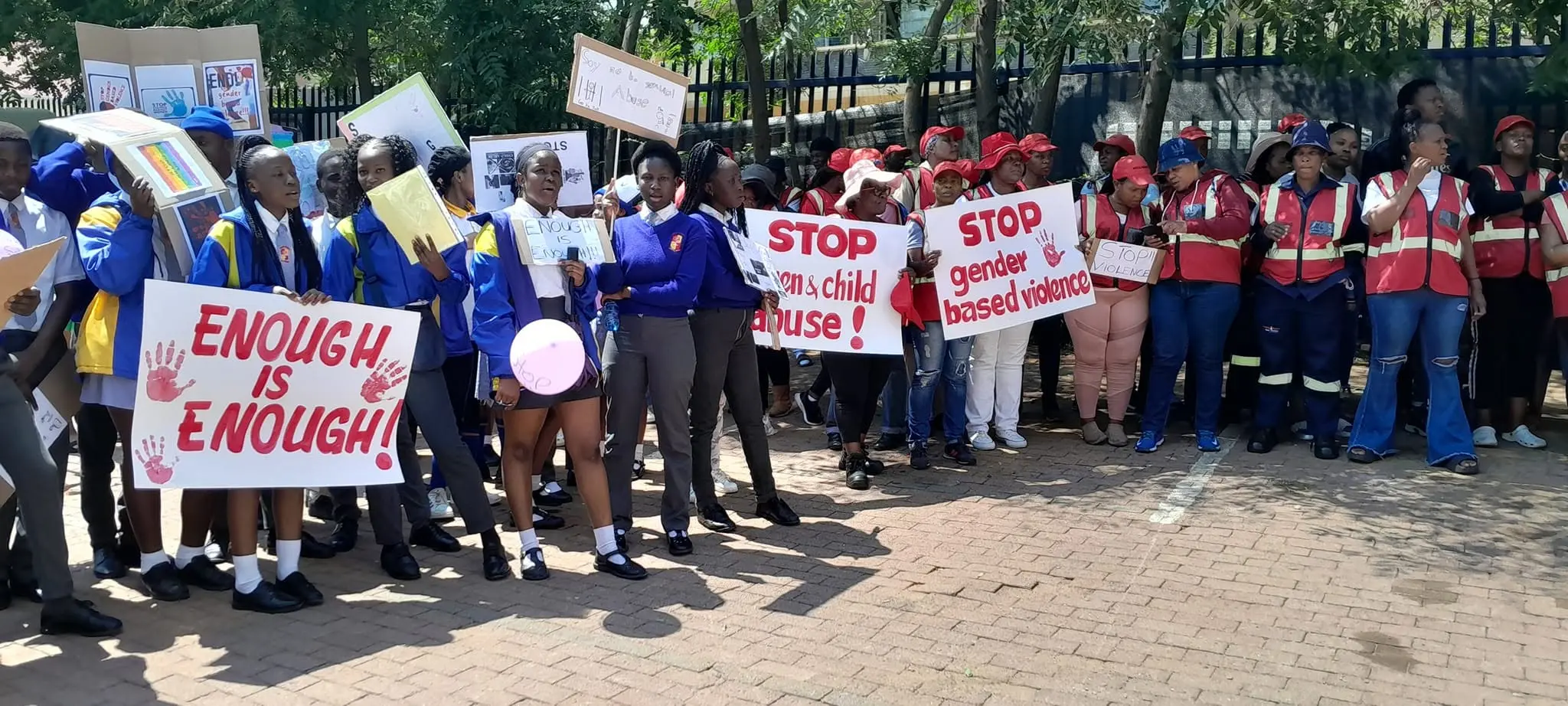
In November 2025, South Africans turned their profile pictures purple in solidarity with victims of gender-based violence and femicide.
For a brief moment, it seemed as though the country had reached a rare consensus. Gender-based violence and femicide had become impossible to ignore. Women demanded solidarity. Politicians promised action. President Cyril Ramaphosa described the crisis as a national disaster.
South Africans were told that violence against women was everyone’s problem. Today, some of the loudest anti-foreigner campaigns in South Africa are being led by women.
I find this difficult to understand.
South Africa is not a xenophobic country. At least, I do not believe it is. This country has opened its doors to people fleeing war, persecution and economic collapse. It has long been a place where people arrived carrying little more than hope. Our history should make us sensitive to exclusion. We know what it means to be treated as less than human.
That belief is reinforced by the fact that government officials have repeatedly spoken out against attempts to deny people healthcare, education or basic services on the basis of nationality. Yet no one can ignore what is happening around us.
The chants of “abahambe” have become familiar. Videos circulate daily. Podcasts, social media accounts and political activists speak openly about removing foreign nationals from schools, clinics and communities.
What surprised me was not the anger. South Africans have legitimate frustrations. Unemployment remains devastatingly high. Public services are under strain. Crime continues to shape daily life.
What surprised me was who was carrying the message.
Women.
In January 2026, protests outside Addington Primary School in Durban drew national attention as activists demanded action against the enrolment of foreign learners.
Yet the department of basic education has stated that foreign learners account for only 1.8% of public-school enrolment nationally. The overwhelming majority of learners in South Africa are South African citizens. Nevertheless, mothers found themselves confronting other mothers over access to education.
The same tensions have emerged in healthcare. In recent years, anti-foreigner demonstrations have repeatedly targeted public clinics and hospitals, particularly maternity wards.
Pregnant migrant women have become symbolic targets in a debate about public services, their presence presented not as a healthcare issue but as evidence of an alleged national crisis.
The consequences are not merely rhetorical.
In August 2025, Newzroom Afrika reported on the case of Grace Banda, 21, whose one-year-old daughter, Praise Banda, died after she was unable to access treatment. Banda alleged that when she took her child to a local clinic on 31 July 2025, she was turned away and told to seek assistance from a private facility because she did not possess a South African identity document. According to the report, her daughter died the following day, on 1 August 2025.
The South African government publicly condemned the exclusion of patients from public healthcare facilities on the basis of nationality, making clear that such actions were inconsistent with official policy. Yet the case remains a stark illustration of how quickly political hostility can spill into spaces meant for care and compassion.
Facts, however, rarely survive once fear becomes political currency.
A new language has emerged online. Women who associate with, defend or date foreign nationals are increasingly labelled “Afcon”.
The message is simple: their loyalty is suspect. Their relationships are treated as political acts. In some corners of social media, these women are accused of enabling what is described as an “invasion through procreation” — the idea that foreign nationals can establish a future claim to belonging through relationships, childbirth and family formation.
In this telling, the border is no longer merely a line on a map. It extends into the most intimate parts of life. Women’s bodies become another frontier to defend and their personal choices become matters of national security.
What began as a debate about immigration increasingly resembles a debate about who is entitled to belong. The irony should be obvious.
For years, women have demanded the right to make decisions about their own bodies, their own safety and their own lives without interference. Yet some now participate in movements that seek to police those same freedoms when foreign nationals are involved.
Perhaps patriotism now requires a hierarchy of compassion.
Perhaps some women deserve solidarity more than others.
Perhaps rights become negotiable once nationality enters the conversation.
If so, then we should at least be honest about it.
Because the treatment of migrant women reveals something uncomfortable about our politics. It suggests that many South Africans do not oppose the mistreatment of women in principle. We oppose the mistreatment of certain women.
The distinction matters.
A woman assaulted by her partner is a victim. A migrant woman assaulted by a foreign national often becomes a political talking point. A South African woman denied healthcare is a human tragedy. A migrant woman denied healthcare is treated as an immigration debate.
The suffering remains the same. Our response changes. That should concern all of us.
Every country has the right to regulate immigration. South Africa is no exception. Debating immigration policy is legitimate. Debating the capacity of public services is legitimate.
Demanding accountability from the government is legitimate.
Humiliating vulnerable women is not.
What worries me most is that we are beginning to confuse cruelty with patriotism.
The foreign woman at the clinic did not cause state capture.
The foreign child in a classroom did not collapse municipalities.
The migrant mother seeking healthcare did not create South Africa’s unemployment crisis.
Yet they are often asked to carry the blame for failures they did not create.
In a strange and deeply troubling way, South African men and women appear to have finally found common ground. For years, we struggled to unite against corruption, state failure and gender-based violence. Today, many seem united by something else entirely: opposition to the African foreigner.
That should give us pause.
Because solidarity is easy when it is extended to people we recognise as our own. The real test comes when it must be extended to those who are unpopular, vulnerable or politically convenient to exclude.
In November 2025, South Africans declared that violence against women was unacceptable. The question is whether we meant all women. Or only the women we consider South African.
Boris B Mukwambo holds an LLB from the University of Pretoria and a Bachelor of Social Science in Psychology from the University of KwaZulu-Natal. He is the founder of WellnesSA, a platform created to help bridge the gap between communities and essential social services. His work and interests are rooted in human rights, access to justice and community development. He is also a NABFAM-accredited family mediator.