


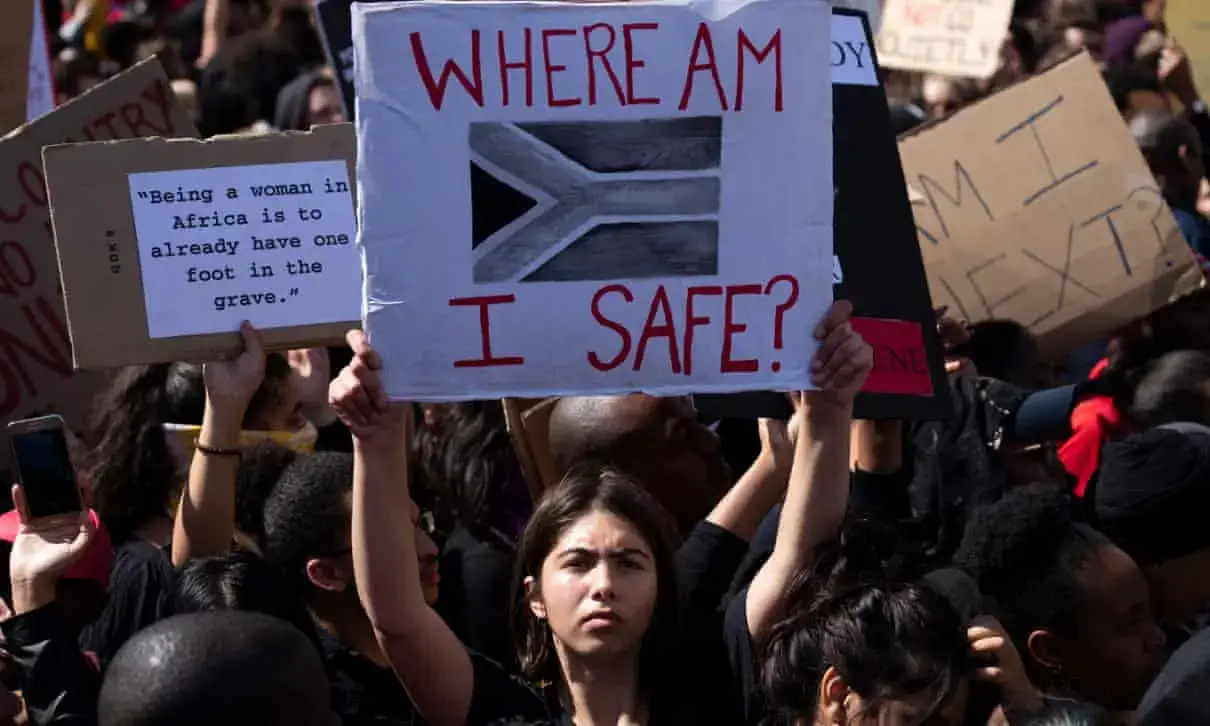
Every August, South Africa celebrates the strength of its women. We speak of resilience, courage and sacrifice. We praise women for holding families and communities together under difficult circumstances.
The tributes are well-intentioned. Too often, though, we celebrate women and girls for carrying burdens that should never have been placed on them.
Through the Nelson Mandela Children’s Fund’s Girl Power Project Against Violence, we engaged more than 17 000 women and girls in the 2025-26 financial year. They speak about unsafe streets and transport, harassment at school, violence in their communities and abuse in digital spaces.
There is another, less visible burden in the accounts. From an early age, girls are made to feel responsible for preventing the violence that might be inflicted on them. They are told to be careful about where they go, what they wear, how they speak, whom they trust and what they share online. They learn to change their routes, restrict their movements and constantly assess the behaviour of others. Their safety becomes something they are expected to manage.
When harm occurs, attention turns to the girl’s choices. Why was she there? Why did she trust that person? Why did she share the photograph? Why did she not report it sooner?
We should rather be asking: Who created the conditions in which harm was possible? Which adult, institution or system failed to act? What must change to prevent another child from being harmed?
The girls participating in the Girl Power Project understand power, coercion and risk with a sophistication no child should need to acquire so young. However, a girl who knows how to avoid danger is not necessarily empowered. She might simply have learnt that the systems around her cannot be trusted to protect her.
We cannot place a girl in an unsafe environment, teach her how to navigate it and call the outcome “empowerment”. The responsibility must extend beyond the child.
Our approach recognises that child protection depends on the systems and people around a child. We take an intersectional approach that recognises the link between children’s safety and their families’ well-being.
In schools, we have strengthened reporting pathways, including My Safety Plan, which supports children living with autism to report violence and equips teachers to respond.
In Limpopo, a WhatsApp reporting platform recorded 253 cases by March 2026. Research in KwaZulu-Natal found that 42% of children surveyed identified schools as their main source of support, highlighting the critical role of teachers and schools. Through Safe to Learn, teachers are equipped to safeguard children and refer incidents to relevant authorities.
In Delft, Child Protection Forum partners strengthened duty-bearer capacity and access to statutory services. In Lusikisiki and Thaba Nchu, multisectoral Child Protection Forums have been revived to protect women and children together.
The same pattern is visible in digital spaces. Online platforms can also expose girls to harassment, coercion, stalking, threats and the non-consensual sharing of intimate images. Once again, the dominant response is often to tell girls to be more careful: strengthen privacy settings, share less, block offenders and stay away from certain spaces.
A child should not carry the primary responsibility for making a global digital platform safe. Technology companies must make child safety a part of product design. Harmful content must be reported and removed quickly. Perpetrators must face consequences. Parents, teachers and children need reporting mechanisms that are accessible, responsive and easy to understand.
The test should not be whether a girl behaved cautiously. It should be whether the systems surrounding her did enough to protect her.
When institutions fall short, women often fill the gap. Mothers monitor devices and worry about journeys to and from school. Female teachers become counsellors and first responders. Women-led community organisations support survivors, educate families and intervene where formal systems have failed.
However, women should not have to compensate for failures in public safety, education, justice and technology. Nor should we praise them for their strength while leaving the conditions that demand such strength unchanged.
That is why Women’s Month must be a demand for accountability.
Honouring women means properly supporting the people and organisations doing the work of protection. It means ensuring that schools have functioning safeguarding systems, survivors can report violence without being blamed or dismissed and institutions act before harm occurs.
It means listening to girls. The Girl Power Project does not treat girls simply as victims or beneficiaries. It recognises them as people with knowledge, opinions and the right to participate in decisions affecting their lives. Their voices help us understand where danger exists and how our responses place too much responsibility on those most at risk.
Girls should be encouraged to know their rights, use their voices and claim their power. But their freedom should not depend on their ability to anticipate every danger.
This Women’s Month, let us celebrate courage. But let us also ask why so much courage is required to move through the world. A girl’s safety is not a reward for being vigilant, obedient or resilient. It is her right and our collective responsibility.
Anzio Jacobs and Sneke Aluta are with the Child Safety and Protection Unit at the Nelson Mandela Children’s Fund.