


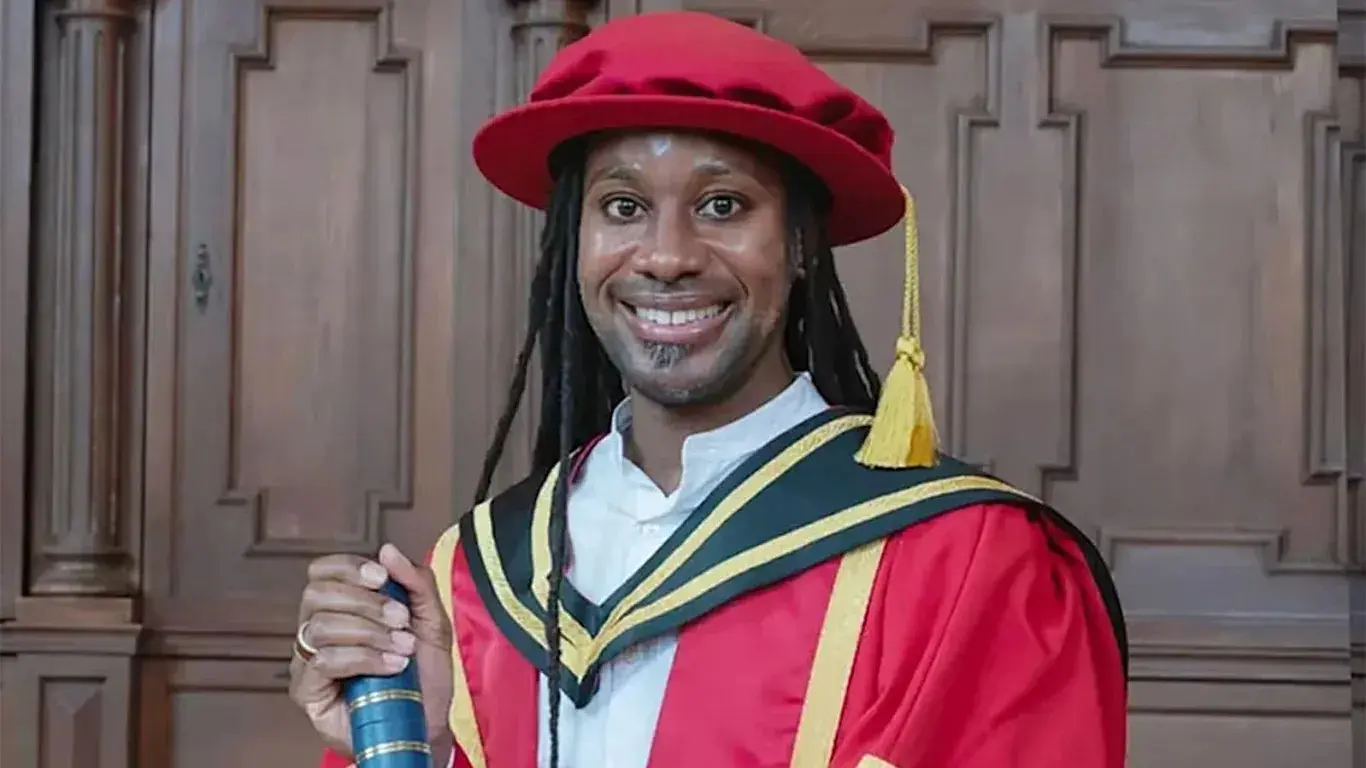
The story of Professor Jason Arday has once again brought an important question about neurodiversity into public view: How many people whose abilities do not conform to conventional expectations are being overlooked by our education systems and workplaces?
Arday, who became the youngest professor at the University of Cambridge, has spoken publicly about being autistic and the developmental difficulties he experienced growing up.
His academic journey brought visibility to what neurodivergent people can achieve when their abilities are recognised. The recent controversy surrounding his academic career has generated intense public debate but the broader conversation about neurodiversity extends beyond one individual and one institution.
For South Africa, the conversation is particularly important.
Since 1994, diversity, inclusion and transformation have been central to our institutional and corporate landscape. Much of the conversation has focused on race, gender, disability and the historical exclusion of large sections of society from economic opportunity. Yet our understanding of diversity remains less developed when it comes to differences that are not immediately visible.
Neurodiversity recognises variations in how people process information, communicate, learn and experience the world. Autism, attention deficit hyperactivity disorder (ADHD), dyslexia and Tourette syndrome are among the conditions commonly discussed within the neurodiversity movement.
For decades, the differences have emphasised what an individual struggles to do rather than on how the interaction between an individual and their environment can shape their abilities.
The distinction matters in the workplace. Many recruitment processes are built around an implicit idea of what a competent candidate should look and sound like. Candidates are expected to maintain eye contact, respond quickly, demonstrate confidence in unfamiliar social situations and navigate unstructured conversations under the pressure of an interview. Yet the behaviours do not necessarily determine whether someone can perform the job.
A highly capable analyst may not excel in a conventional interview. A talented programmer may communicate differently from the person interviewing them. A researcher may need more time to process a question before responding. Someone with ADHD may struggle with certain organisational tasks while demonstrating strong creativity, problem-solving ability or an ability to identify connections that others overlook.
The issue is not whether employers should lower their standards. It is whether they are measuring the right things.
When organisations describe someone as lacking “executive presence”, being a poor “culture fit” or having weak interpersonal skills, it is worth asking how much of that assessment relates to job performance and how much reflects an expectation that successful employees should communicate and behave in familiar ways.
This matters in a country confronting an employment crisis. South Africa cannot afford to overlook capable people because they do not conform to conventional expectations about communication, learning or workplace behaviour. At the same time, employers continue to speak about skills shortages, innovation and the need to compete in an increasingly complex economy.
We cannot argue that South Africa needs to unlock every available source of talent while maintaining systems that may prevent some people from demonstrating their capabilities.
The economic case for neuroinclusion therefore deserves as much attention as the social case.
Neurodivergent people are not a homogeneous group and there is no guarantee that a neurodiverse workforce will automatically be more productive or innovative. But organisations that make space for different ways of thinking can broaden the range of perspectives available to them. The objective should not be to romanticise neurodivergence but to ensure that difference is not automatically mistaken for deficiency.
For South Africa, however, the workplace is only one part of the problem. The inequalities surrounding neurodiversity begin earlier.
Access to assessment, diagnosis and appropriate support is influenced by socioeconomic circumstances.
A child from a well-resourced household may have access to developmental specialists, educational psychologists, occupational therapists and specialised educational support. A child growing up in an under-resourced community may instead
be labelled disruptive, inattentive, difficult or academically weak without anyone understanding why they are struggling.
The consequences can extend into adulthood. Where neurodivergent learners are not identified or adequately supported, educational difficulties can contribute to poor academic outcomes and disengagement, limiting access to tertiary education and eventually employment.
Neurodiversity is therefore also an inequality issue and one that cannot be separated from South Africa’s broader education and employment problems. This is why the conversation cannot begin only when someone reaches the interview room.
Universities, universities of technology and colleges are critical
links between education and employment. Employers can work with the institutions to create stronger pathways through mentorship, internships, workplace exposure and graduate recruitment programmes that recognise different ways of learning and communicating.
Government also has a role in creating an environment in which neuroinclusive education and employment can become more systematic, particularly through education, skills development, awareness and the effective implementation of existing employment and disability frameworks.
The responsibility, however, does not rest with government alone.
For companies that speak about environmental, social and governance issues, social impact and responsible business, neuroinclusion should not be reduced to a statement in a diversity policy. It should be reflected in how organisations recruit, develop, retain and advance talent.
This is where neurodiversity intersects with the broader transformation agenda. Transformation cannot simply be about who is represented in an organisation; it must also consider whether organisational systems enable people with different circumstances and ways of functioning to participate meaningfully.
An organisation can employ neurodivergent people while maintaining recruitment processes that exclude them, workplace cultures that encourage masking and management structures that have little understanding of their needs. Representation without inclusion changes very little.
Neurodiversity therefore belongs in the boardroom, not only in the human resources department.
Boards should be asking whether their recruitment practices unintentionally exclude people whose communication styles differ from the norm. Executives should consider whether managers are equipped to support different ways of working.
Transformation leaders should ask whether their definition of diversity adequately captures forms of difference that may not be immediately visible. And companies should consider how they can contribute to stronger education-to-employment pathways.
The shift required is cultural. Conditions such as autism and ADHD have historically been discussed primarily through the language of disorder, limitation and treatment. Recognising neurodiversity does not diminish the difficulties some people experience or the importance of clinical and educational support.
It does, however, require us to consider whether every barrier lies in the individual or whether some are intensified by environments designed around a narrow definition of what is considered normal. That is relevant in workplaces where notions of professionalism can sometimes become proxies for conformity.
The value of the Jason Arday story should therefore not be confined to the headlines surrounding one individual. It provides an opportunity to consider the much larger population of neurodivergent people whose potential may never become visible because they encounter barriers at school, university, during recruitment or once they enter employment.
The question for corporate South Africa is whether our institutions are creating conditions in which people with different ways of thinking, communicating and processing information can develop their potential and participate in the economy.
South Africa has spent three decades asking who gets a seat at the table. The next stage of our transformation conversation should also ask whether the table itself has been designed to accommodate different ways of thinking, communicating and contributing.
If we are serious about transformation, reducing barriers to employment and unlocking the country’s human capital, neurodiversity cannot remain an afterthought. It belongs in our schools and universities, in our workplaces and, increasingly, in the boardroom.
Dr Nkhensane Khosa is a medical doctor and general practitioner in Polokwane, with 20 years’ experience in practice. He holds an MBChB from the University of KwaZulu-Natal, Executive MBA and a certified director from the IoDSA. He is vice-chairperson of the Limpopo Independent Practitioners Association and serves on several boards.