


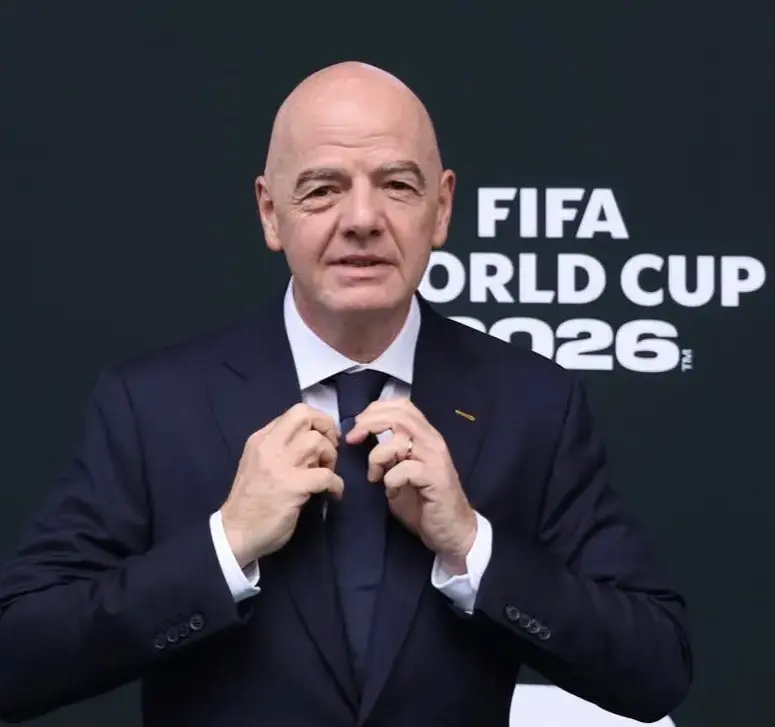
Gianni Infantino has started a debate that will outlive the proposal that provoked it.
Fifa has scrapped his plan to create Fifa Forward Enterprise, a commercial vehicle for Fifa’s tournament-related operations that would have sold a minority stake to private investors as a way to raise billions for development, according to Reuters.
The scheme is dead for now. The question it exposed is not: Who has the right to monetise football’s most valuable common asset?
The backlash was swift. Uefa and its 55 national associations threatened to boycott Fifa competitions while the plan remained active. Concacaf, representing North and Central America and the Caribbean, rejected the proposal over process and governance concerns. The Asian Football Confederation warned that Fifa’s unilateral approach could unsettle the foundations of continental football. The pressure worked: Fifa withdrew the plan after only days of resistance. But the speed of the retreat should not obscure the seriousness of what was attempted.
The controversy was sharpened by the money offered. Fifa had said the proposal would make an optional $20 million (R322m) immediately available to each member association for special projects, followed by higher Forward funding cycles through 2038 if approved. For smaller and cash-strapped federations, this was a powerful incentive. But money offered under deadline pressure raised a fair governance question: Were associations being invited to deliberate or hurried into consenting to a transformation of football’s most valuable common asset?
Infantino’s move also fit a broader pattern that has unsettled many in the game: expanded tournaments, a larger commercial footprint in the global calendar, new honours and events and too little reflection on what recent competitions have revealed. The issue was never whether football needs money. It does. The issue was whether the pursuit of money should alter the ownership, governance and soul of the game.
At the centre of the dispute was a simple question that remains unresolved: Who owns football — Fifa, the confederations, national federations, clubs, players or supporters? The answer matters because it determines whether Fifa has the moral and institutional authority to sell any part of the World Cup’s commercial future to private capital.

Formally, Fifa organises and commercialises the World Cup, the Women’s World Cup, the Club World Cup and other global competitions. It owns trademarks, sells broadcast and sponsorship packages, runs tournament operations and distributes development funding. It is also a Swiss not-for-profit association made up of 211 national member associations, each with a vote in the Fifa Congress. Yet Fifa does not own the federations that constitute it, the national teams, the players or the supporters whose loyalty gives the World Cup its meaning and market value.
The distinction matters. Fifa may control the legal and commercial architecture of its competitions but their value is produced collectively. The World Cup is valuable because Brazil, Germany, France, Argentina, Spain, Morocco, Senegal, Ghana, Japan, the United States, Mexico and many others choose to participate; because players risk careers and reputations in national colours; because clubs release them; because broadcasters pay for a spectacle that depends on the world’s best teams; and because billions of fans see the tournament as something larger than entertainment. Had major confederations refused to participate, Fifa’s commercial rights would have become rights to a diminished product.
This is why Uefa’s threat mattered. It argued that ownership in football is not exhausted by legal title. It also lies in participation, legitimacy and stewardship. A World Cup without Europe would have been commercially damaged. Without Concacaf’s support, it would have been institutionally weakened, especially after North America co-hosted the 2026 tournament. Without Africa, Asia or South America, it would have been unthinkable. Fifa’s power rests on the consent of its members. It should treat that consent as a trust, not as a tradable asset.
For African federations, the temptation was real — and may return in another form. Many operate with limited domestic revenue, fragile leagues, poor infrastructure and heavy dependence on external support. The immediate $20m in special-project funding cited by Fifa could build fields, improve women’s football, strengthen youth academies, upgrade coaching and support national teams. No responsible federation should dismiss development finance lightly. But African football should ask what obligations would follow if private investors acquired an economic interest in Fifa’s competitions. Investors do not buy stakes in global sports assets out of charity. They expect returns.
The returns could come through more tournaments, more matches, higher ticket prices, heavier sponsorship obligations, greater pressure on the international calendar and less attention to player welfare. They could also widen the gap between elite commercial football and countries building their football economies. In business, minority ownership is rarely passive when large sums are at stake. Shareholder expectations become a permanent pressure on decision-making. The danger is that football’s calendar, formats and priorities are gradually shaped less by what serves the game than by what satisfies capital.

Africa should therefore treat this episode as a warning: short-term payouts can easily be mistaken for long-term empowerment. The continent’s football problem is not simply a shortage of money. It is also a problem of governance, organisation, professional leagues, youth development, transparent administration and player pathways. External money can help but it cannot replace institutional responsibility. Africa has learnt this lesson repeatedly in development policy: when financing is accepted without clear ownership, accountability and strategic discipline, countries may gain resources but lose leverage. Football should not repeat the mistake.
The better path is not for Africa and other confederations to line up passively behind either Fifa or Uefa. It is to draw lessons from what almost happened and assert their own claim to football’s future. They should demand full disclosure of any future structure involving investor rights, governance arrangements, revenue-sharing formulas, conflict-of-interest safeguards, calendar implications and exit provisions. No private investor should acquire rights that could influence sporting decisions, competition formats, player welfare or the allocation of future revenues. Any development funding should be governed by transparent, measurable and independently audited plans.
Above all, African federations should use this episode to build stronger alliances with other football regions, including Uefa and Concacaf, on fairer terms. Europe benefits enormously from African talent. African football deserves deeper partnerships in training, academies, coaching, club licensing, women’s football, infrastructure and player protection. If the failed proposal produces a more serious conversation about solidarity, professionalism and shared stewardship, it may yet strengthen the African game.
Infantino is right that football development needs ambition. But ambition is not privatisation. Fifa is a custodian, not a proprietor. It administers competitions whose value has been built over decades through national rivalry, player sacrifice, institutional work and public devotion across every continent. The World Cup is not merely a commercial platform. It is one of the few global institutions in which nations, large and small, meet on a field under rules that command emotional legitimacy.
The legitimacy should not have been put up for sale under deadline pressure. If Fifa believes future proposals of this kind serve football, it should publish the full terms, open a genuine consultation and submit any plan to independent scrutiny before asking members to choose. Africa and the remaining confederations should learn from this episode. They should defend a simple principle: football belongs first to those who play it, build it and love it — not to those who would turn its greatest tournament into a private asset class.
Anthony Ohemeng-Boamah is a development specialist and writes on international development and socioeconomic transformation with a focus on Africa.