


As we celebrate Heritage Day, South Africans are invited to remember our roots through languages, foods, music, monuments and museums.
Yet heritage is far richer than what can be touched or displayed; it lives in the fisherman's reading of the tide, in the healer's songs sung to the sea before diving in and in the grandmother's wisdom about which rocks will yield shellfish.
This year, on 24 September, we must be grateful for a court judgment that has safeguarded the heritage of such stories and practices.
In Sustaining the Wild Coast NPC and Others versus Minister of Mineral Resources and Energy and Others [2026] ZACC 33, the Constitutional Court permanently struck down the mineral rights held by Shell for approximately 250km of the Eastern Cape's Wild Coast.
In an order written by Justice Narandran Kollapen, the matter, which had been before the courts for almost 13 years, was settled in no uncertain terms: no remittal, no second shot at the necessary forms and no reward for the R1.1 billion that Shell had spent on the venture thus far.
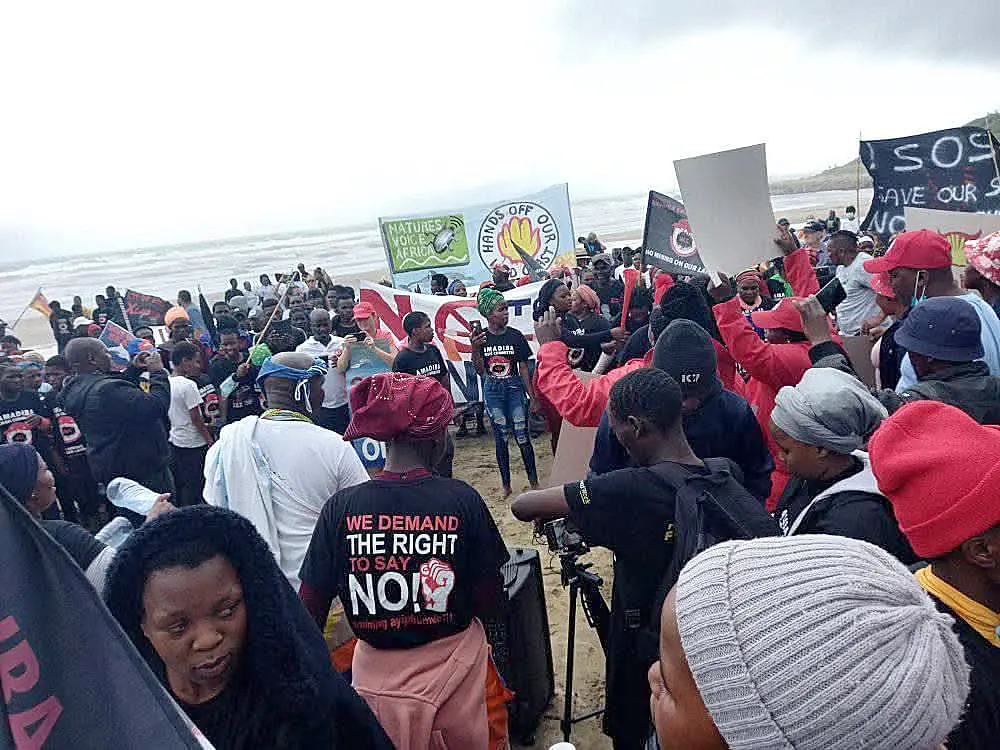
For the fishing and healing communities of Dwesa Cwebe, Amadiba and Sigidi, the ruling amounted to as decisive a victory as litigation can deliver.
What makes this judgment worthy of commemoration on Heritage Day, rather than being filed away as a mineral-law footnote, is what the court said about why the process failed.
Consultation notices were published only in English and Afrikaans in villages where people speak isiXhosa.
Where communities were engaged at all, consultants filtered communication through traditional leaders and deemed that sufficient, despite repeated objections that it was not.
The court refused to dismiss these flaws as mere technicalities.
Justice Kollapen wrote that consultation "affirms human dignity by allowing the affected parties a place at the table", not a box to tick before business proceeds but an exercise in treating people as equals rather than spectators in decisions about their own land and sea.
This, in essence, is what the Constitution means when it speaks of heritage.
Apart from historical monuments and objects celebrated during Heritage Day, sections 30 and 31 protect a living legacy of culture, language, traditions and the close connection that binds the community to its land.
Regarding the Wild Coast villages, the ocean does not serve only as a picturesque backdrop or a business object but is essential for the survival and identity of the people there.
As stated by the court, the community has nourished the ocean through the ages as much as the ocean has nourished them.
Heritage is not something that is dead and gone but is alive and needs full constitutional protection.
The court also refused to let time erase that claim.
Offering communities a consultation a decade after the real decision was made, it held, is no remedy at all; dignity deferred is dignity denied.
And it declined to let a renewal process quietly launder a flawed original decision or let scientific uncertainty become an excuse for irreversible harm to a coastline that the community has relied on for generations.
Communities within the Southern African Development Community (SADC) have faced challenges in defending their heritage against extractive activities.
In Namibia, communities of Kavango sought to safeguard their cultural and natural heritage in the Okavango River Basin. Their urgent application in Maseka and Others versus ReconAfrica (2021) was rejected based on procedural arguments.
In Botswana, the decision in Sesana and Others versus Attorney General (2006) gave the Basarwa/San people a right to go back to the Central Kalahari Game Reserve but weaknesses in legislation allowed their ancestral heritage to be vulnerable to limitations by the state.
The displacement of thousands of people in the Cabo Delgado province of Mozambique from their homes and heritage sites due to energy projects took place without judicial intervention.
What makes the constitutional court's Wild Coast judgment distinctive is that it did more than expose procedural flaws or impose delays.
Through its reasoning, the court elevated consultation from a bureaucratic hurdle to a constitutional guarantee of dignity and equality.
By refusing Shell compensation and affirming consultation as a constitutional right, the court brought an unequivocal end to Shell's bid to explore for oil in South Africa's coastal waters.
In doing so, it delivered a historic affirmation of community rights and living heritage, safeguarding the sacred land, livelihoods and identities that define our people.
That is why this belongs in a Heritage Day conversation and not only in a law journal.
It tells us that the torch of heritage, the living memory of a people, their spiritual tie to land and sea, the culture handed down between generations, cannot be switched off in commodity prices or a company's sunk costs.
Parliament is drafting a new licensing regime for petroleum exploration and early signs suggest it might push meaningful public participation later into the process, closer to production than to the granting of rights. If that survives into law, it will sit uneasily.
Heritage is not a museum artefact we polish for annual display and then tuck away.
It is alive in the healer stepping into the sea, the isiXhosa language echoing along the shore and the fundamental right of a community to say no and have that choice respected.
This Heritage Day, the Wild Coast offers a vital lesson: a nation that surrenders its legacy for a quick permit signature hasn't achieved progress — it has lost its identity.
Advocate Paledi Alfred Sathekge is a human rights proponent.