

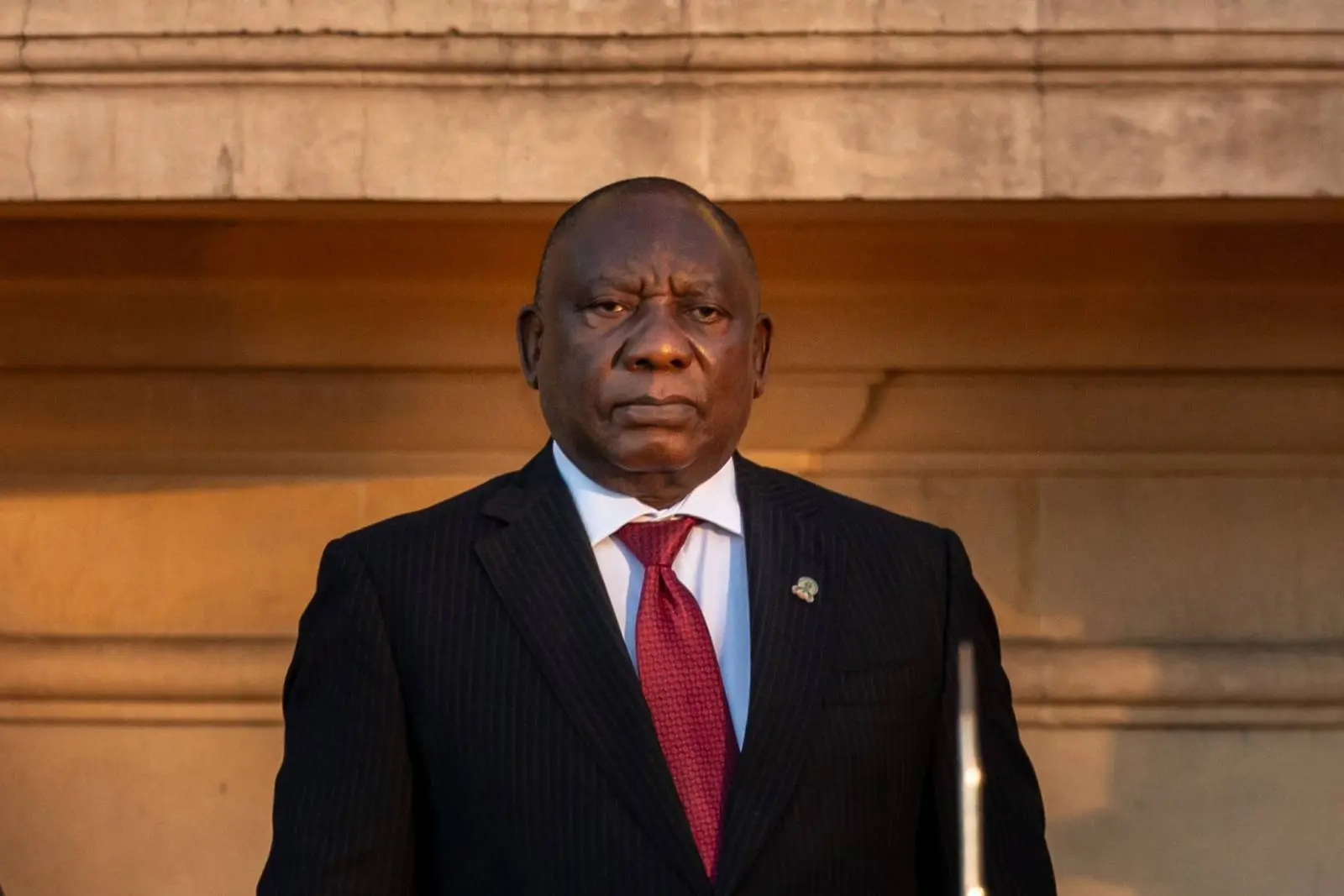
Dear President Ramaphosa
An Open Letter to His Excellency, President Cyril Ramaphosa
Firstly, let me welcome your decision to extend the deadline for the submission of the final report of the Madlanga Commission, it is worth every cent spent on it. This is a step in the right direction, given that the revelations to date have been far-reaching and have exposed the extent to which the criminal justice system may have been infiltrated, manipulated and exploited by criminal networks. Allow me to convey my sincere condolences to the families and loved ones of the 10 women who have lost their lives in Ekurhuleni, as well as to all South Africans who have lost loved ones to violent crime.
Mr President, I write this letter neither in pursuit of fame nor in search of public attention. I have no desire for media exposure, radio interviews or television appearances. I write simply as a concerned South African citizen who believes that the challenges confronting our country require honest reflection and courageous leadership. The views expressed in this letter are my own and stem from a genuine concern for the future direction of our nation.
As I write, I am deeply saddened and angered by the discovery of the body of a ninth woman in Ekurhuleni. To some, such incidents may become mere statistics in SAPS quarterly crime statistics reports. To me, each victim represents a daughter, sister, aunt, niece, mother, wife or loved one whose life was taken far too soon. Behind every statistic is a grieving family, children and a community left traumatised.
Mr President, you and I know that South Africa’s levels of violent crime and murder will remain unacceptable for as long as citizens continue to live in fear. While some may argue that a completely crime-free society is unrealistic, even in the most developed nations; this should not prevent us from striving towards a South Africa where our children and future generations can live safely and free from the fear of attacks by criminals and thugs. The existence of crime elsewhere should never become an excuse for accepting the levels of violence currently experienced in our country.
The persistence of violent crime raises important questions about whether our legal and constitutional framework is adequately serving the interests of law-abiding citizens. Many South Africans increasingly believe that certain aspects of the system appear to provide greater protection to offenders than to victims. Whether that perception is accurate or not, it is a sentiment that is becoming more widespread and cannot simply be dismissed.
For this reason, I believe there is merit in reviewing sections 35(2)(b), 35(2)(c), 35(3)(f), 35(3)(g), 19(3) and 36 of the Constitution. Such a review should examine whether the current balance between individual rights and public safety remains appropriate in a society confronted by persistent and often brutal criminality.
Beyond constitutional considerations, we must also have an honest national conversation about the effectiveness of our criminal justice policies. Questions surrounding parole, sentencing and deterrence deserve careful examination. Many law-abiding citizens struggle to understand why individuals convicted of serious offences are frequently released on parole before serving their full sentences. Equally, there is a growing belief that sentencing frameworks should be reviewed to ensure that they provide both meaningful punishment and an effective deterrent against violent and repeat offending. The correctional and restorative-justice approaches that we have pursued since 1994 have not benefited law-abiding citizens nor have they contributed positively to crime-prevention efforts.
I fully appreciate that many of the protections contained in the Bill of Rights were adopted in response to the injustices and abuses committed under apartheid government. These protections were essential to safeguarding human dignity, preventing the abuse of state power and ensuring that South Africa would never return to its painful past. I acknowledge that they remain among the most important achievements of our constitutional democracy.
However, it is equally important to recognise that South Africa today faces challenges that could not have been fully anticipated during the constitutional negotiations in the early 1990s. Many South Africans entered the democratic era believing that freedom would be accompanied by significantly improved safety and security. Yet, for millions of citizens, daily life continues to be overshadowed by the threat of violent crime. It is therefore reasonable to ask whether aspects of our legal framework require adjustment to address contemporary realities while remaining faithful to constitutional principles.
Another area requiring consideration is section 19(3) of the Constitution and the broader framework governing eligibility for public office. As matters currently stand, the requirements for becoming a councillor, a member of a provincial legislature or a Member of Parliament appear relatively lenient. While inclusivity is a fundamental democratic value, public office should also demand the highest standards of integrity, ethics and public trust.
This concern becomes particularly significant when one considers that elected representatives may ultimately participate in processes that influence the appointment of judges to some of the country’s highest courts, such as the Constitutional Court, Supreme Court of Appeal (SCA), High Courts, Land Court, Labour Appeal Court and Electoral Court. The quality, integrity and credibility of those entrusted with public office therefore have implications that extend far beyond the legislative sphere. Strengthening eligibility requirements would not undermine democracy; rather, it would reinforce public confidence in democratic institutions.
Under the current framework, a person is generally disqualified from serving as a lawmaker only if they have been convicted of an offence and sentenced to more than 12 months’ imprisonment without the option of a fine. In my view, these requirements should be reviewed and strengthened. Consideration should be given to introducing more rigorous integrity requirements for those seeking public office, including longer periods of disqualification for individuals convicted of serious criminal offences.
Such measures would demonstrate solidarity with victims of crime and reinforce the principle that public office is a privilege that carries significant responsibility. As things stand, the perception held by many citizens is that the current system is insufficiently responsive to the interests of victims and law-abiding communities. In my view, to be eligible for public office, a person should not have committed any criminal offence during the previous 25 years. This would help keep many lawbreakers out of local councils, provincial legislatures and Parliament. The suggested legislative changes would not have to be applied retrospectively if that is a concern.
The concerns outlined above underscore the importance of the work currently being undertaken by the Judicial Commission of Inquiry into Criminality, Political Interference and Corruption in the Criminal Justice System, commonly known as the Madlanga Commission. Once the Commission submits its final report, the normal process would be for the report to be released publicly and tabled before Parliament.
However, South Africa requires more than the usual process. The country needs a clear and credible mechanism to ensure that the Commission’s recommendations receive meaningful consideration and implementation beyond the current term of the Government of National Unity and that they are binding on any political party or parties that may succeed the current GNU. Without such a mechanism, there is a risk that the findings may join a long list of well-intentioned reports that generate public interest but produce limited meaningful changes.
For this reason, consideration should be given to establishing legal and institutional measures that require the government to respond formally to the Commission’s recommendations, provide reasons for accepting or rejecting them and report publicly on implementation progress. Such an approach would strengthen accountability and help restore public confidence in the state’s commitment to combating corruption, criminality and institutional failure.
Mr President, South Africa finds itself at a critical moment in its democratic journey. The nation requires decisive, lawful and courageous leadership to confront the challenges of crime, corruption and declining public confidence in state institutions. We must demonstrate, in theory and action, that South Africa is not and will never become a haven for criminals, organised criminal networks and perpetrators of violent crime.
The people of South Africa deserve a society in which law-abiding citizens are protected, victims are respected and criminals are held accountable and appropriately punished for their criminal acts. Mr President, it cannot be correct that 87% of the Legal Aid South Africa allocated budget of R2.3 billion is spent providing legal assistance in criminal cases.
Lesego Sechaba Mogotsi
Lesego Sechaba Mogotsi is a Member of the Azanian People’s Organisation (AZAPO). He writes in his personal capacity.