


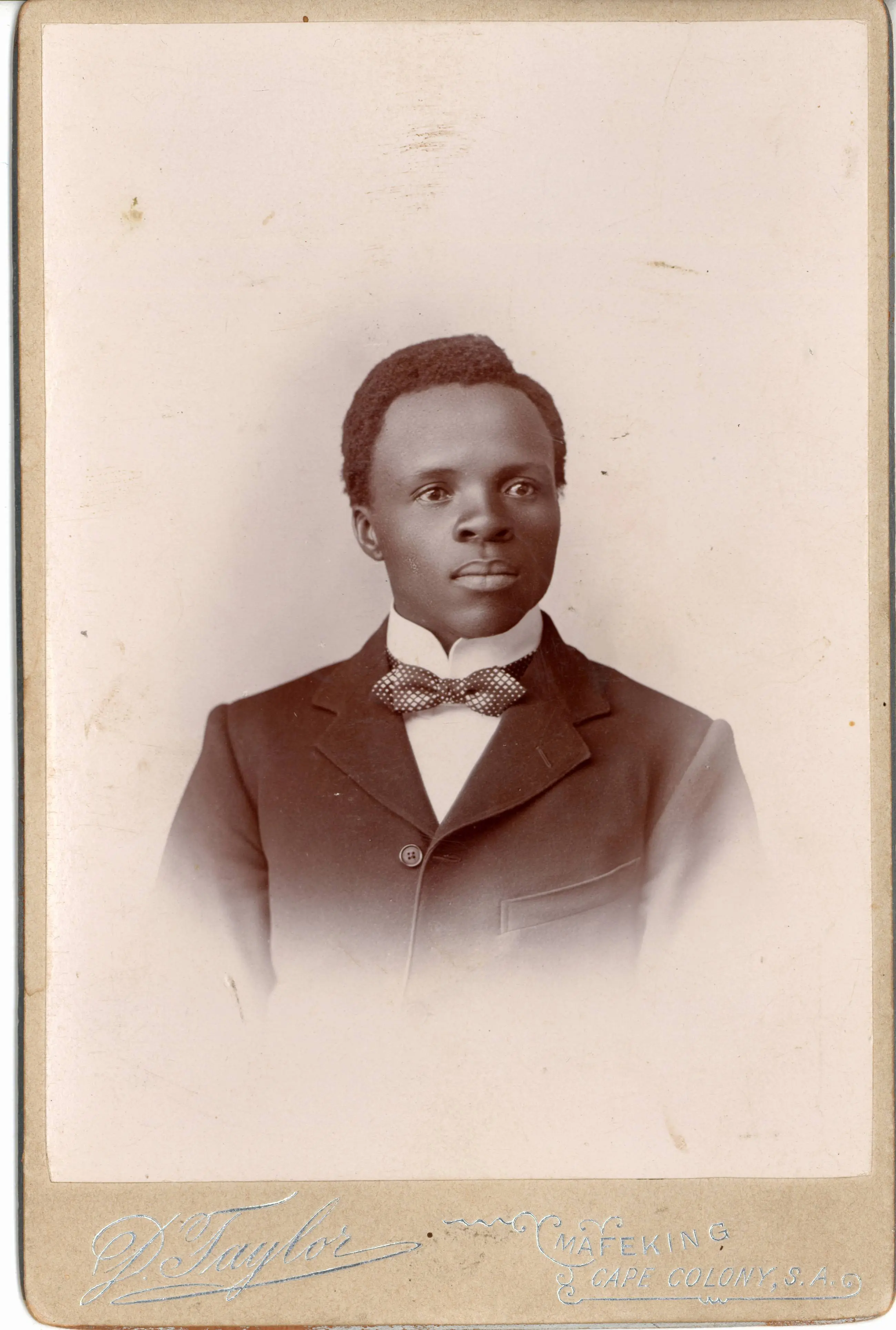
I grew up in Kimberley surrounded by the name Sol Plaatje. Every Sunday, on my way to church at Our Lady of Fatima Shrine, I passed Sol Plaatje Primary School. I spent many happy days with friends on Sol Plaatje Street.
His name remains part of the geography of my childhood. Yet I never knew the person behind it. For many of us, names like his were simply markers of place or names of freedom struggle heroes whose lives we knew little about. When their stories were told, it was often in hushed tones, for fear of falling foul of the laws of the day.
But I could recite Jan van Riebeeck’s arrival at the Cape in 1652 and name his three ships: Drommedaris, Reijger and Goede Hoop. I could draw the later Castle of Good Hope and label its five bastions: Leerdam, Buuren, Katzenellenbogen, Nassau and Oranje. Our prescribed textbooks presented colonial figures as pioneers and bearers of civilisation. I learnt the architecture of colonial power before I understood the lives of those who challenged it.
An extraordinary African whose name accompanied my everyday journeys remained largely invisible in my education. I knew those who had claimed our country before I knew a man who had defended our humanity. How many of us were conditioned to walk past our history, oblivious to the lives behind the names surrounding us?
As we mark the 150th anniversary of Solomon Tshekisho Plaatje’s birth on 9 October 1876, I revisit that childhood experience through a different lens. As Chancellor of the university bearing his name, I feel a responsibility, both personal and institutional, to help ensure that this and subsequent generations know both the name and its meaning.

Engaging deeply with his history, I discovered a man whose intellectual curiosity was inseparable from his concern for others. A journalist, author, linguist, translator and political organiser, he placed his gifts at the service of African dignity. What moved me was the humanity that gave his achievements purpose.
A founding member and first general secretary of the South African Native National Congress in 1912, he challenged dispossession through Native Life in South Africa. His novel Mhudi centred African experience, while his Shakespeare translations into Setswana affirmed the intellectual possibilities of our languages. He understood that people must tell their own stories.
For a man whose formal schooling ended at primary level, his intellectual reach was extraordinary. His travels to Britain, Canada and the United States carried African struggles beyond our borders. Having been fortunate enough to travel to every African country and every continent, I find particular resonance in his journeys. Travel has deepened my appreciation of the common bonds that unite us across borders, languages and cultures, and of the dignity we owe one another.
Plaatje travelled under far more difficult circumstances, yet refused to accept them as the boundaries of his contribution.
His life gives substance to Nelson Mandela’s words in Long Walk to Freedom: “It is what we make out of what we have, not what we are given, that separates one person from another.” A university bearing Plaatje’s name must recognise potential beyond privilege and pro-vide opportunities he had to create for himself.
The University’s four faculties connect powerfully with his legacy. Education equips us to define our future. Economic and Management Sciences turn knowledge and enterprise into livelihoods and shared prosperity. The Humanities help us recover our stories and affirm our dignity.
Natural and Applied Sciences equip us to understand our world and develop solutions to its challenges. Together, they give practical expression to the pursuit of knowledge for human advancement and offer foundations for a future worth living.
The perseverance of his family, community storytellers, the Sol Plaatje Educational Trust and scholars preserved a history that formal education neglected and kept his legacy alive.

Those of us entrusted with institutions must help ensure that his story reaches classrooms, homes and public life, enabling young people to understand their inheritance and their capacity to shape the future.
That responsibility must include what we prescribe in our classrooms. Plaatje’s works, including Mhudi and Native Life in South Africa, should be required reading at appropriate stages of school and university education. Through his writing, young people can engage critically with dispossession, identity, language and justice.
His ideas should form part of the intellectual and moral foundation of their education, so that the next generation grows up knowing his voice and values as well as his name.
As Chancellor, I am inspired to be part of an institution endowed with that legacy. It gives my tenure a clear and inspirational purpose: to champion these values and support the University in embedding them in our education and conduct. Students should encounter his curiosity in their learning, his respect for language in their classrooms and his commitment to dignity in their treatment. Communities should experience his spirit of service through our engagement.
Every institution carrying his name shares this responsibility. A municipality should embody responsive service; a school should nurture curiosity and belonging; a street should invite discovery of our history. His values must be evident in everyday experience.
With the world at a crossroads, Plaatje offers a moral compass far beyond academia.
Amid widespread conflict, persistent abject poverty, rising inequality and the unfulfilled promises of freedom, his example calls us back to the purpose of progress: a better life for all.
Where prejudice diminishes people, his defence of dignity affirms our shared humanity. Where public office serves private interests, his example demands service. Where ignorance divides us, his curiosity invites understanding. His legacy challenges us to measure progress by whether the vulnerable are protected, opportunity extends beyond privilege and power serves the people. These are the standards by which nations, and an international order promising peace, justice and prosperity, must be judged.
It is often said that to whom much is given, much is expected. Plaatje showed us that from those whom much is taken, much can still be reclaimed: dignity, voice and the power to shape a better future.
As we mark 150 years since his birth, our greatest tribute is to live the values he embodied and build the society he envisioned. Thebe Ikalafeng is founder and chairman of Brand Africa, Chancellor of Sol Plaatje University and Pro-fessor of Practice at the University of Johannesburg Business School.