

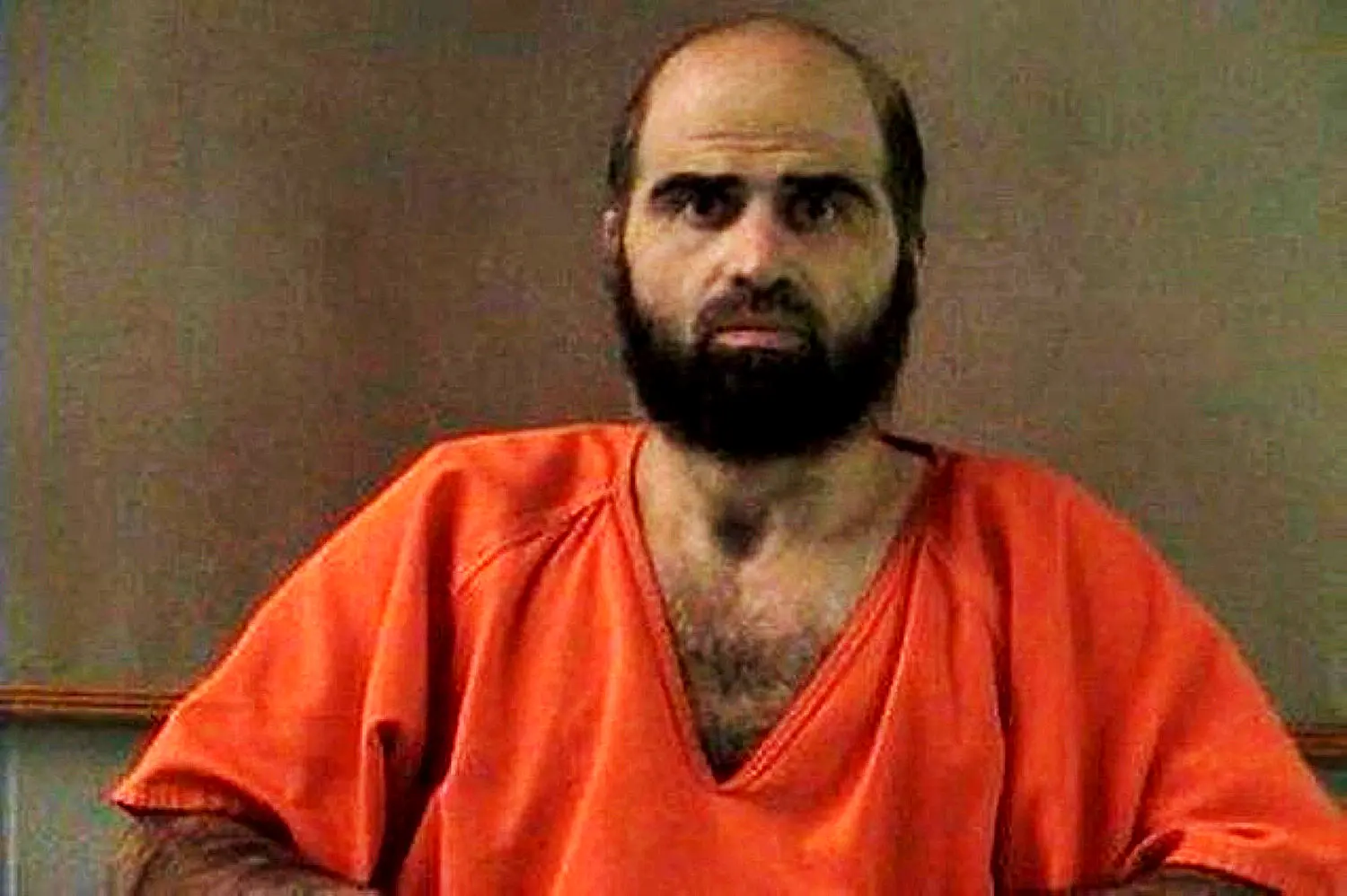
On 3 December, at 1pm, the US Army intends to shoot a man in a wheelchair — and it wants the world to watch. Nidal Hasan, who murdered 13 people and wounded more than 30 at Fort Hood in 2009, is to die by firing squad.
“We’ll make sure that people are able to watch it,” Defence Secretary Pete Hegseth said on 8 October. The Pentagon has since confirmed a livestream.
Unless a court intervenes, it will be the first execution broadcast live in the US. The UN human rights office has warned that a livestream is “tantamount to a public execution” and would breach the ban on torture.
What Hasan did was monstrous. He opened fire on unarmed soldiers. Their families have carried that day for 17 years. I make no plea for him. I am writing because I am appalled by what a government is about to do and by what it is asking of everyone who watches.
In June 1995, in S versus Makwanyane, all 11 judges of our Constitutional Court held that the death penalty could not live alongside the Constitution. The court accepted that most South Africans wanted the hangings to continue. It refused all the same. I regard that refusal as among the finest things our law has done.
“It is only if there is a willingness to protect the worst and the weakest amongst us,” wrote then-chief justice of the Constitutional Court Arthur Chaskalson, “that all of us can be secure that our own rights will be protected.” An execution treats a human being “as an object to be eliminated by the state”.
Justice Yvonne Mokgoro turned to ubuntu, which she called a “golden thread” running across our cultures. Ubuntu demands most when it is least welcome: my humanity is bound up with how I treat you, even when you have done the unforgivable. We may punish and we may imprison a killer for life. What we may not do is discard a person, because something of ourselves is discarded with them.
Washington’s plan tramples every part of this. Hegseth says people must watch because they “need to understand that there’s serious consequences”.
French philosopher Michel Foucault showed that the public execution was always less about justice than about power, the sovereign displaying his might on a human body and this one has been staged with care: the hour matches the hour of the shooting and the place is the scene of the crime. Theatre requires an audience and a government that turns a man’s death into a broadcast is counting on us to tune in.
French philosopher Emmanuel Levinas taught that the face of another person makes a claim on us before any law does: ‘Do not kill me.’
Under the army’s last written procedure, from 1959, the prisoner is hooded before the order to fire. If that holds, somewhere a child with a phone will watch a hooded man shot dead. What that child will be taught is how to stop seeing a person.
None of this is distant from us. Twelve women have been found dead in Ekurhuleni, believed murdered. The fear is real and so is the fury. I share both.
The ANC Women’s League wants the death penalty debate reopened and reportedly hopes it will end in a referendum. “The Constitution must be put to the test,” said its secretary-general, Nokuthula Nqaba. With municipal elections on 4 November, it is hard not to hear a campaign in this. Murdered women deserve better than to become a slogan.
The Constitution was put to that test and Makwanyane closed this door: the question, the court said, “cannot be referred to a referendum, in which a majority view would pre-vail over the wishes of any minority”. The gallows do not even deliver the safety promised in its name. In 2012 the US National Research Council concluded that more than three decades of studies tell us nothing about whether executions reduce murder. Our own history points the same way: 20 years after the death penalty was struck down, South Africa’s murder rate was half what it had been.
What did deter, the court said, was certainty: “The greatest deterrent to crime is the likelihood that offenders will be apprehended, convicted and punished.”
It was not a missing gallows that failed the women of Ekurhuleni. It was policing that too seldom catches killers, evidence stuck in forensic backlogs and, in the president’s words, a government that “has failed to repair a light”.
On 3 December the world will be offered a link. On 4 November some of us will be offered gallows in place of a working police station. Both ask us to accept a killing as proof that something is being done.
Thirty-one years ago this country, with more cause for vengeance than most, was offered the same bargain and refused it.
Do not watch. And do not let anyone sell you a rope and call it justice.
Prof Narnia Bohler-Muller is the professor and research theme leader of the Flourishing Life Research Theme in the Faculty of Law, University of the Free State, and an advocate of the High Court of South Africa. She writes in her personal capacity.