

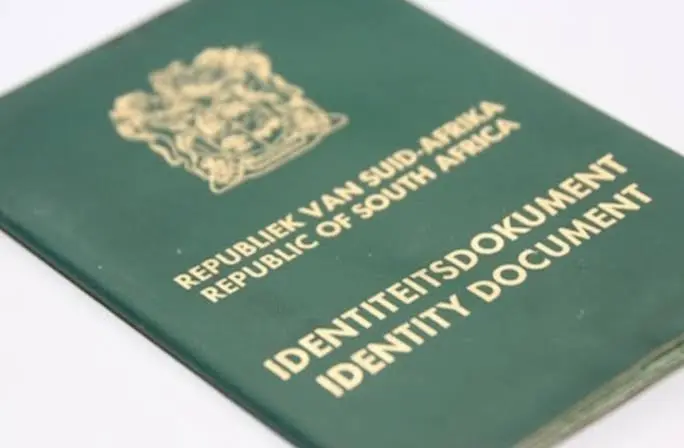
An affluent banking client walks into a quiet commercial branch in Sandton, an upmarket suburb north of Johannesburg, South Africa, to renew a Smart ID card. She completes the biometric capture in 10 minutes over a complementary coffee. A few kilometres away in Alexandra, a low-income township, an elderly pensioner joins an early morning queue outside a department of home affairs office, waiting in the biting cold only to be turned away when the computer network collapses at midday.
The stark contrast captures the central fault line running through Africa's digital modernisation drive. As governments across the continent accelerate the rollout of digital public infrastructure (DPI), biometric registries and digital identity platforms are celebrated as the ultimate solution to public administrative decay.
In step with the governments, large development finance institutions and technology vendors pile on to the sales pitch as they all evangelise in unison about how digital credentials will unlock economic inclusion and streamline public service delivery.
This is, of course, a false narrative. Behind the promotional roadmaps lies an expensive graveyard of failed rollouts across the continent. Which begs the question: Are these failures simply technological incompetence or is there something more fundamental at play?
During a recent discussion on The Angle Podcast Ep 52 | Capability | Inclusion | Is Digital ID a Trust Issue or a Tech Problem?, Dr Geci Karuri-Sebina, an associate professor in digital governance at the Wits School of Governance, challenged the technocratic assumption that software can replace competent public administration.
Karuri-Sebina put it bluntly: “Digital governance is not just government IT procurement, it is a broader system of how decisions are made and how we agree to operate as a society.
“There is a tendency to believe our challenges are purely technological. But technology cannot bypass basic governance hygiene. We still need institutional accountability, public trust, citizen inclusion and administrative competence. If the underlying governance foundations are broken, deploying new software merely automates that dysfunction.”
The belief that technology can resolve structural political failure is widespread. Political leaders routinely sign continental declarations pledging digital transformation under the African Union’s Agenda 2063.
However, research from the Tayarisha African Centre of Excellence in Digital Governance at the Wits School of Governance working paper series, AI and Digital Governance Politics and Management: A View from the Global South, demonstrates that digital identity systems deployed without democratic safeguards create new mechanisms of social exclusion.
Legal scholars Jonathan Klaaren and Janaina Costa examine the structural realities underpinning national identification systems in their research paper, Can Identity Deliver Digitally? A Southern African exploration with particular attention to South Africa and Mozambique.
One of the focal points in the paper was South Africa’s transition from the fingerprint-based Home Affairs National Identification System (Hanis) to the Automated Biometric Identification System (Abis) which is also equipped with facial recognition.
Klaaren and Costa found that South Africa's digital identity framework was developed through commercial agreements rather than a dedicated, rights-centred digital identity statute. The state increasingly enlisted private commercial banks to handle identity enrollment and verification. While this arrangement delivered swift service to banked consumers, it created a divided structure of citizenship.
“A national identity system is built contract by contract,” Klaaren and Costa note in their study. “When private financial institutions become the primary gatekeepers of biometric enrolment and verification, the system inherently privileges those already embedded in the formal commercial economy. For rural residents and marginalised communities who rely on neglected local state offices, digital identity exacerbates existing barriers to public services.”
The divide highlights a troubling reality in South Africa. While access to foundational identity is a constitutional right, digital execution of an identity system functions like a commercial commodity that excludes a large proportion of the citizenry.
When an affluent resident uses private banking channels to secure a passport while a poor applicant spends days in a chaotic municipal queue, digital modernisation ceases to be a tool of equal empowerment; it becomes an instrument that reinforces social stratification.
In his working paper, E-Governance and the Kerala Model: Unpacking the Changing Dynamics of Dependency and Discretion, public policy scholar Ashwin Varghese examines a different issue that compounds the problem even further. He found that the risks to digital identity extended beyond access disparities.
When governments lack internal engineering expertise, they become captive to external technology vendors who control proprietary software architectures. It is a dependency that undermines public sector accountability and leads to the erosion of sovereign administrative capability.
Analysing digital reforms in the Indian state of Kerala, Varghese documents how relying on private Total Service Providers (TSPs) created a severe “design-reality gap” where commercial platforms failed to respond to welfare needs.
“Dependency on external service providers strips public officials of discretionary judgment,” Varghese writes. “When state departments outsource system architecture to private vendors, they receive rigid systems misaligned with citizen realities.”
Kerala responded by developing in-house technical capacity within the public sector by training civil servants and police personnel to build open-source tools that preserved human discretion alongside public accountability.
In contrast, South Africa’s recent history of high-profile state IT procurement failures, from dysfunctional traffic management platforms to disputed department of home affairs vendor contracts, illustrates the perils of commercial lock-in.
As Karuri-Sebina emphasised on the podcast, administrative mismanagement has driven skilled public engineers and technical specialists out of government. Without rebuilding internal technical competence, African states remain dependent on opaque commercial providers that leave officials unable to explain or fix system breakdowns when digital services collapse.
The lack of institutional competence is also compounded by the systemic exclusion of civil society from technology policymaking and regulatory frameworks. In their empirical study, Impact of Civil Society and Social Movements on Digital Policies in the Sahel, researchers Dr Mady Ibrahim Kante and Lubiche Prudence Noutcha Issoy investigate civic participation across five Sahelian nations: Mali, Burkina Faso, Niger, Mauritania and Chad.
Kante and Issoy found that 74% of surveyed civil society organisations and civic movements remained excluded from national digital policymaking processes. Digital identity frameworks and data governance policies are routinely drafted behind closed doors by state officials and corporate consultants while ignoring community realities like rural connectivity gaps and high data tariffs.
The authors observed that when digital governance frameworks are formulated without authentic civic consultation, they provoke public mistrust and resistance. “Civil society organisations,” the paper continues, “are not passive beneficiaries; they are vital actors defending privacy and building grassroots digital literacy.”
It seems then, that advocates of rapid digital identity deployment use efficiency as a defense against poor governance. They argue that centralised biometric databases eliminate duplicate records and speed up administrative transactions across overburdened public departments.
They argue that paper-based bureaucracy is notoriously vulnerable to corruption and manual error and that replacing cumbersome physical filing with instant digital verification appears, on the surface, to modernise the state and protect public resources. The reality, however, is a little more complex.
South Africa’s recent experience with digitising identity exposes how this technocratic rationale ignores constitutional issues. Section 10 of the Constitution guarantees the right to human dignity, while Section 33 guarantees lawful and procedurally fair administrative action. A legal identity is not a discretionary privilege granted to consumers; it is a foundational public right necessary for exercising citizenship and accessing social protection.
When an automated biometric scanner rejects an elderly citizen’s worn fingerprint, or when an unbanked worker cannot access an online portal, the state cannot hide behind technical glitches to deny constitutional rights.
It stands to reason then that digital identity alone cannot repair a fractured relationship between the state and its people. If African governments treat digital transformation as a cosmetic procurement exercise rather than a democratic project of institutional renewal, biometric systems will continue to deepen inequality.
This is the third of five stories from the series. It is derived from the podcast: https://www.youtube.com/watch?v=G8NNyYo0gVg
Earl Joseph is the founder of The Digital Afrikan, a digital media company in Johannesburg. He is also an award-winning journalist and commentator on African technology policy, governance and institutional transformation.
Stanley Moloto is the editor, host and producer of The Angle Podcast which focuses on the African digital innovation ecosystem. He is a digital entrepreneur, web developer and co-founder of The Digital Afrikan.