

World Food Day is celebrated every year on 16 October to raise awareness of global hunger, food security and agricultural development. This year marks 45 years of this commemoration.
The Food and Agriculture (FAO) Organisation announces a theme annually that aligns with global food security priorities, challenges, such as climate change, migration or inequality, and the United Nations Sustainable Development Goals.
The themes are chosen to provide a common focus for advocacy and action across governments, civil society and international organisations. The themes over four decades have succeeded in expanding the conversation from food production to sustainability and rights but it underplays a focus on urban food systems, equity, nutrition transitions and technological innovation.

This year’s theme, “Innovate today. Nourish tomorrow” reframes innovation as technological progress and preventive action. By emphasising risk reduction before crises emerge, it showcases the value of cross‑sectoral approaches that strengthen resilience and avoid the higher costs of reactive responses. This framing succeeds in shifting innovation from a reactive paradigm to a preventive one, highlighting sustainability and resilience as central to food security.
However, future discourse would benefit from greater attention to equity, governance and nutrition transitions, ensuring that innovation is inclusive, accountable and responsive to the challenges of unhealthy food environments and widening inequalities.
The FAO says innovation is reshaping every stage of the agrifood system, from production and storage to transport and marketing. It integrates scientific and technological progress with the practical knowledge, skills and creativity of farmers, fishers, pastoralists and foresters. The groups should include women, youth and indigenous communities, alongside the contributions of investors, policymakers and entrepreneurs.
Because transforming agrifood systems demands collective effort, innovation manifests in diverse ways: digital advisory platforms, data and information systems, improved seed varieties and biotechnologies, farmer field schools (a participatory, community‑based approach to agricultural education and extension), cooperative structures, traditional land and water management practices, and novel approaches to production, markets, finance and distribution.
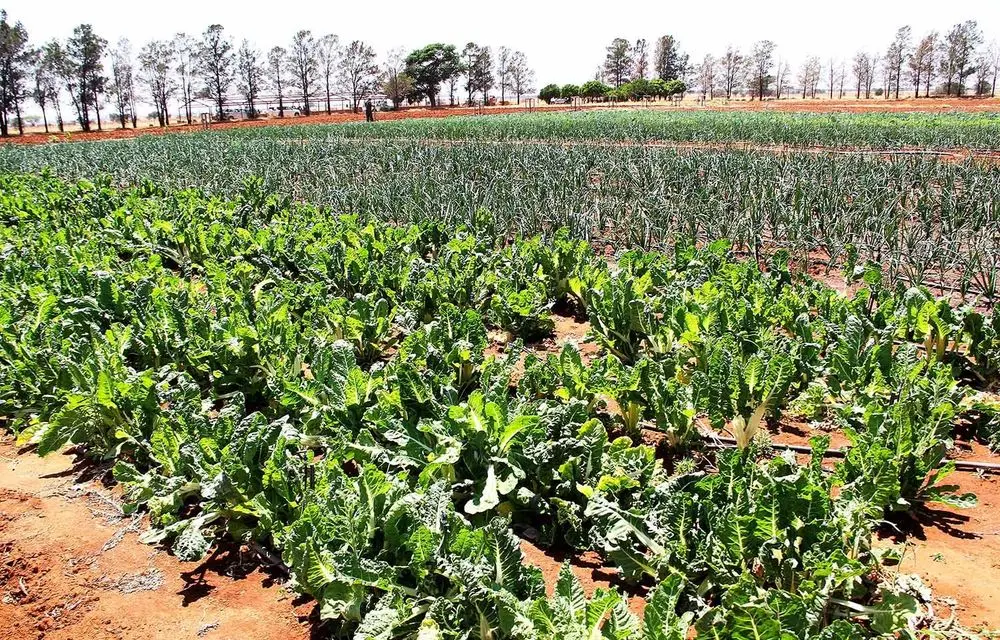
Innovation can also mean reducing risk before crises emerge. Preventive and cross-sectoral approaches can strengthen resilience and avoid far higher costs once shocks take place. One clear illustration of such innovation is agroecological farming, which is gaining recognition in South Africa as a promising route to healthier communities and environmental resilience.
Research demonstrates that agroecology can simultaneously confront challenges such as food insecurity, climate stress, biodiversity decline and social inequality by reinforcing the connections between people and the ecosystems that sustain them. Case studies in KwaZulu‑Natal (KZN), drawing on site visits, organisational interviews and collaborative learning exchanges, highlight that effective agroecological initiatives operate as integrated systems, combining ecological practices, local market development, community knowledge, and supportive governance.

This systems‑based approach yields benefits that extend well beyond agricultural output. It diversifies diets, reduces dependence on expensive external inputs, enhances climate resilience and contributes to the restoration of degraded landscapes.
Evidence further indicates that most agroecological projects improve food security and nutrition outcomes, particularly when they incorporate multiple interconnected components.
The KZN case studies also show where the innovation lies. Much of it is not new technology but new ways for farmers to organise, learn and sell. At Thanda, near Mtwalume on the South Coast, more than 300 smallholders, most of them women and young people, farm 31 cooperative plots. Thirty mentors visit every farm each week and simple digital tools help farmers plan what to plant and when. In 2023 these farms produced vegetables worth R6.6 million, and most of the harvest was eaten or sold in the surrounding villages, close to the households that needed it.
In the Ugu District, Siyavuna works with about 1 500 farmers, nine in 10 of them young people. They sell under a shared brand, Kumnandi, and use a Participatory Guarantee System, in which farmers and buyers check one another’s practices, to vouch for how the food is grown. This costs far less than formal organic certification, which few small-scale farmers can afford.
These farms can do more for nutrition when public institutions buy from them. In iLembe, at the peak of a local procurement arrangement, small-scale farmers supplied about 55 tonnes of vegetables a week to more than 150 000 learners at 399 schools through the National School Nutrition Programme.
Early childhood development centres offer a similar opening. Several of Grow Great’s “Best Buys”, the affordable and nutrient-rich foods it recommends for young children, can be produced by small-scale agroecological farmers close to where those children live. Eggs and beans are the clearest examples. Yet the Siyazisiza Trust in northern KwaZulu-Natal found that only one in five of the centres it works with could take in fresh produce, mainly because they were not fenced.
Government systems inadvertently often work against these farmers. At the Inchanga Agroecology Hub in eThekwini, one municipal extension officer supports 75 cooperatives. Seed bought through municipal procurement has arrived late and sometimes after it had expired.
Farmers also receive conflicting messages from different government programmes, which undermines the practices the hub is trying to build. Nationally, agricultural policy favours conventional farming. Seed rules aligned with the 1991 international convention on plant breeders’ rights could restrict the saving and sharing of seed on which many of these farmers depend.
If innovation is meant to reduce risk before crises arrive, these are the places to invest. Funders and government should pay for mentors and farmer-to-farmer learning rather than one-off handouts of inputs. Schools and early childhood centres should buy from farmers and procurement rules should accept Participatory Guarantee Systems as proof of how food is grown. Small pieces of infrastructure, such as cold storage, fencing and transport, decide whether good produce reaches children or rots, and they cost little compared with the hunger they prevent.
Community savings groups help. SaveAct has more than 110 000 members, most of them women, who save and lend to one another. South Africa’s forthcoming Agroecology Framework, discussed this week at a national dialogue convened by the department of agriculture and the Agricultural Research Council, is the chance to write these lessons into policy.
By advancing innovation collectively, we can shape agrifood systems that are more resilient, inclusive and stable, with systems capable of meeting present nutritional needs while safeguarding the natural resources essential for future generations.
Lisanne du Plessis is an associate professor and Scott Drimie an extraordinary professor in the Division of Human Nutrition in the Department of Global Health in the Faculty of Medicine and Health Sciences at Stellenbosch University.