


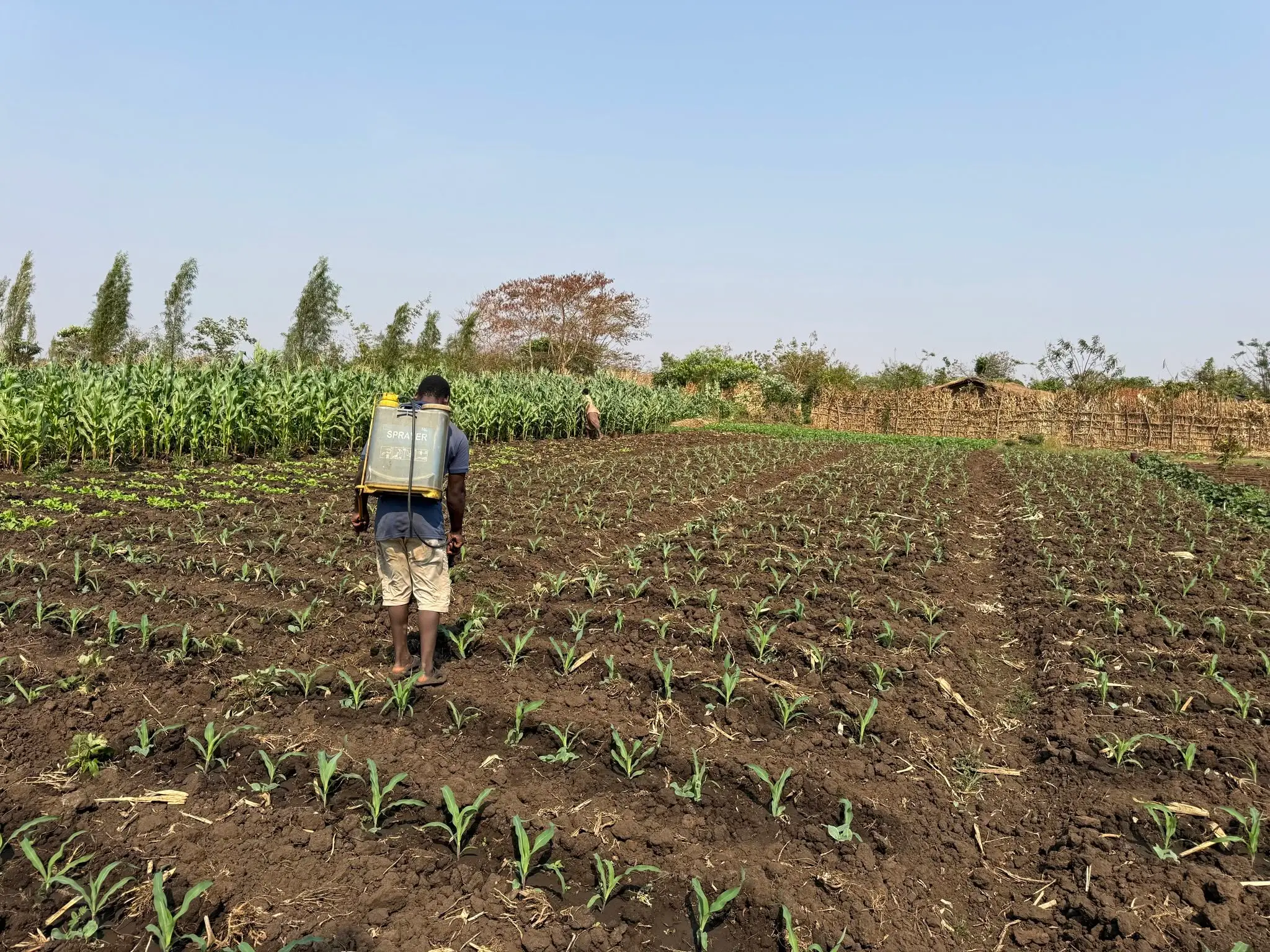
Malawi’s new seed investment plan is intended to translate stronger laws into more productive farms.
But conflicting accounts of who is funding it, rising hunger despite yield gains and a continental dispute over commercial inputs expose unresolved questions about implementation and accountability.
Malawi’s reported $1 million (R16.4 million) commitment to a national seed investment plan comes as African agriculture confronts a dispute over what two decades of commercial seed, synthetic fertiliser and subsidy-led policy have achieved.
Nyasa Times, citing Agra president Alice Ruhweza, described the money as public funding and said Malawi’s commitment was smaller than Nigeria’s $37.66 million fund and Ethiopia’s $5 million initiative with the Gates Foundation.
That account conflicts with Malawi Broadcasting Corporation’s report when the strategy was launched in May 2024. The broadcaster said the Alliance for a Green Revolution in Africa, now known as Agra, had promised $1 million to support implementation.
The distinction matters.
Government financing would suggest domestic ownership, while donor financing would raise questions about the dependency Ruhweza cautioned against when she wrote that government-owned plans get financed while donor-owned plans get filed.
Malawi has established much of the formal framework. Its 2018 National Seed Policy sought stronger quality assurance, certification and domestic seed industry growth.
The Seed Act of 2022 established a regulatory authority and aligned parts of the system with rules of the Southern African Development Community (SADC) and the Common Market for Eastern and Southern Africa (Comesa), two regional economic blocs.
The investment strategy, however, says regulations dating from 2018 need to be aligned with the 2022 law and calls for faster establishment of the Malawi Seed Regulatory Authority.
This gap between law and implementation extends across the continent. The African Union’s 2025 Seed Sector Performance Index, as cited by Ruhweza and Evelyn Lusenaka, gave 50 countries an average score of 4.63 out of 10, with the use of quality commercial seed scoring 3.06.
None of the 46 countries with sufficient data met all seed requirements for four priority crops, while 14 released no new varieties from 2022 to 2024.
Malawi’s individual score was not disclosed. SADC scored 4.96 for recognition of farmer-managed seed systems, the strongest regional result. But recognition alone does not establish whether farmers can obtain suitable seed on time or whether regulators can enforce quality standards.
Malawi’s national strategy identifies limited government support for variety development, capacity gaps in certification, weak agricultural extension services and dependence on subsidy programmes.
Implementation will have to contend with an agricultural budget heavily committed to farm inputs. The 2025-26 budget allocated MWK 131.6 billion to the Affordable Inputs Programme, which subsidises farm inputs, within a total agriculture allocation of MWK 693.3 billion.
The government planned to target 1.1 million productive households with 150 000 metric tons of fertiliser, 7 500 metric tons of cereal seed and 4 500 metric tons of legume seed.
A national seed plan could improve quality control, variety release, breeder seed supply and coordination. Its effect, however, will depend on whether institutions can connect those functions to extension services, climate information, soil management and reliable markets.
A better seed without soil health, extension, finance and markets is like a stronger engine in a vehicle with no road.

The Alliance for Food Sovereignty in Africa (AFSA), a civil society network, challenges the input-led model more fundamentally. Its August 2026 report analysed Food and Agriculture Organisation data across 13 Agra focus countries from 2006 to 2024, alongside institutional records, peer-reviewed studies, African Union documents and a donor-commissioned evaluation.
AFSA found that fertiliser use more than doubled, cropped land expanded 46% and weighted staple yields grew 1.2% annually, slightly below the 1.3% recorded during the preceding 12 years.
Malawi complicates any simple verdict. AFSA found that the country recorded the strongest staple yield growth among the 13, yet its number of undernourished people increased 61%.
This association does not prove that improved seed or fertiliser caused hunger. It does show that yield growth alone did not secure food access, which also depends on prices, incomes, crop diversity, climate shocks and market conditions.
Food security projections reinforce that distinction. An estimated 1.9 million Malawians faced crisis-level acute food insecurity between April and September 2026, with the number projected to rise to 2.6 million during the October 2026 to March 2027 lean season.
Southern districts faced dry spells and reduced maize production, while high prices, inflation, fuel costs and foreign exchange shortages weakened purchasing power even after a better national growing season.
These pressures carry concrete household costs. Families in districts including Neno, Mwanza, Chikwawa and Nsanje were expected to exhaust food stocks early and depend more heavily on markets while earnings from agricultural labour remained weak.
The seed debate is therefore not only about germination or the release of new varieties. It concerns whether productivity policy reduces the economic and climatic risks that separate harvests from meals.
AFSA concludes that input-led intensification failed as Africa’s organising agricultural model. It advocates redirecting public finance towards farmer-managed seed, biological soil fertility, diversified farms, public extension, local processing and local and regional food markets.
Its comparative case is Senegal, which retained millet, sorghum and groundnuts, used roughly half the fertiliser of the Agra-country average, raised its staple yield index 73% and halved hunger over the study period.
That comparison poses a challenge to Agra.
A fair counter-consideration is that national hunger trends have multiple causes and Senegal is not a controlled comparison. AFSA acknowledges differences in conflict exposure, fisheries, remittances and urbanisation, as well as Senegal’s own land expansion and continued use of subsidised seed and fertiliser.
Agra also argues that its approach has moved beyond stand-alone inputs.
Its Malawi country director, Eluphy Nyirenda, said the organisation supported 31 crop varieties, more than 16 000 metric tons of certified seed, eight local seed companies and access to inputs, finance or markets for more than 149 000 farmers.
She said productivity requires knowledge, irrigation, finance, aggregation and dependable markets and reported that Agra and partners had helped mobilise more than $200 million for Malawi’s food system.
Those figures indicate institutional activity but do not necessarily establish attributable gains in income, nutrition or resilience.
Independent assessment remains constrained. According to the draft’s account of AFSA’s findings, Agra has not released monitoring data for independent scrutiny, and no financing institution has conducted a comprehensive evaluation covering 20 years.
The dispute concerns outcomes and who controls the evidence used to judge them.
Malawi’s seed policy is also a trade policy. Harmonised SADC and Comesa rules can shorten variety registration, support cross-border seed supply and expand markets for seed companies. They can also increase pressure to favour uniform commercial varieties unless farmer-managed systems, indigenous crops and locally adapted seed receive workable legal and budgetary protection.
This tension will sharpen as countries translate the African Union’s 2026-35 agricultural strategy into national plans.
AFSA says the continental policy continues to favour commercial seed, fertiliser, mechanisation and private investment, even while recognising agroecology. Agra wants mutual recognition of national variety releases and seed plans backed by budgets, an approach intended to translate regional rules into seed availability.
The decisive test is not whether Malawi chooses commercial or farmer-managed seed as an exclusive category. It is whether public policy can determine which combinations improve whole-farm productivity, dietary diversity, incomes and climate resilience while maintaining credible regulation and transparent fiscal costs.
The reports described in the supplied draft set out Agra’s broader position but contain no direct response from Agra or Malawi’s government to AFSA’s Malawi-specific findings. That response remains absent from the reporting record.
Whether Malawi’s Ministry of Agriculture publishes the$1 million financing instrument and measurable outcomes, whether Parliament funds and oversees the Seed Regulatory Authority, and whether Agra releases country-level monitoring data may determine whether Malawi’s seed plan closes the distance between laws and farms or merely finances another untested assumption.
Collins Mtika is a veteran journalist and the Mail & Guardian’s special correspondent in Mzuzu, Malawi. This article was made possible by a partnership with the Centre for Investigative Journalism Malawi (www.investigative-malawi.org).