


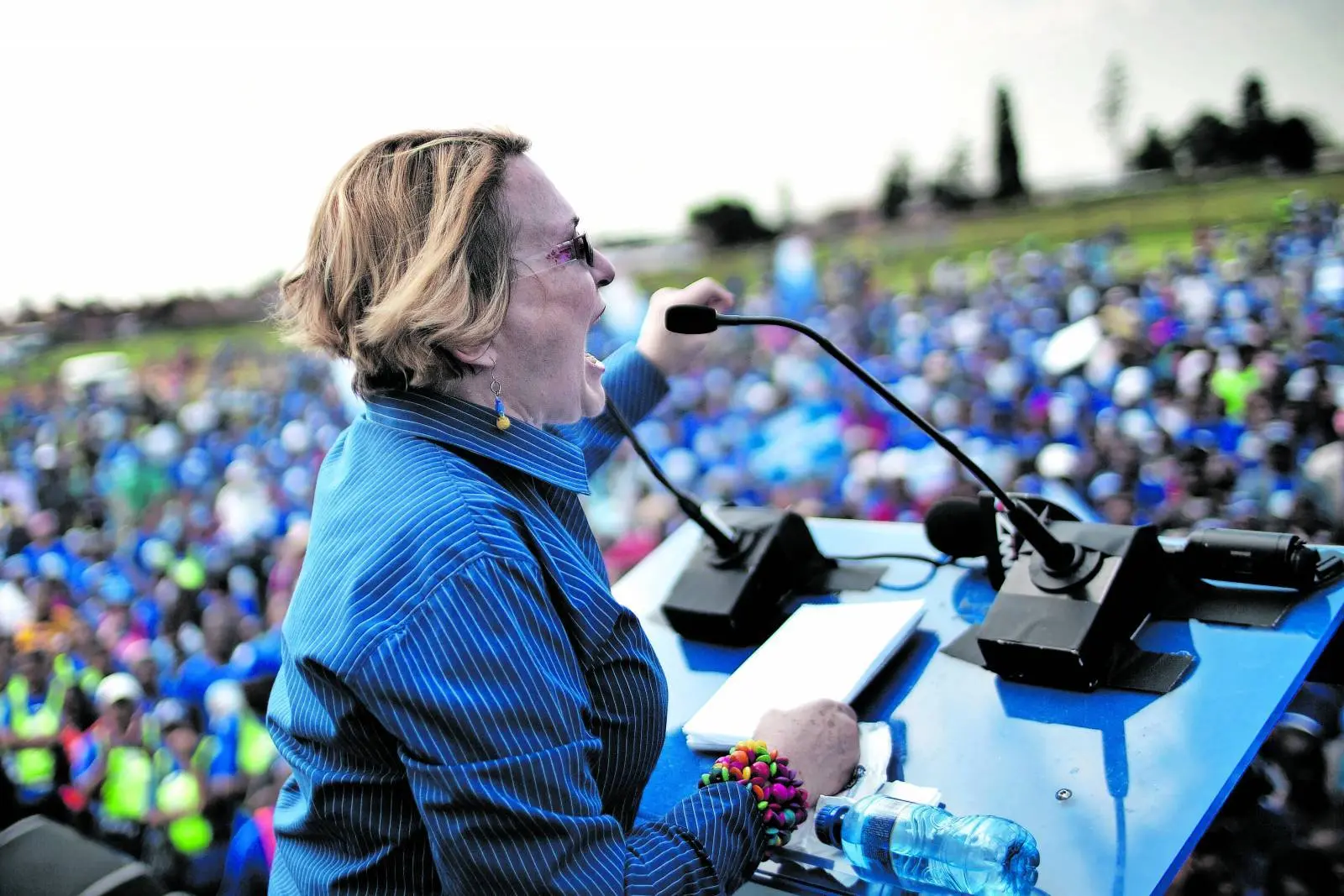
There is something profoundly troubling about the Mail & Guardian's headline, “Black parties block Zille”. Not simply because of its choice of words but because of what that framing reveals about the political imagination through which South Africa’s democracy is being interpreted.
One has to ask: Why is the political outcome of coalition negotiations being framed primarily through race? And why does the exclusion of Helen Zille from a potential mayoral position appear to warrant a racialised headline, as though something inherently undemocratic has occurred when black-led political formations decide to negotiate among themselves?
Perhaps the more revealing question is this: When did black political parties exercising their democratic choices become a threat to democracy?
South Africa is a constitutional democracy. Political parties are entitled to negotiate, form coalitions, establish governing arrangements and decide which political leaders they are prepared to support. These are not extraordinary privileges. They are the ordinary workings of parliamentary democracy.
The Democratic Alliance (DA) might have emerged as the largest party in Johannesburg but receiving the largest share of the vote is not the same as securing a governing majority. With 34.8% of the vote and 91 of the city's 270 council seats, the DArequires the support of other parties to govern. The question, therefore, is not whether Zille has been unfairly denied something that belongs to her, but whether other parties are entitled to exercise their political agency in determining who should govern.
They are.
Yet the language surrounding these negotiations suggests that there is something suspect about political cooperation among black-led parties. The phrase “black parties” is particularly revealing. These are South African political formations representing South African citizens. Their leaders and constituencies might be predominantly black, but their participation in democratic politics does not make them less legitimate or their political choices less national. A majority does not become an exclusionary force simply because it exercises its democratic rights.
The headline invites uncomfortable questions: Would the story have been framed in the same way had a collection of predominantly white political formations negotiated to prevent a black political leader from becoming mayor? Would we be discussing the racial exclusion of that leader or would we simply call it coalition politics?
The issue is not Zille’s race in isolation. It is the historical and political symbolism attached to her ambitions. South Africa cannot pretend that political authority operates in a historical vacuum. Apartheid was not merely a system of racial separation; it was a system that normalised white political, economic and institutional dominance while systematically denying black people the right to determine their own political and material futures.
Democracy dismantled the legal architecture of that system but it did not automatically dismantle its assumptions about who is entitled to lead, whose political judgement is trusted and whose exercise of power is regarded as legitimate. South Africa’s democracy cannot be judged only by whether everyone is permitted to participate in politics; it must also be judged by whether previously marginalised people are able to exercise political power without that power being treated as inherently suspect.
The arrogance of whiteness, in this context, lies in the assumption that political authority remains a natural inheritance, even in a country where white people constitute a demographic minority. It is not an argument against white political participation. South Africa belongs equally to all its citizens. It is an argument against the expectation that white political leadership should enjoy a particular entitlement to power or that its absence must be interpreted as a democratic failure.
Zille’s political history and the DA’s record in the Western Cape also deserve scrutiny. The party cannot simply invoke its reputation for administrative competence as though this settles every question about its approach to transformation, inequality and historical redress. The persistent inequalities between affluent suburbs and historically marginalised communities in the province raise legitimate questions about whose needs are prioritised, how public resources are distributed and whether service delivery is being measured by administrative efficiency only or also by social justice.
Competence matters. But competence without an appreciation of historical inequality is an incomplete conception of good governance.
This brings us to the broader question of political and economic power. The DA has presented itself as a bulwark against what it describes as the dangers of coalitions involving the ANC, EFF, MK Party and other formations. Its warnings about instability, corruption and poor governance should not be dismissed automatically.
South Africans have every reason to be concerned about coalition instability and the failures of political leadership. But these concerns must be applied consistently. The Government of National Unity demonstrated that an arrangement involving parties with significantly different political philosophies is not inherently unworkable. Why, then, should cooperation among black-led parties be treated as an impending catastrophe before it has even been given the opportunity to govern?
There are also legitimate questions about the growing influence of private interests in public infrastructure and service delivery. Public-private partnerships, the management of water, electricity, transport and other essential services and the agreements underpinning them deserve rigorous democratic scrutiny. Who benefits? Who carries the financial risk? What safeguards protect the public interest? These questions should be asked of every administration, including the GNU and DA-led municipalities. They should not, however, be turned into unsubstantiated allegations about particular funders or commercial arrangements.
Ultimately, this debate is about much more than Zille or the mayoralty of Johannesburg. It is about whether South Africans are prepared to accept that political power is no longer the preserve of established political elites and that black political formations can negotiate, disagree, collaborate and govern without having their legitimacy questioned on racial grounds.
The proposed coalition must, of course, be judged by its performance. It must demonstrate that it can govern responsibly, maintain financial accountability, deliver services and improve the lives of residents. Its constituent parties should not receive a free pass because they share a political history or because they are predominantly black. Political solidarity is not a substitute for competence, just as claims of competence are not a substitute for social justice.
But let us apply the same democratic standard to everyone.
The question is not why black parties have blocked Zille. The question is why the possibility of black political cooperation continues to provoke such anxiety.
Let them govern. Let them demonstrate what they can achieve. Let their records be scrutinised as rigorously as those of any other political formation. And let South Africans, rather than the anxieties of political elites, decide whether they deserve another term in 2029.
That, surely, is what democracy looks like.
Dr Quraysha Ismail Sooliman is an adjunct academic in the department of applied management at Unisa.