


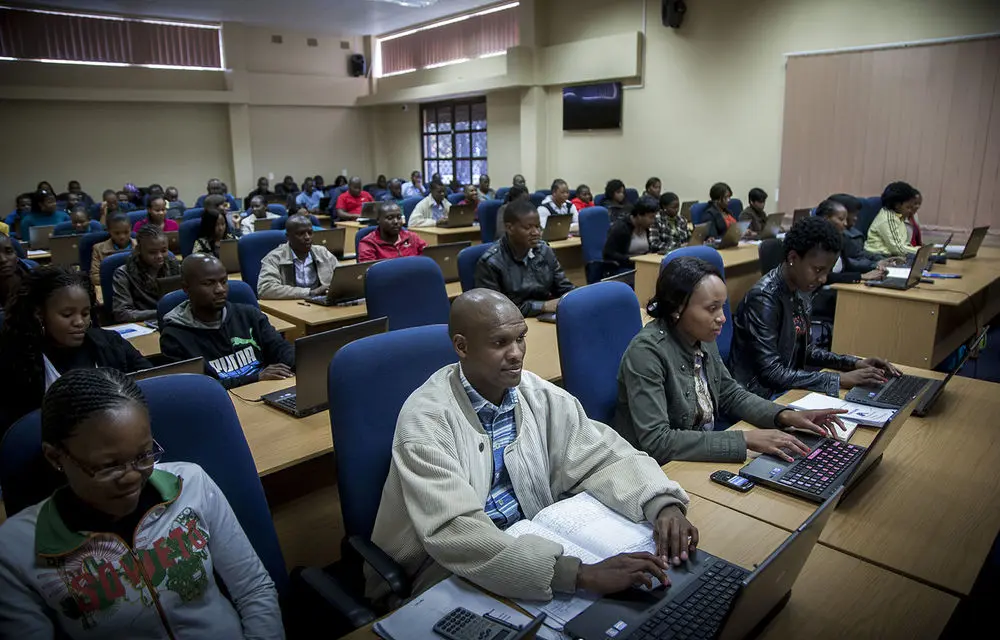
South Africa does not face a choice between universities and TVET colleges. It faces a far more urgent challenge: building an integrated post-school education and training system that values different forms of knowledge, develops diverse talents and equips citizens with the capabilities required by a rapidly changing economy. The question is not whether universities are better than TVET colleges, or vice versa. It is whether the country can afford to continue undervaluing either.
We must also challenge the misconception that university education is inherently superior to vocational and technical training. South Africa needs researchers, engineers, artisans, technicians, educators, entrepreneurs and professionals. These capabilities are complementary and equally important to national development. Talent is distributed throughout society, even where opportunities are not.
Our objective is not merely to produce graduates or artisans. It is to build an integrated post-school education and training system that connects learning to opportunity, responds to labour-market demand, supports economic growth and expands pathways into employment, entrepreneurship and lifelong learning.
The historical preference for university education is understandable. Universities have traditionally been associated with professional careers, social mobility, prestige and leadership. Parents often dream of seeing their children become doctors, engineers, lawyers, accountants, academics or scientists. These aspirations are legitimate and should be celebrated. A country that neglects its universities undermines its ability to produce researchers, professionals, innovators and public intellectuals who drive development and knowledge creation.
However, a dangerous misconception arises when university education is elevated into the only meaningful pathway to success. This mindset has imposed a heavy cost on South Africa. It has fuelled the perception that practical and technical occupations are somehow inferior to professional occupations. It has encouraged many young people to pursue academic qualifications that may not align with their interests, talents or labour market opportunities. It has also contributed to the neglect of occupations that are indispensable for industrial growth, infrastructure development and economic competitiveness.
Modern economies do not run on university graduates alone. The roads we travel on, the houses we live in, the factories that produce goods, the electrical systems that power our communities, the digital networks that connect our businesses and the machinery that sustains industrial production all depend on artisans, technicians and skilled tradespeople. Without welders, plumbers, electricians, millwrights, fitters, mechanics, coders, renewable energy technicians and countless other vocational professionals, economic activity would grind to a halt.
South Africa’s development aspirations make this reality even more compelling. Whether one considers the expansion of transport infrastructure, the energy transition, industrialisation, localisation, manufacturing growth, digital transformation or the revitalisation of the economy, all these ambitions require a large pool of technically skilled workers. The country simply cannot build a capable developmental state or a competitive economy without strengthening technical and vocational education.

This is why TVET colleges are central to South Africa’s skills revolution. For too long, TVET colleges have been viewed through the lens of what they are not, rather than what they are. They are not miniature universities. They are not institutions of last resort. They are not fallback options for students who could not enter university. They are specialised institutions designed to produce occupationally directed skills that are essential to economic growth and social progress.
In many respects, TVET colleges are uniquely positioned to respond to one of South Africa’s most pressing challenges: youth unemployment. One of the persistent criticisms of education systems across the world is that graduates often leave institutions with theoretical knowledge but insufficient workplace experience. TVET colleges help bridge this divide by integrating classroom learning with practical training, workplace exposure and industry-relevant competencies. Their programmes are deliberately aligned to occupations and sectors where technical expertise is required.
This alignment matters. Employers increasingly seek workers who can demonstrate practical competence, adaptability and job-readiness. While academic qualifications remain important, employability increasingly depends on whether individuals can apply their knowledge to real-world challenges. In many sectors, graduates from vocational and technical programmes possess precisely the skills that employers require.
Moreover, the rise of advanced manufacturing, automation, artificial intelligence, green energy and digital technologies is not diminishing the importance of technical skills. On the contrary, it is transforming and elevating them. The technician of the future will require sophisticated knowledge, digital literacy and continuous learning. Modern vocational education is therefore not about low-skilled work; it is about preparing individuals for highly specialised occupations within increasingly complex economic systems.
At the same time, it would be a mistake to conclude that universities have become less important. The notion that TVET colleges should replace universities is as flawed as the notion that universities should overshadow TVET colleges. A modern economy requires both. Universities generate research, innovation and advanced knowledge. They produce scientists who develop new technologies, engineers who design complex systems, healthcare professionals who improve public health outcomes, economists who shape policy and educators who nurture future generations. Their contribution extends beyond labour market preparation. Universities are institutions of discovery, critical inquiry and intellectual advancement.
TVET colleges, meanwhile, translate knowledge into practical capability. They provide the technical expertise required to implement, maintain, operate and expand the systems upon which society depends. Their graduates convert ideas into action and plans into tangible outcomes. The relationship between universities and TVET colleges should therefore be understood not as a competition, but as a partnership. An engineer designs a bridge, technicians and artisans help build and maintain it. A software architect develops a digital platform, technicians and programmers help deploy and manage it. A scientist develops renewable energy technologies, electricians and technicians install and operate them. Neither can succeed without the other.
Indeed, countries that have successfully industrialised and maintained competitive economies have generally invested in both strong universities and robust vocational education systems. Their success stems not from choosing one pathway over another, but from recognising the complementary contribution each makes to national development.
South Africa must embrace the same philosophy. This requires changing deeply embedded social attitudes. Parents, educators, employers and communities must stop treating vocational education as a lesser alternative. Young people should be encouraged to pursue pathways that align with their talents, interests and aspirations, whether those pathways lead to a university lecture hall, a TVET workshop, an apprenticeship programme or a combination of these options.
An inclusive and responsive PSET system is not merely an education goal. As Minister Buti Manamela consistently reminds us, it is a cornerstone of economic transformation. It is through a well-functioning network of universities, TVET colleges, CET colleges, SETAs and workplace-based learning opportunities that South Africa can develop the skills required for industrialisation, infrastructure development, digital innovation, entrepreneurship and sustainable economic growth. Such a system creates pathways into employment, supports self-employment and enterprise development, and ensures that learning translates into meaningful participation in the economy.
When South Africa finally recognises that academic excellence and vocational excellence are equally valuable expressions of human potential, it will unlock a more inclusive, productive and prosperous future. The skills revolution the country needs will not emerge from privileging one pathway over another. It will emerge from building a coherent, integrated and high-performing PSET system in which universities and TVET colleges work as equal partners, each contributing according to its strengths, to expand opportunity, strengthen social inclusion and drive national development. That is not merely an education imperative. It is an economic imperative, a social imperative and a nation-building imperative.
South Africa's skills revolution will succeed not because universities win or TVET colleges win, but because the Post-School Education and Training system under the stewardship of Minister Manamela succeeds as an integrated ecosystem in which every institution contributes according to its own strengths.
Cornelius Monama is the spokesperson of the Department of Higher Education and Training