


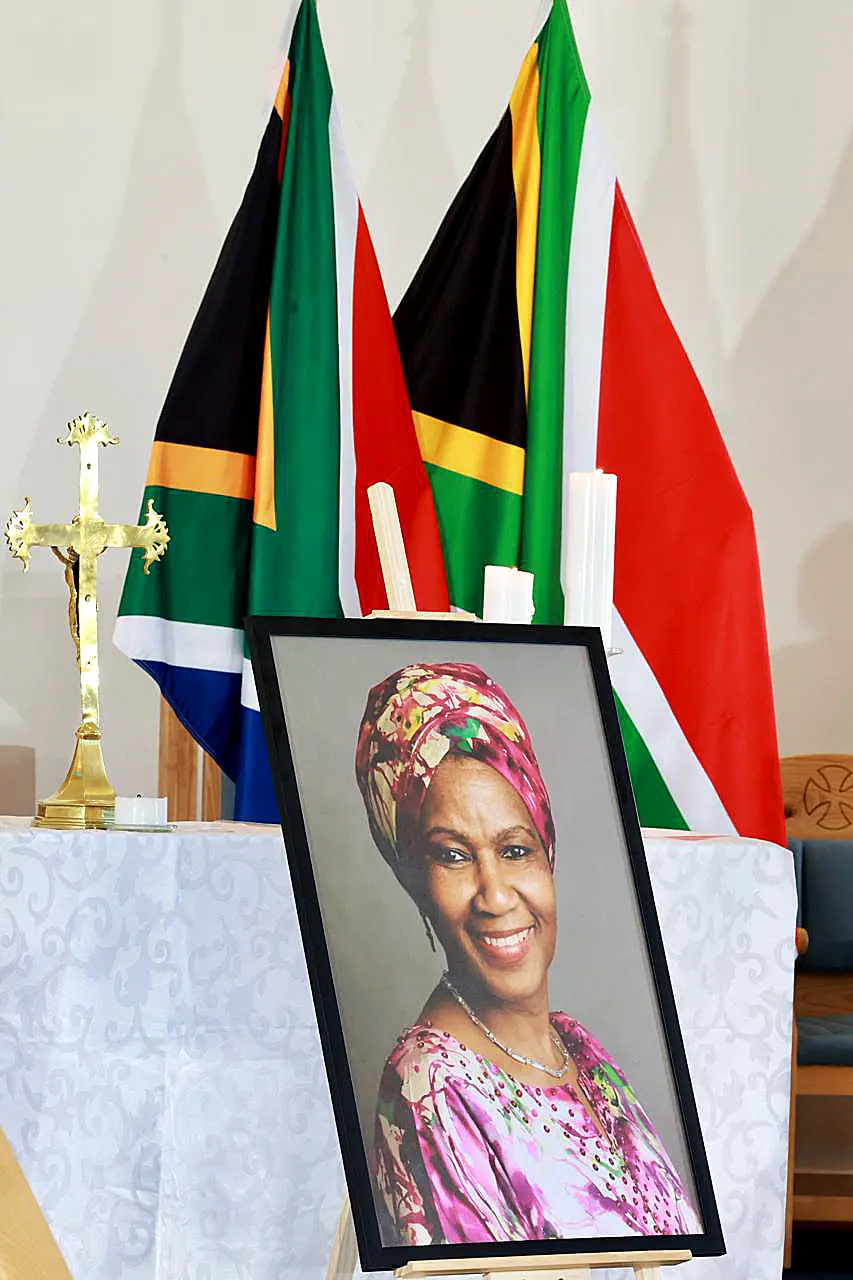
The passing of Dr Phumzile Mlambo-Ngcuka marks the close of an extraordinary chapter in South Africa’s democratic story. A former Deputy President, accomplished diplomat, and global champion for gender equality, she leaves behind a legacy that extends far beyond public office and will continue to inspire generations.
Yet, as with every remarkable chapter, its conclusion invites us not only to reflect on what has been written, but also to consider how we will carry the lessons forward.
Her passing is a profound loss for South Africa, the African continent, and the international community. The loss is felt even more deeply because she remained committed to justice, development, and human dignity until her final days, with important work still before her.
In reflecting on her life, the image of a book with many chapters comes to mind. Though every book eventually reaches its final chapter and its pages are gently closed, the story does not end there. Its lessons endure, its wisdom remains, and its message continues to resonate long after the last sentence has been read.
That is perhaps the most fitting way to understand the life and legacy of Dr Phumzile Mlambo-Ngcuka.
Many have spoken of her as a devoted wife, mother, family member, and friend, remembering her warmth, compassion, and humanity. Yet to focus only on these personal qualities would be to overlook the extraordinary public contribution of a woman whose life became inseparable from South Africa’s democratic journey and the global struggle for gender equality.
Dr Mlambo-Ngcuka belonged to a generation that refused to accept injustice as inevitable. Together with her contemporaries, she chose the difficult path of resisting apartheid because she believed a better South Africa was possible. That belief shaped not only her political career but also her broader vision of social transformation.
What distinguished her leadership was her understanding that political freedom alone is not enough. She believed democracy must deliver real opportunities and tangible improvements in people’s lives, particularly for women, young people, and historically marginalised communities.
This conviction became the defining thread throughout her public service.
As a Member of Parliament in South Africa’s first democratic Parliament, she helped lay the foundations of a constitutional order rooted in dignity, equality, and human rights. As Deputy Minister of Trade and Industry, she advanced economic inclusion and expanded opportunities for those excluded from meaningful participation in the economy. As Minister of Minerals and Energy, she championed reforms aimed at transforming one of the country’s most unequal sectors.
Her historic appointment in 2005 as South Africa’s first female Deputy President was more than a personal milestone. It became a powerful symbol of the steady dismantling of barriers that had long kept women from the highest levels of leadership.
Her influence, however, extended far beyond South Africa’s borders.
As Executive Director of UN Women and United Nations Under- Secretary-General, Dr Mlambo- Ngcuka emerged as one of the world’s most respected voices for gender equality. At a time when discussions about women’s leadership often remained aspirational, she consistently challenged institutions to move beyond rhetoric and create meaningful opportunities for women’s advancement.
She understood a truth that remains relevant today:
the shortage is not capable women leaders, but systems and structures that continue to deny them equal opportunity.
That conviction shaped initiatives such as HeForShe, through which she mobilised governments, businesses, universities, and civil society to treat gender equality not as a peripheral issue, but as a central pillar of development.
Perhaps this is why her legacy resonates so deeply. Her life’s work was never about personal achievement. It was about creating opportunities for others.
Wherever she served, she amplified marginalised voices. She viewed leadership not as the accumulation of power, but as the expansion of possibility. She measured success by the impact policies had on people’s lives, particularly those historically excluded from the benefits of progress.
Her commitment to education reflected this philosophy. She believed education is one of the most powerful instruments for empowerment, social mobility, and national development. Whether serving as Chancellor of the University of Johannesburg or pursuing her own academic journey, she remained steadfast in that belief.
Even in her later years, Dr Mlambo-Ngcuka continued to champion peace, development, and democratic governance across Africa. Her involvement in conflict resolution and peace-building efforts reflected her enduring belief that Africa’s challenges require African-led solutions.
Importantly, she remained committed to the renewal of public institutions and political leadership. She understood that lasting progress depends not only on vision, but also on accountability, integrity, and responsiveness to the needs of citizens. Her life stands as a powerful reminder that ethical leadership matters most in moments of difficulty.
As South Africa reflects on her passing, it may be tempting to celebrate her achievements and leave it there. That would not be enough.
The greatest tribute to Dr Mlambo- Ngcuka will not be found in memorial speeches, public accolades, or historical recognition. It will be found in continuing the work to which she dedicated her life.
It will be found in building a society where every child, regardless of circumstance, has the opportunity to succeed. It will be found in advancing the empowerment of women and girls, reducing inequality, strengthening democracy, and ensuring that economic growth creates opportunity for many rather than privilege for a few.
Above all, it will be found in embracing the values that defined her public service: courage, integrity, compassion, and an unwavering faith in human potential.
Dr Phumzile Mlambo-Ngcuka’s earthly journey may have come to an end, but her mission endures. It lives on in every young woman who chooses to lead, every student who sees education as a pathway to opportunity, every community striving for dignity and every citizen working towards a more just society.
Legends do not endure because of the positions they held or the titles they earned. They endure because of the lives they touched and the possibilities they created.
Through that measure, Dr Phumzile Mlambo-Ngcuka’s legacy is secure. It will continue to inspire generations to come. Indeed, legends never die. They live on in the hearts and minds of generations.
Paul Mashatile is the deputy president of South Africa.