


Years ago, at the Africa Leadership Initiative, an Aspen fellowship, we were asked to think about moving from success to significance. The seminars, coaching and readings were meant to cultivate the ethos of servant leadership.
If we had a career, a family and good friends, we considered ourselves successful and with good reason. In a country as unequal as ours, a steady job in a household can change what is possible for everyone in it. What do we owe to others once those opportunities have come our way? After several seminars we agreed that the question could be answered only with time.
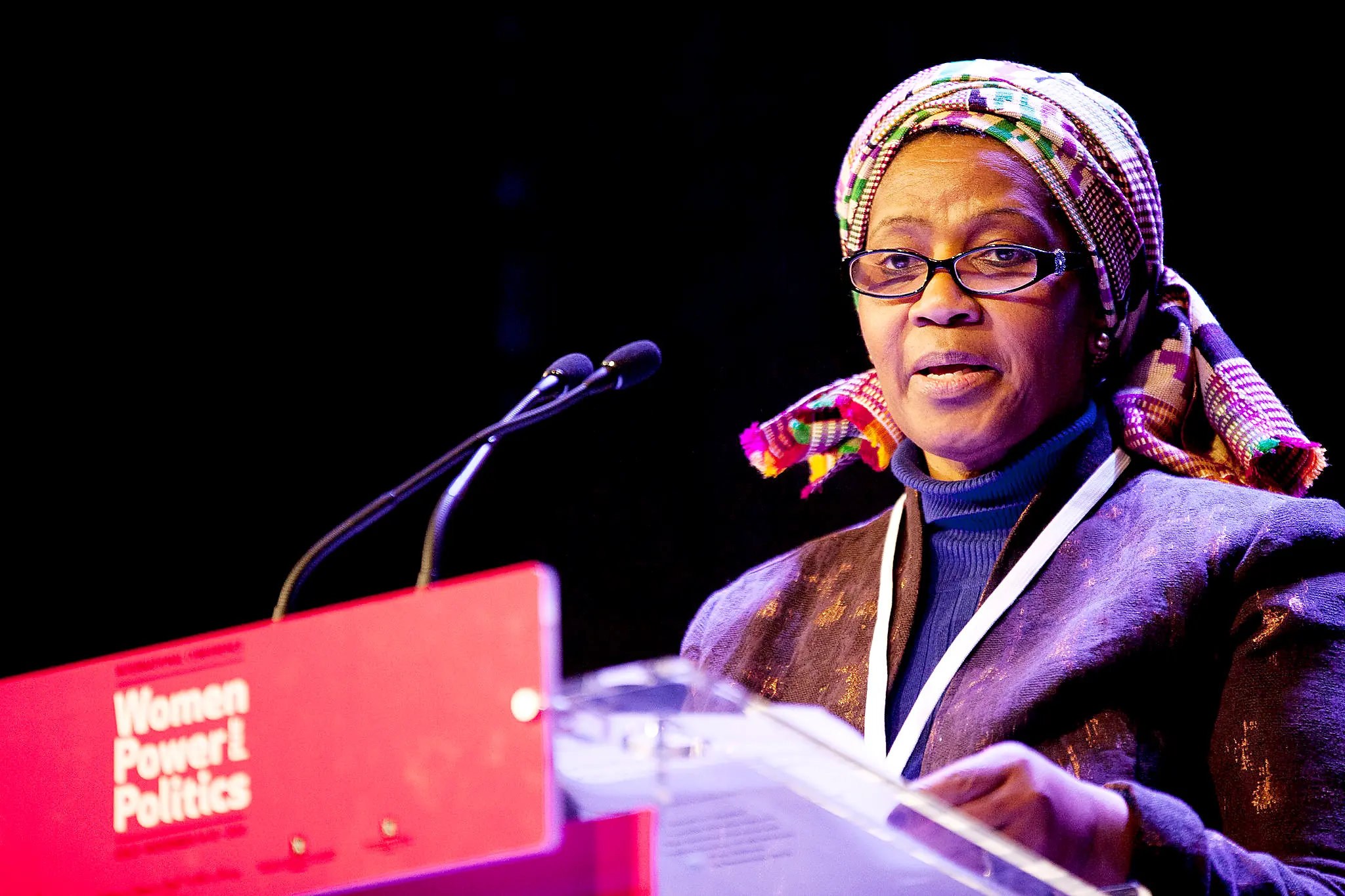
Last weekend I went to pay my respects at the home of my former principal, the late deputy president Phumzile Mlambo-Ngcuka.
Young people from the Umlambo Foundation, the education non-profit she established after leaving the Presidency, were there. So were the protectors with whom we had worked when she was deputy president, men and women who had served principals before her and many after her. Standing among them, I found myself returning to the question the fellowship had left with us.
I came to the Union Buildings in 2005 to mainstream youth development. I was meant to stay for a year. I stayed for 15. The Presidency, under Reverend Frank Chikane as director-general and Joel Netshitenzhe as head of policy, was immersed in the deputy president’s strategic priorities. Before long I had moved to her office as head of strategy and then chief of staff.
Ma’am, as we called her, advised that I should not shy away from pink shirts. I needed to be daring and bright, she said, and to bring some energy into the place. Pink was a bold choice for a lowly public servant at the Union Buildings, which I suppose was her point. Then a woman came to a meeting and the shirt caught her eye. She would later become the mother of my children.
Those of us who worked for her remember the hours she gave to preparation. By the time she walked into a meeting she knew what she wanted to achieve and whose help she needed and she expected the same of us. For her, preparation was a form of respect.
Through the Joint Initiative on Priority Skills Acquisition (Jipsa) she called on people here and abroad to secure training placements, learnerships and scholarships for young people. During this week of mourning I met some of the beneficiaries, now middle-aged professionals in government and the private sector. One of them told me: “I was just a township girl. Through Jipsa I got to see the inside of an aircraft flying to Europe.”
Business leaders such as Yvonne Mfolo, Sindi Koyana and Nolitha Fakude also count her among the people who shaped their careers, so do former colleagues like Mamoloko Kubayi, Doreen Kosi, Lusanda Mxenge and many more.
A programme can be judged a success in an annual report. Its significance shows only years later, in people whose lives took a different course. She brought universities and business into the Accelerated and Shared Growth Initiative for South Africa for the same reason. She was clear about the binding constraints to growth, read the notes we prepared in the Policy Unit closely and respected evidence in policymaking.
Some of the ministers whose support she needed were her seniors in age and in ANC rank. She came to them with something worth their time and never led with her position.
I saw this at first hand in a meeting where I faced resistance from ministers who doubted the National Youth Service programme. She settled the matter in two sentences: “Lekota is right. If we do not intervene in the lives of young people, other dark forces will.” Funding followed, including for the extension of the Military Skills Development System.
She put her stamp on the institutions she inherited, among them the South African National Aids Council, which she used to calm the stormy relations between government and civil society over the national Aids response. The inter-ministerial committee she chaired to prepare for the 2010 Fifa World Cup remains one of the best examples of coordination in government.
She told Joel Netshitenzhe and Alan Hirsch that if there were indeed two economies, as president Mbeki had argued, the Presidency must lead the effort to transform the second.
Public employment and small enterprise programmes multiplied and she asked for an anti-poverty strategy, which we delivered after consulting the social partners at Nedlac. With the Policy Unit she then took these matters to the executive councils of provinces to hear where things were stuck and what political backing they needed.
One day in Pietermaritzburg, Bheki Cele, then KwaZulu-Natal MEC for transport, was explaining the delays in building King Shaka International Airport: “Angithi kunabantu abathi kunezinkonjane laphayana, azingathintwa. Yingakho nje i-airport ingakhiwa. Asithumele abafana baKwaMashu bazishaye ngesihlilingi.” (There are people who say there are swallows over there and they must not be disturbed. That is why the airport is not being built. Let us send the boys from KwaMashu to chase them off with slingshots.) You had to hear Bheki say it in isiZulu. Ma’am laughed all the way from Pietermaritzburg to Pretoria:
“Izinkonjane, nkosi yami!”
Of course some of the interventions like her attempt to stabilise Nelson Mandela Bay did not succeed, the squabblists are still at it today, collapsing what remains of the once promising manufacturing hub.
Someone asked me recently what had happened to Jipsa. I told her that minister Blade Nzimande had told me to “change its name to protect it, because it was too useful to abandon”. It became the Human Resource Development Council of South Africa, which Deputy President Paul Mashatile chairs.
Ma’am sustained the programmes she inherited from her predecessor, Jacob Zuma, and her successors did the same. Those were government programmes, not anyone’s pet projects, she remarked.
After Polokwane we saw how she handled political dynamics of her own. She and Kgalema Motlanthe had stood on opposing sides of that contest. When Motlanthe was sworn in as second minister in the Presidency in 2008, he was deputy president of the ANC. She told us to give him every support and to make sure he was fully drawn into the work of the institution.
I never heard her speak ill of a political opponent. She listened to colleagues, comrades and advisers and kept close to the people she represented. A proverb from Inanda, where she and I both went to school at Ohlange, puts it well: “As a leader, you can’t claim to love those you represent without fellowship with those you lead with.”
I think of these habits when I recall what we read in the Aspen fellowship. We read Desmond Tutu’s work about justice and reconciliation. Ehsan Naraghi’s From Palace to Prison made us consider the dangers of political deafness and being a stooge. In Chinua Achebe’s No Longer at Ease we met Obi Okonkwo, the gifted young civil servant brought down by the compromises he once despised. Those of us who were young, educated and pleased with our prospects were warned not to end up like him.
When I left the Union Buildings to become director-general of the National School of Government, Ma’am affirmed the move and added: “Let’s not read about you in the news, wenze kahle njengo DG Chikane nabo Sandile Nogxina wase minerals.” (Do well as DGs Chikane and Sandile Nogxina of Minerals.) Malose Kekana, her sounding board on youth development, said the same. I knew what they meant: I must not become Obi Okonkwo. When I asked her to chair the NSG’s quality assurance committee, she accepted without hesitation.
Later I told her I was leaving the NSG for the University of Johannesburg, where she was chancellor. “Welcome to the leading university in Africa,” she said.
In August this year the university hosted the inaugural Phumzile Mlambo-Ngcuka Annual Lecture, delivered by her friend ambassador Thenjiwe Mtintso. She reminded us that “societal impact begins long before titles”, in homes, communities, churches and stokvels, wherever women quietly organise society. Ma’am said democracy and freedom were incomplete if a large section of humanity did not enjoy them.
She called recently to ask me to convene a summer school for her mentees in the African Achievers Governance and Policy Leadership initiative, together with Ameenah Gurib-Fakim, the former president of Mauritius. I said yes. With Ma’am, the teacher and mentor always came first. Ma’am and comrades of hers such as Naledi Pandor made time to study all the way to doctoral level, amid some of their busiest years. She still made time for other’s education.
I keep returning to the mourners at her home. Ministers, judges, politicians, business leaders, public servants, young women activists and hawkers came, as did retired ambassadors and even teary journalists.
The young people could tell you what it meant to have her take an interest in what they might become. She was a fellow Zebra, as those of us who studied at Ohlange High School are known, and she carried the name further than most, breaking down barriers and lifting girls like Nozipho Mbanjwa as she rose. Now Khosi Shange, Viwe Mtshonshi and the team at her foundation must carry on without her, as will her family.
At the fellowship we had been asked to think about what we might do for others once we had succeeded. Thenjiwe Mtintso’s words make me wonder whether we have put things in the right order. Ma’am was doing work that mattered long before she held the offices by which so many came to know her. Those offices gave her more room to do it.
In Down in the Valley of the Sages, I ask what we want of life as our elders grow older. Down in the valley of the sages /We watch our sages age / Hoping for life’s mercies /To extend the lease of life /For more days, weeks and even years.
I know what I would have done with a few more days. I would have spoken to her about the summer school. And all of us who worked with her would have liked to hear her laugh again, telling the bodyguards to go incognito: “Ningangifakeli umjojo eHydro” (Don’t shine a spotlight on me when I go to the spa).
Like the rest of us sinners, Ma’am had her faults. What I admired in her was how long she kept trying to do things that mattered. She preferred doing them to being praised. That is why, as we take leave of her, I hear Ladysmith Black Mambazo singing Kukhona Ikhaya Labangcwele: there is a home for the saints. I hear the song as a prayer for Ma’am. We went to the house where we had hoped to find her for many more years. Now we wish her rest in a home we can only sing about. From all of us who served in her office: hamba kahle, Ma’am. Lala ngoxolo.
Busani Ngcaweni is the director of the Centre for Public Policy and African Studies at the University of Johannesburg.