

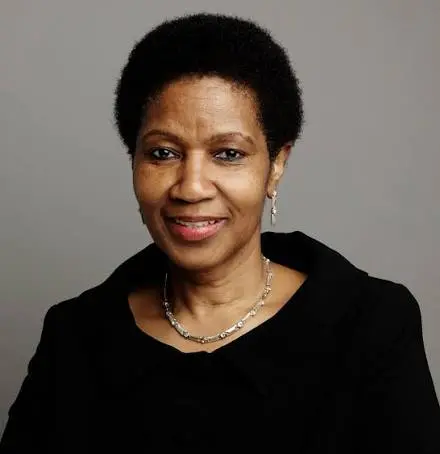
“My mother always told me that inaction is not an option – and neither is going at it alone”.
These words were written by Dr Phumzile Mlambo-Ngcuka in an article published by the Huffington Post on the 20 March 2014 as part of the Global Moms Relay - a digital campaign that raises funds, awareness, and support for mothers and babies around the world. As I join millions of South Africans in mourning her loss, I find myself reflecting on these words. Their profundity became more pronounced to me seven years after she wrote them when I assumed office as the vice-chancellor and principal of the biggest university in Africa. It was a time characterised by both extraordinary triumphs and devastating trials.
On one hand, history was being written, as the University of South Africa (Unisa) had appointed its first female vice-chancellor, affirming to women in academia and larger society that gender relations, which are fundamentally power relations, could no longer remain unchallenged. On the other hand, such a challenge, with its upending of a status quo which far too many people were comfortable with, faced vehement opposition from those in power and those on its peripheries. And as with any opposition to long-standing inequity, the contestation was not expressed through ideation with the intention of persuading and having an open-mind to be persuaded, but with tactics that sought to dehumanise my person and destabilise the vision of a premier institution.
No one understood this path better than Mme Mlambo-Ngcuka, who was serving as the executive director of the United Nations Entity for Gender Equality and Empowerment of Women (UN Women) and the under-secretary of the UN at the time. Between 2005 and 2008, she had served as the deputy president of South Africa – the first woman in history to do so. Her entire life was defined by work dedicated to bettering the lives of people on the margins, particularly women and the youth. Long before she served in the cabinet of the first democratic government of South Africa, she was a teacher investing in the lives of young people in KwaZulu-Natal, and the inaugural president of the Natal Organisation of Women (NOW) – an affiliate of the United Democratic Front (UDF). There, she organised around issues that affected both urban and rural women across the colour and class divide. These included housing, the cost of living and healthcare.
And so it was, that when the challenges that came with being the first woman to assume an office confronted me, she was among the first people to avail counsel. The support did not cease, and it was not given only in private. In one official event where she witnessed an injustice meted out against me in full view of the world, she did not hesitate to confront the responsible person immediately and openly. It was a demonstration that inaction was not an option for her, and that she was unwilling to allow another woman to endure injustice alone, unsupported and rendered invisible. It was a principle that she not only advocated for, but one that she espoused in her own life and her interactions with other women.

I draw attention to this intimate account because it matters that when history has its say about Mme Mlambo-Ngcuka, it records not only her efforts and accomplishments in building and strengthening institutions, but also in the ways that she showed up for women confronted with struggles that may, on the surface, appear personal. She understood, concretely, that the personal is political. Every day, private experiences that women navigate in the productive and reproductive spheres are shaped by broader social and political power structures rather than being purely individual issues. It was through her sustained counsel and wisdom, and that of women like Mama Zanele Mbeki, that I came to have a deeper appreciation that struggles that feel personal or private often reflect wider patterns of inequality and power, and that this necessitates collective action that facilitates social, political and economic change.
Collective action also necessitates intergenerational dialogues among women, which Mme Mlambo-Ngcuka was especially committed to. In April 2022, she delivered the keynote address at the Charlotte Mannya-Maxeke Commemorative Lecture hosted by the University of Johannesburg, where I was a respondent alongside the public protector, advocate Kholeka Gcaleka, and former student activist, Fasiha Hassan, who, in 2019, became the youngest member of the Gauteng Provincial Legislature, chairing committees on COGTA, Economic Development, and Environment. There, Mme Mlambo-Ngcuka emphasised the principle that her mother had imparted on her – that inaction is not an option, and that collaboration is the bedrock on which meaningful change rests.
At Unisa, we were privileged to enjoy a longstanding friendship with Mme Mlambo-Ngcuka. Her association with our university spans nearly two decades, from addressing the opening of our academic year in 2007 as the deputy president of the Republic, to delivering the ninth Thabo Mbeki Africa Day Lecture in 2018 and contributing to our intellectual engagements on gender equality, human rights and Africa’s development. In the same year, she participated in the International Dialogue on Human Rights and Social Activism, where she emphasised the interconnected nature of human rights struggles and acknowledged young women’s participation. At our 2020 National Women’s Day dialogue, which happened at the height of the COVID-19 pandemic that had a devastating impact on people around the world, and even more so on the most vulnerable populations, she delivered a keynote address that advocated for equal remuneration, economic empowerment, the elimination of gender-based violence, equitable distribution of unpaid care work, leadership participation and investment in gender equality. Oppression, she understood, has gendered characteristics that cannot be minimised in discourse on empowerment.
In August 2021, as she concluded her tenure at UN Women, we had the privilege of celebrating her extraordinary contribution to humanity through our partnership with South African Women in Dialogue (SAWID) and UN Women. The following year, in my capacity as the Vice-Chancellor and Principal of Unisa, I was bestowed the honour to respond to her lecture on what an educated African girl can do - a subject that resonates deeply with our shared conviction in the transformative power of education and in centering girls and women in discourse. So committed is Unisa to this pursuit that we have defined feminist, womanist and Bosadi theorisations as one of our ten catalytic niche areas that aim to drive African-centred research, innovation, teaching, and sustainable development.
It is particularly comforting, in this moment of profound loss, that just a week before her passing, Unisa recognised Mme Mlambo-Ngcuka’s lifelong commitment to humanity through the 2026 Chancellor’s Calabash Award for Public Service. We were able to honour her in her lifetime and affirm the enduring significance of her life’s work. That work, whose value is immeasurable, must continue.

Professor Puleng LenkaBula is the principal and vice-chancellor of Unisa