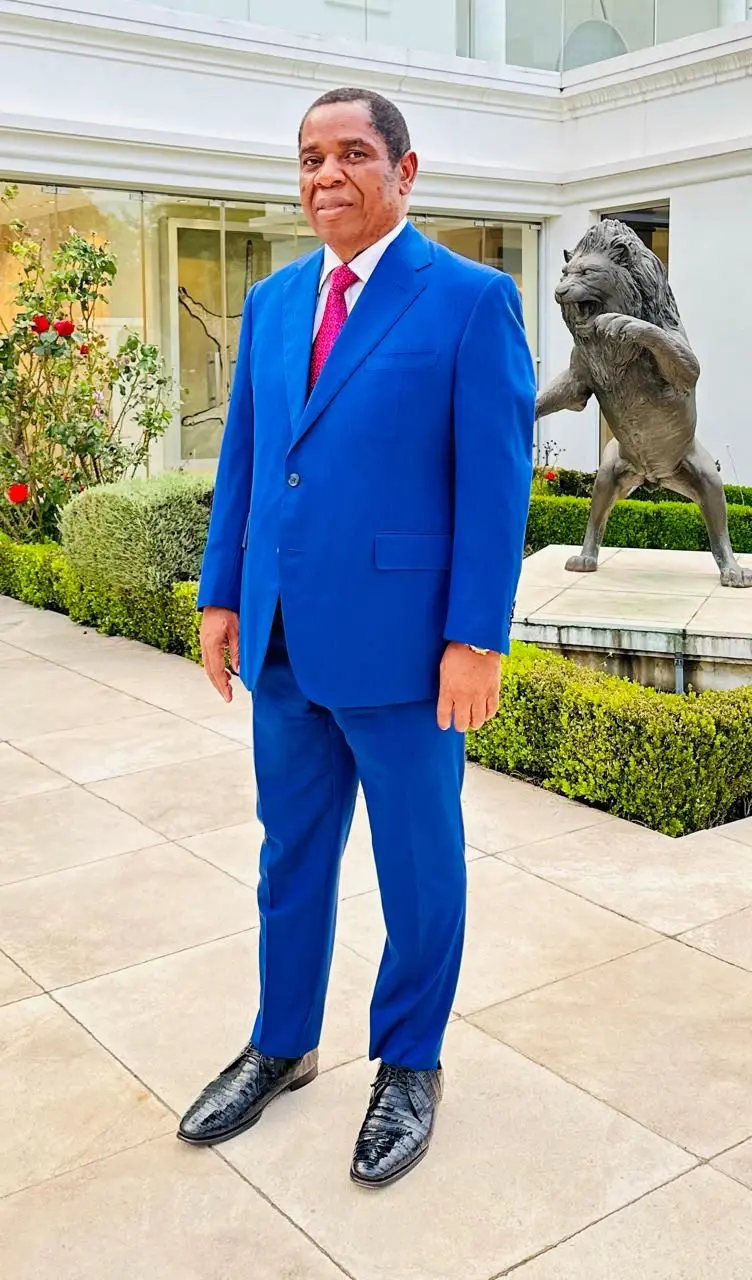
Reverend Frank Chikane at Carlswald Estate, Midrand. (Photograph: James Puttick)
Reverend Frank Chikane, former director-general in the presidency, has just completed six years as chairperson of the Kagiso Trust, which has built schools and halls at a fraction of the price the government would pay. He speaks to Carien Du Plessis about corruption, his children’s political views and how churches can be better mobilised
Would you ever go back to work for the government?
If the government wants to use my experience, it is welcome, but I don’t have to go back and be a public servant. If you went as far as the head of the presidency, there is nothing beyond that, actually. I went to the government to serve. It had nothing to do with personal ambitions.
If I’m needed I will be there; for example, we worked on this issue of the Covid grant as churches. We made recommendations to the government. They changed it to some extent, but I’m pleased that the budget was approved and it helped people through difficult times.
For the past six years you have been heading the Kagiso Trust. What have the highlights been?
I took over the trust when it was going through a difficult time. Kagiso has a developmental arm, which deals with all the programmes and projects, and the business side makes money for these.
One of our investments was not performing. I had to fix the organisation, stabilise it and also deal with the investment side.
Kagiso Tiso Holdings (KTH), our initial investment company, was not performing well, so we had to restructure it — optimise it. It’s back on the rails as from the beginning of this year. I became chair of KTH, so I’m now focusing on the business side a lot more.
The other significant achievement is that we celebrated 30 years in 2015. That history is extraordinary. It includes the history of 1993, taking care of victims of apartheid [anti-apartheid activists returning from exile], empowering them and sponsoring programmes that helped them to survive.
We changed gears to look at what we will be doing in the next 30 years, how are we going to help meet [the country’s] challenges.
Give some examples of Kagiso Trust’s programmes?
We first developed the education model. It’s the one that made Vrystaat perform better than other provinces [in matric results]. We took the worst-performing districts in the country and made them the best-performing districts; that’s how effective that model has been.
[For local government], we have a high-tech facility that can assist you in dealing with issues of revenue collection, identifying where people are, and [gathering] statistical information of those who are indigent, poor, or can’t pay. When we started, we had difficulties. The government doesn’t know how to deal with people who are coming to help it. They know about tenders, but we told them we don’t need their money; for example, we built a hall and a school; we experimented through that, and we can build a quality hall for half the price the government spends.
Your son, Rekgotsofetse, wrote a book called Breaking a Rainbow, Building a Nation. What do you think of his views?
I taught my children to think they can be independent of me, so when he wrote that book, he wanted me to read the manuscript. I said to him: ‘No, I am not going to read the manuscript because I [could] influence what you say and do”, so I only read the book after publication.
He has a point. We must accept that the young generation has a point, the Fees Must Fall generation.
A rainbow nation was good imagery for us to bring conflicting parts of our society into one. It had a lot of meaning to build social cohesion; become one nation when the [National Party] separated us, even us black people, into different tribal and ethnic groups. But now the younger people say the problem with a rainbow is that the colours never meet: they go parallel forever. So those who are rich remain rich, and those who are poor remain poor.
How do you think we should tackle race friction, like in Senekal recently?
It was [white] people reacting to a general problem of the nation. My brother who is a former [Umkhonto weSizwe member] has a farm, and he’s been dealing with criminals who come there, and he said, “You know, at one stage I’m going to die on this farm.” And he’s black, so this is not a black-white issue: it’s crime. We need to deal with it, and nobody should die.
This tells you we come from our enclaves and deal with the problem from a racial perspective rather than say, “but actually, this is a national problem, except that farmers are vulnerable”. [Church leaders] should have been there, because we have both white and black people in our churches. We should go there and say, “Let’s deal with this problem; don’t racialise it.”
I am also convinced that until we solve the economic problem in this country, we will not have peace. There should not be anybody who goes without clothes or food.
So you think churches could be more involved in solving problems?
During the pandemic I got messages from people saying they have no food; they have nothing. I could call the headquarters of my church, and they identified the regional leader, who identified the local pastor. The AFM [Apostolic Faith Mission] says, “Where there are people, the AFM is there.” I said, “If there are the people, let’s see if the AFM will be there with them.” And within a day they were able to get a parcel. That shows you the power of the church; that they are everywhere and, therefore, should be using this power better.
In Eight Days in September you wrote that former president Thabo Mbeki ran into trouble when he arrested Schabir Shaik. Do you think President Cyril Ramaphosa could run into the same problems?
This is a different age. In 2005 with [convicted fraudster] Schabir Shaik the problem became an internal ANC matter, and the people outside didn’t do anything about it.
Corruption was not as it is today. People did do corrupt things, but there was a risk that you could be arrested. Then we reached a stage where people stole the money without expecting to be arrested. The level it has reached, especially with the [personal protective equipment procurement scandals], people are so angry that I can’t see how anybody will go inside the ANC and cause changes to make sure the corrupt continue leading the organisation.
When the ANC goes wrong, the country goes wrong, as happened in 2005. If [the leadership] can’t [fix] it, then the branches must do something. And if they fail, then it must be the people of South Africa who actually draw the last line of defence.
Is the fight against corruption on the right track?
If you have people at the top level in government becoming corrupt, what do you expect from ordinary people? The Zondo commission is making progress. Even those who were doubtful now know that it works and that those who were involved in corrupt activities are not sleeping peacefully. The more we make the corrupt uncomfortable, the better, so that nobody behaves corruptly and thinks they will never be caught.
What we need to do is to make sure that nobody pulls down the whole edifice on top of all of us because they don’t want to go to jail. I think those who committed crimes must go to jail and leave this country to have a better future.
[/membership]