



The city said at first it was completely illegal to sell municipal water
The Gift of the Givers Foundation, the Nelson Mandela Bay Business Chamber and the Nelson Mandela Bay metropolitan municipality are working together on urgent interventions to “avert a humanitarian crisis” in the drought-hit metro.
The metro is edging closer towards Day Zero, which will see it run out of water within weeks, affecting more than a third of its population. The Impofu Dam has been decommissioned because of low levels, while the Churchill Dam has eight days until it runs dry and the Loerie Dam has 40 days. Total dam storage levels are at 11.98%.
“Taps running dry risks an unprecedented health and humanitarian crisis in the metro, particularly in the most disadvantaged areas,” said Denise van Huyssteen, the chief executive of the Business Chamber. “This is a time when we all need to stand together and work for the greater good of Nelson Mandela Bay.”
Its key water crisis interventions — Adopt A School, Adopt A Leak and various humanitarian initiatives — provide a platform for business to help mitigate the risks associated with the water crisis and will be implemented in partnership with Gift of the Givers.
“We have identified immediate projects that will benefit the metro and we stand ready to do whatever is needed with the chamber — whether it is to act as implementing agent, interface with government or deploy funds into projects where they are needed,” said Gift of the Givers founder Imtiaz Sooliman.
“Funding for borehole pumps, Jojo tanks, drilling of new boreholes and supporting the repair of electrical and mechanical equipment will speed up the water delivery process.”
Gift of the Givers said it has been overwhelmed by the cooperation and enthusiasm displayed by interest groups to work together “in a spirit of goodwill to bring ease to a challenged city and distressed community”.
Drilling boreholes has started
Within hours of their arrival on Tuesday, Gift of the Givers teams started drilling at a primary school, the first of 10 boreholes. The nonprofit’s focus is on disadvantaged areas in the “red zone”, which are at the most risk of running out of water.
It hopes to ultimately drill 30 boreholes and has requested records of previously drilled but non-used boreholes in the area “that we can resuscitate, add pumps to and make functional immediately thus rapidly increasing water delivery to multiple areas within the metro”.
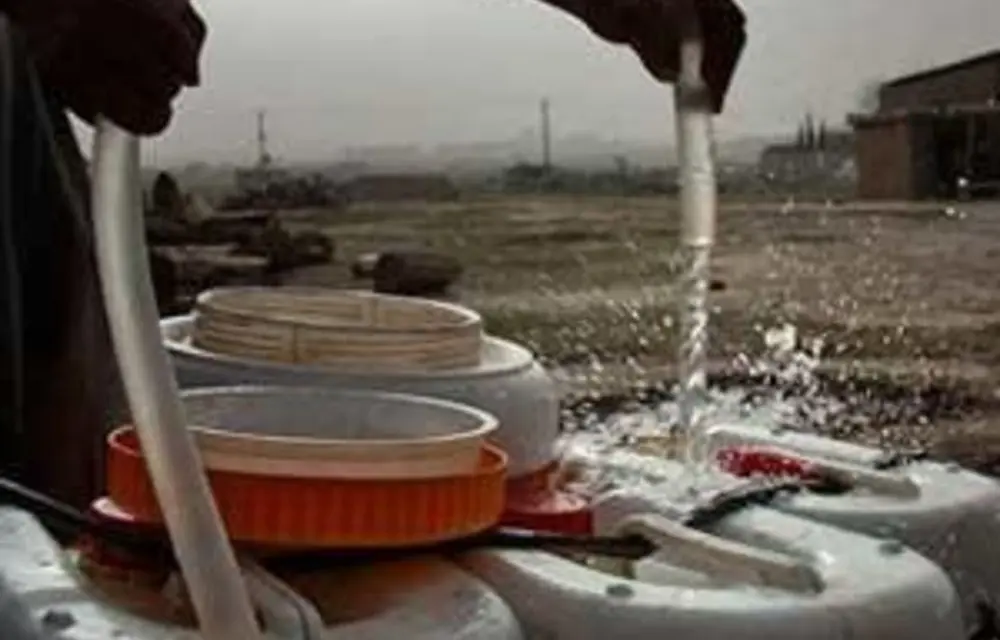
Gift of the Givers will install water tanks at sites to be serviced by municipal water trucks to ensure residents can collect water at any time without queuing or waiting for a water truck to arrive. Water tanks will be placed in secure locations at schools, clinics, hospitals and police stations to serve surrounding areas.
‘People are battling’
Arriving in the metro, which has been battling a seven-year drought, was “very deceptive”, Sooliman said, because everything appeared normal. “But when you start going into the areas, there are areas that haven’t received water — one area for four months — and then areas that haven’t had water for two weeks, and then seven days.
“So there’s less water, there’s water-shedding, there’s areas that are completely cut off. There’s a whole list of areas that are not receiving water. And with each day the water is becoming less and less.”
He said the municipality is already telling residents that the water will be cut very soon in many areas.
“They [the municipality] are putting taps in the streets for people to collect water because they have to cut the water because they can’t take any water out the dam anymore. The hospitals are battling, the psychiatric hospitals, old age homes and schools are going to be in trouble. The one dam has got zero already and the second dam [Churchill] is just days away from Day Zero.”
Luvuyo Bangazi, spokesperson for the water crisis joint operations committee, insisted the metro is “far” from reaching Day Zero and had several plans and interventions in place to stop taps from running dry.
“We’re not there, we’re not closer to it. Where there is a struggle with water it’s because of interruptions in the systems from maintenance issues and low flow … and there’s minimal disruption. It’s not from a lack of water.
“When that happens we’re providing water tankers, there are JoJo tanks installed in communities. There is no area in Nelson Mandela Bay in Day Zero and we’re not in a situation where we have run out of water.”
Bangazi said the Loerie Dam would supply the metro with the deficit it had lost from Impofu Dam, which would secure three more months of supply, while a borehole project would come on stream at the end of next month to augment water supply.
“We’re finishing off the KwaNobuhle pump station, which is also now distributing more water from the Nooitgedacht scheme to the rest of the city.”
Water collection points were being constructed for an “eventuality”, he said. “We’re dealing with nature and at the same time, we’re dealing with machines and pumps that fail so it’s a balancing act. All of this is being put in play as a mix to avoid the potential Day Zero.”
Severe restrictions
Sputnik Ratau, the spokesperson for the department of water and sanitation, said among the reasons for the low dam levels is there has only been six months of rainfall above the average monthly rainfall since 2018. “Weather experts are predicting that the marginal rainfall received will persist for the remainder of the year. Whereas, what is needed is rainfall of 50mm in 24 hours to get runoff to the dams.”
He said the department has recommended to the metro that severe restrictions of 40% should be implemented to maintain the supply of water to affected areas. “What we then did to assist the metro was to fast-track the completion of the Nooitgedacht water scheme, which supplies water from the Orange Fish River system and currently supplies 210 millin litres a day to the metro.”
The scheme was intended to supply water to the eastern side of the metro but, through collaborative efforts aimed at ensuring that the western side of the metro does not dry out, 90 million litres a day is being pumped through to the western side, with the aim to increase this to 120 million litres a day.
Leak backlog
The Business Chamber said that in partnership with the municipality, it will coordinate the efforts of local businesses that have volunteered to help repair the metro’s “severe backlog” of water leaks through the Adopt A Leak initiative, which is being finalised. This is to reduce a loss of 80 million litres of water daily.
There is a running backlog in which new leaks are reported almost as fast as existing leaks are repaired, which means “accelerating the pace of repairs is critical to reining in water losses and conserving the metro’s water supply”.
“The response of businesses willing to volunteer their services, time and resources to avert a crisis by repairing leaks, installing water tanks and boreholes, treating water and other assistance, has been really encouraging … We have agreed with Gift of the Givers to openly share our plans and resources and coordinate our efforts, making the business and civil society response to the water crisis more efficient and effective,” Van Huyssteen said.
The municipality will focus on various aspects of infrastructure upgrade and increase water tanker delivery to communities. “The leak situation is still dire and this is where we will be focusing along with boreholes, pump water treatment plants, rainwater harvesting and repairing or upgrading pumps at dams. At the same time, residents and businesses still need to cut water consumption, implement solutions such as rainwater tanks and also search for leaks on their own premises,” she said.
Daily consumption stands at 281 million litres a day, while the target consumption level is 230 million litres a day. “It is vital that all stakeholders pull together to reduce the severity of the water crisis.”
Day Zero “has all but arrived” in Nelson Mandela Bay, said Cilliers Brink, the Democratic Alliance’s cooperative governance and traditional affairs representative. “One of South Africa’s largest cities is now facing a humanitarian crisis like never before. Nelson Mandela Bay will run out of water in less than two weeks and will become the first metropolitan city in the world to suffer this fate.”
The blame for this debacle “can be placed squarely on the shoulders” of the ANC-led coalition government, who failed to manage this unfolding crisis and “ignored all the signs of what was to come”.
Day Zero will prove to have disastrous consequences for its residents because “very few alternative plans to provide water to at least a third of the metro have been communicated”.
[/membership]