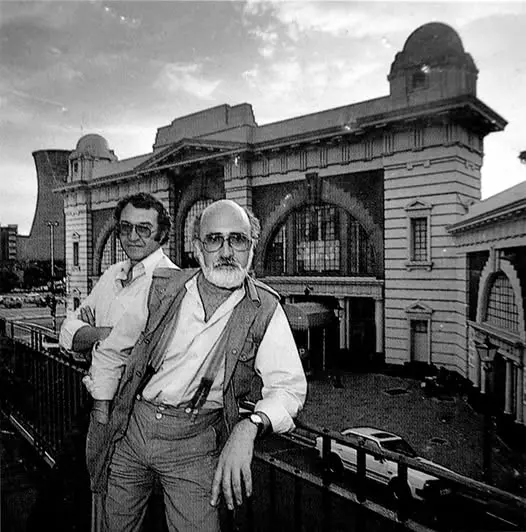


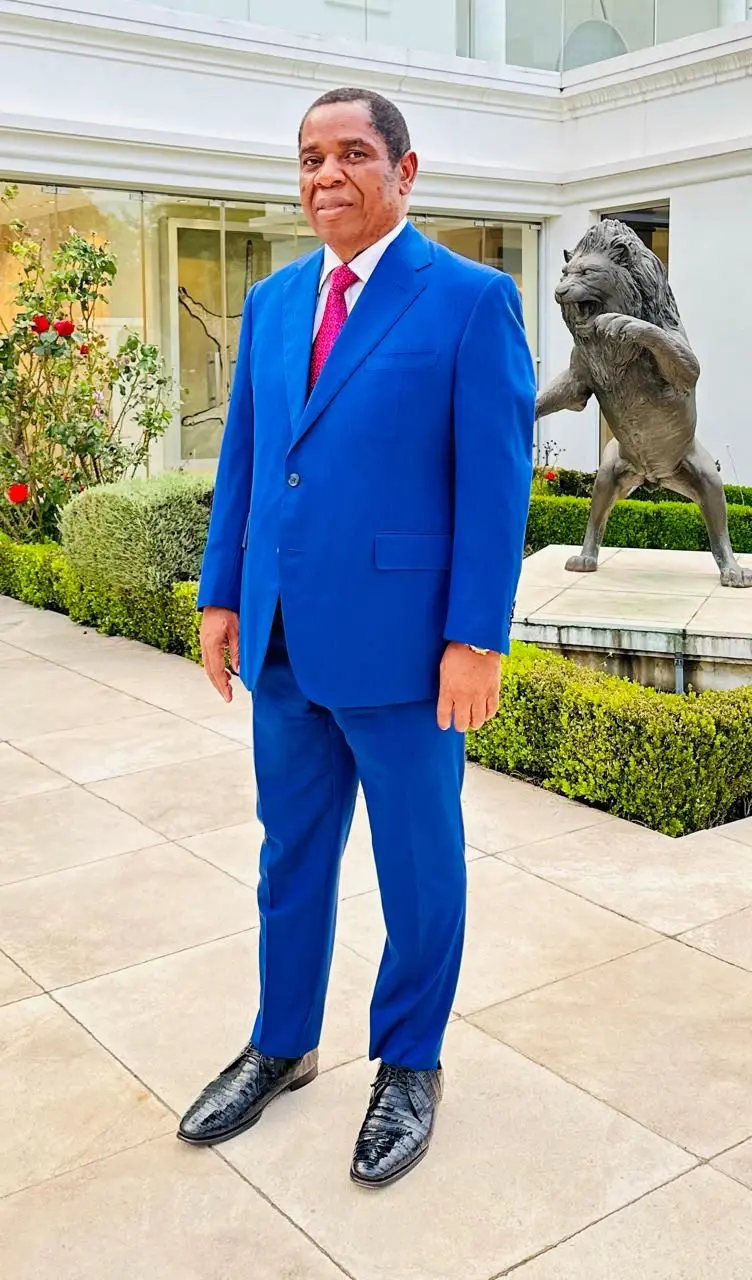
State capture: Ajay Gupta, Atul and Rajesh. (Adrian de Kock/Netwerk24)
Serious concerns have been raised about the capacity of the National Prosecuting Authority (NPA) team pursuing the Nulane Investments fraud and corruption trial on which the pending extradition application for Atul and Rajesh Gupta rests and the commitment to having them surrendered to South Africa by the United Arab Emirates.
The prosecution is feeling the absence of senior advocates who helped to build aspects of the broader case against the brothers for their central role in state capture in the Free State, sources with knowledge of the matter told the Mail & Guardian.
The work extended beyond Nulane, which set up the scam that became the Estina scandal, and the case now serves as a crucial precursor for the state to bring further charges against the accused for the fraud that followed in the dairy farm project.
Some of the counsel brought in by advocate Hermione Cronje, who signed the application for an Interpol red alert for the two Guptas and their spouses, to help build a case against them were not retained after she left the NPA’s Investigating Directorate in March. Advocates who have been briefed in the past include Geoff Budlender — on the pursuit of a provisional restraint order — and Janice Bleazard.
The Nulane case is in the pre-trial stage and the state’s Peter Serunye and Jacyntha Witbooi are being assisted by Nazeer Cassim SC, whose services have been retained in terms of section 38 of the National Prosecuting Act and who serves as the senior prosecutor in the matter.
When questioned by Judge Martha Mbhele during the first hearing on 24 June, Cassim had to concede that the state may not be ready to go to trial on 23 January next year.
A source close to the case said it could be trial ready early in the new year “but it will not be at this rate”.
Cassim had clearly not been favoured with a full copy of the state’s reply to a request for further particulars filed by the Guptas’s attorney, Stiaan Krause, on 24 May. The state’s answering papers were filed a few days before the pre-trial hearing and Mike Hellens SC, for the Guptas, was trying to rip holes into these, claiming the case against his clients was inadequate.
Cassim reminded Hellens that if he was not happy, his remedy was to file a request for further, better particulars, which Hellens vowed to do. The parties agreed that he would file by 27 July and the state would respond by 15 August. Should Atul and Rajesh Gupta wish to force the state to disclose additional information, they have to file notice by 29 August.
The high court has declined to release a copy of the state’s response to the initial request without the NPA’s permission, which ignored a request in this regard.
A source with knowledge of the state’s papers filed to date said: “We have to treat the matter much more seriously and put much more work into it. We have to do proper further particulars … what is there is hopelessly inadequate.
“This whole serious matter is shrouded in darkness.”
He said it could safely be assumed that Hellens was preparing to argue for the withdrawal of charges against his clients on 8 September, when the pre-trial hearing is set to continue.
This is just more than a month after the expiry of a 60-day deadline for South African authorities to file a formal application for the extradition of the Gupta brothers that sets out the case they have to answer. With three weeks to go, sources confirmed this week that the application is still being prepared, although it is understood to be at an advanced stage.
Should the government miss the first deadline, Hellens could invoke section 14 of the extradition treaty with the UAE, which states that anybody who is provisionally arrested may be released 60 days later if the country seeking their extradition has not submitted a certified copy of the warrant of arrest and “charging document” issued against them.
This need not be fatal to the extradition effort, because section 6 stipulates that it “shall not prejudice the subsequent re-arrest and extradition of that person if the extradition request and supporting documents are delivered at a later date”. But the situation becomes more grave should Hellens move for the charges to be set aside.
While listening to the wrangling about particulars and the possibility of a delay last month, Mbhele cautioned the state that she could not keep child-minding it in the matter.
Those who are concerned about the state’s readiness say it needs to rope in a seasoned Free State criminal prosecutor and at least one of the private counsel who has previously worked on the matter.
A decade ago the NPA decided to reduce its reliance on section 38 advocates as part of efforts to curb costs. But this was before the Zondo commission on state capture delivered its findings and a long list of recommendations that the NPA conduct further investigations and consider corruption charges against those pinpointed in its report.
Several sources said the more likely explanation is that since Cronje’s acrimonious departure, the NPA has revised her approach to how the Gupta file is handled. “It is a very sensitive matter, and the politics around it are very difficult,” one said.
The first signs of slippage were seen after 28 February when Interpol issued a red notice for the location and preliminary arrest of the Gupta brothers and requested that South Africa supply copies of their fingerprints. It took seven weeks to send these, a delay officials have sought to blame on the police, saying they were reliant on law enforcement to provide the information.
Former head of the Investigating Directorate Hermione Cronje signed the Interpol arrest application. (Elizabeth Sejake/Netwerk24)
After the brothers’ arrest on 2 June, the NPA brought in Anton Katz SC to help formulate the extradition request. The NPA is also understood to be looking to brief lawyers in Dubai to secure bank statements that will confirm its contention that the end destination of much of the R24.9-million Iqbal Sharma and his company, Nulane Investments, extracted from the Free State was a company set up in the UAE by a friend of the Guptas, Sanjay Grover.
The indictment details a list of financial transfers between various companies in the Guptas’ network until these reached Gateway Limited — a company based in Ras Al Khaimah in the Emirates, where it holds a Standard Chartered Bank account.
Gateway was contracted by Nulane as a subcontractor in a deal worth $2.55-million, with payment schedules attached, signed by Grover in Dubai on 30 November 2011.
“In actual fact, this contract was just a vehicle used to launder money unlawfully derived by accused five [Nulane Investments] from the department, from accused five’s bank account to Gateway Limited’s bank account as detailed in count three for the benefit of the Gupta enterprise,” the charge sheet reads.
The contract was a word-for-word copy of the sub-contract into which Nulane had entered with Deloitte to perform the feasibility study for a dairy project planned by the Free State department of agriculture, except the value was 10 times higher.
The money flowed from the department, through a host of other companies that formed part of the Guptas’ operations, until an amount of R19 070 934 ended up in Gateway’s account on the pretext that it was for work performed in terms of the contract with Nulane.
Grover is an Indian citizen resident in Dubai and is described in the charge sheet as a “close, trusted, loyal friend, employee and business partner of the Gupta enterprise”.
He managed and controlled the funds of Gateway and several of the family’s other companies, including Oakbay Investments, Wone Management, Pragat and Arcos Trading, through whose bank accounts funds passed before landing in that of Gateway.
The state is being pressed by Krause and Hellens to provide further details to flesh out its claim in the indictment that the Guptas conspired to achieve this, including the dates when they allegedly did so.
The NPA has been frustrated in its pursuit of associates of the Guptas in the past because it was unable to secure bank statements from the UAE and in 2018 provisionally withdrew charges in relation to the Estina project. That case has been privately described by lawyers as a shambles on several counts.
The mood in Dubai has shifted since and government sources, speaking off the record, have said the Emirates has been enthusiastic in cooperating with South Africa in recent months.
The reason probably lies in the rush to redeem the UAE’s image as a haven for financial crime after its grey-listing by the Paris-based Financial Action Task Force in March. The scrutiny has intensified following reports of an inflow of Russian money in the wake of the invasion of Ukraine.
The Emirates is reportedly negotiating more extradition treaties and arrested British hedge fund trader Sanjay Shah for potential extradition to Denmark to face tax fraud charges a day after the Guptas were apprehended.
Against this backdrop, Ajay Gupta — the third brother and alleged mastermind of much that transpired in the state capture scandal — is reported to be at large in the UAE and there is no confirmation from South African authorities that they are seeking a red notice for him to be apprehended.
The absence of a red notice might simply imply that no investigation against him is sufficiently advanced to formalise a request but the NPA has nonetheless declined to comment on this.
Political sources have said there is no ambiguity from the side of the executive on efforts to secure the extradition of his brothers as it will read as proof of readiness to fight corruption.
[/membership]