The happy couple: What did psychiatrist Ingrid Williamson think and feel knowing that her husband, Craig, had been responsible for killing Ruth First, Jeanette Schoon and her daughter Katryn?
NEWS ANALYSIS
One hand holds a celebratory glass of champagne, the other is fondly placed on her husband’s shoulder. As they toast their 46 years of marriage, her deep attachment to him radiates from the photograph.
A charming tableau. You would not guess that she is a top medical professional and he is a serial killer.
Thirty-six years earlier, the bulky, genial man in picture sent a powerful bomb that decapitated 35-year-old ANC member Jeanette Schoon and blew off her arm and leg.
Her six-year-old daughter, Katryn — described as bright, loveable and gifted — was reduced to “a little pile of flesh”, according to her father, Marius. The walls of the Schoons’ living room were plastered with gore.
Another child, Fritz, then two and a half, survived the bloodbath to tell Marius that his mother was “broken”. For months afterwards, he hardly spoke.
The bomber was Major Craig Michael Williamson, product of high-end private school St John’s College in Johannesburg and a widely execrated apartheid spook.
Casting himself as an anti-terrorism crusader, Williamson confessed at the Truth and Reconciliation Commission (TRC) to murdering two unarmed women and a child — the third victim being exiled academic Ruth First. Jeanette and Marius were “legitimate targets” who, he claimed, had knowingly endangered Katryn.
Now 73, he has been linked to another apartheid enormity, for which he has not been given amnesty. Last year relatives of the assassinated “Cradock Four” sued the police for failing to prosecute “known suspects”, including Williamson, who allegedly sent operatives to advise on that grisly crime.
The other half of the wedding anniversary celebration is Dr Ingrid Evita Williamson, a private psychiatrist who works out of Sandton Mediclinic.
In his book, Unfinished Business, Terry Bell remarks that she was as “deceitful and cunning” as her husband. Bell says she initially practised under her maiden name, Bacher, but switched to Williamson after he exposed her.
The Mediclinic website carries her picture. She is an attractive 69-year-old, with a bright, rather vacant smile. It gives her core competencies as “psychiatry: general adult and adolescent physical”.
She does well, charging R2 130 for a half-hour appointment and in early June was booked till August. Former patients say she is smart and empathetic; Google review gives her two five-star ratings.
Unlike her husband, who seems to revel in his notoriety, Dr Williamson’s policy has been to keep her head below the parapet, breaking cover occasionally to boost her professional reputation by writing for learned journals or addressing conferences.
She has hosted “free expert Q&As” on radio for the depression and anxiety group Sadag, which among other subjects have focused on dealing with the loss of a loved one, a terrible irony.
Recently, she has grown bolder and more visible, posting wedding photos on Facebook and opining in Mental Health Matters on menopause, headaches and benzodiazepine withdrawal.
Last year she popped up as a media source on Covid-19 and psychiatry. In 2019 she addressed a symposium on women and attention deficit hyperactivity disorder hosted by the South African Society of Psychiatrists. An internet image shows her at the podium.
True to her secretive style, Dr Williamson said she was “too busy” for an interview and has not answered emailed questions. But Bell argues that she and her husband were partners in espionage.
Jonathan Ancer’s book Spy quotes her as telling a former medical colleague, Anne Stanwix, that she knew all along about her husband’s spying activities and shared his convictions. Stanwix confirmed this.
When Williamson duped the Swedish-funded International University Exchange Fund (IUEF) into employing him, she accompanied him to its Geneva headquarters.
The IUEF channelled funds to the ANC in the frontline states, and Bell says Dr Williamson helped her husband copy “memoranda, receipts, orders and private correspondence” filed in its office.
In the pre-internet age, she allegedly carried the documents back to South Africa and turned them over to the security police. Bell argues that some of this information could have revealed the location of ANC operatives, aiding “target selection” for South Africa’s deadly cross-border raids.
Craig Williamson has admitted to helping identify targets for then president PW Botha’s State Security Council. He told the TRC he supplied that service for the 1985 Gaborone raid, in which several innocents were killed, including six-year-old Peter Kamohelo Mofoka.
In the 20 years since Bell’s book was published, neither Dr Williamson nor her husband has denied the allegation that she was a copier and courier of IUEF material, let alone challenged it in court.
Former anti-apartheid student leader Neville Rubin alleged in an interview that Dr Williamson stole documents from his desk at the International Labour Organisation in Geneva and that their German author was subsequently deported from South West Africa.
Asked about her motives, Rubin said: “She was a spy, wasn’t she? She stole whatever she could and sent it to the South African government.”
Office-bound in Pretoria after his cover was blown in 1980, his glamorous double life over, Craig Williamson turned to killing by mail bomb.
His bomb-maker, Jerry Raven, told the TRC that Williamson congratulated him on the Schoon operation, moving advocate George Bizos to exclaim: “Any person with a drop of humanity would have said: ‘Woe to us, we have killed a child.’”
When Raven pressed Williamson on Katryn’s death, he allegedly replied that the bomb was meant for Marius but “it served [Jeanette and Katryn] right”.
He then allegedly claimed the Schoons used Katryn as “a bomb disposal expert”; on receiving suspicious packages, “they would throw them in the backyard and let the child play with them until … they deemed it fit to open them”.
Williamson denied uttering what Bizos called “these evil words”.
Vlakplaas hitman Dirk Coetzee testified that Williamson “smugly” asked him whether he had read about the Schoon assassinations.
Coetzee: “[He was] gloating … sort of happy with himself, very happy.”
Advocate Danny Berger: “Did you get the impression … that he was very proud of what he had done in relation to the death of Jeanette and Katryn Schoon?”
Coetzee: “Yes … as we all were after operations.”
From this one senses Williamson’s need to impress, to match Coetzee in brutality. He allegedly congratulated the latter on his assassination of Griffiths Mxenge, stabbed 45 times.
There is no evidence that Dr Williamson was implicated in the Schoon bombing. Did she only learn of her husband’s role 14 years later at the TRC hearings?
Lending an almost satanic malevolence to the attack is the fact that Williamson knew Katryn, having spent several days in the Schoons’ Botswana house before they moved to Angola for safety. It was there, in Lubango, that the child met her terrible end.
He apologised at the TRC, Sapa reported, “with no outward show of emotion”. Observers were struck by his cold, clinical demeanour.
He freely conceded that his last-minute approach to the TRC was prompted by his legal vulnerability. Later, he would dismissively remark that many more civilians died in Nato’s bombing of Belgrade.
The Schoons’ lawyers, Karien Norval and Danny Berger, said he showed no trace of remorse at the commission. Added Norval: “When he walked in, the hair stood up on the back of my neck — one felt the presence of evil.”
Bizos told the TRC the probabilities showed “a callousness and a disregard for human life that is abnormal”.
What did Dr Williamson, who qualified as a psychiatrist in the same year, make of such hair-raising testimony?
In October 1999 Williamson was controversially given amnesty for the Schoon murders, and based on perceived inconsistencies and lies in his account, the family launched a judicial review.
Centrally at issue was whether personal malice, rather than political motivation, underpinned the Schoon bombing and the proportionality of the attack.
Why send such a powerful bomb to a household that Williamson knew probably included a child?
And why was Jeanette, who taught at the local teachers’ training college, targeted? There was no ANC military structure in Lubango and, as Williamson himself conceded, she was not involved in the armed struggle.
Asked Bizos: “With so many potential targets in the region, why did Williamson and his co-conspirators obsessively seek out the Schoons, so far away and so isolated, doing nothing more than teaching English?”
He argued strongly that personal malice drove the attack.
Apparently rattled that his amnesty might be overturned, Williamson proposed an out-of-court settlement. It was agreed that if the judicial review was dropped, he would pay the Schoons’ legal fees and R325 000 in instalments.
Pleading poverty, he reneged on the deal. When the sheriff tried to seize his assets in 2007, he found everything of value — including a house in the exclusive Beaulieu estate, and a 4X4 with the boastful number-plate CMW 001 — was not in his name. The family’s lawyers had him sequestrated.
The owner may have been none other than Dr Williamson, to whom he was married out of community of property. Property and corporate searches show that both she and Craig were directors of Equistock Properties 143, whose registered address is 96A Percheron Road, Beaulieu, Kyalami.
Nothing could more eloquently have expressed the Williamsons’ indifference to the Schoons’ suffering than this legal skullduggery.
What makes Dr Williamson tick? How could a specialist praised as kind and perceptive be drawn to a future serial killer who would show so little compassion for the child he blew to bloody fragments and the family he devastated?
If she is so smart, why could she not see through Williamson’s crude “reds under the bed” world-view, which even he later dismissed as “the total lie we all lived by”?
Her right-wing persona seems to be a late development. A classmate at Kingsmead, her girls’ private school, said she had no strong presence or views, and a single intense, exclusive friendship. A second described her as “reserved and odd”.
Bell believes the ultra-conservative Asmussen family, who owned the Danish Confectionery in downtown Johannesburg, through whom the Williamsons allegedly met, was a shaping factor.
Shared knowledge and ostracism seemingly cemented the Williamson bond.
Dr Williamson’s early life is a closed book. But in Sheila Isenberg’s fascinating study, Women Who Love Men Who Kill, she argues that women who dote on murderers are “little girls lost” who need to attach themselves to men they see as powerful.
Isenberg observed that such women typically deny their demon lovers’ crimes: “It was an accident”; “he was framed”; “he meant to shoot over his/her head …”
Dr Williamson seems to follow this pattern, condoning by silence her husband’s defence, rejected by every war crimes tribunal since Nuremberg, that he was “doing his job”.
Not every security policeman killed, points out journalist Jacques Pauw. And there is no moral equivalence between the violence of those struggling for a birthright and of their oppressors.
Because of what journalist Victoria Brittain termed “the Faustian pact” underpinning the TRC, relatives of victims such as the Schoons, Slovos and Cradock Four have received some truth but no justice.
The Williamsons have neither fully accounted nor expressed credible remorse. Apparently awash in money, they continue to lead the sweet life.
Their three children, now in their thirties, went to private schools. The girls were showjumpers, allegedly riding costly imported horses. The son is a film producer, one daughter a professional rider and the other a law student. They cannot be named or pictured because of privacy law.
Williamson is legally vulnerable for crimes in Angola, Mozambique and Britain but other than being briefly held by the Angolan authorities — when Bell says South Africa conspicuously failed to cooperate — there have been no repercussions.
Memory fades, witnesses die and people draw a discreet veil over the monstrous wrongs of the past. The challenge to Williamson’s amnesty could have been proceeded with, but overcome by horror, the victims themselves drew back.
Atrocious political crimes have been normalised in South Africa, washing away the sins of former state torturers and assassins.
At stake is novelist Milan Kundera’s dictum that the individual’s struggle against oppressive power is the struggle of remembrance against forgetting. It is precisely because the Williamsons and their ilk would prefer Katryn Schoon and her terrible fate forgotten that South Africans must nurse the tenuous flame of her memory.
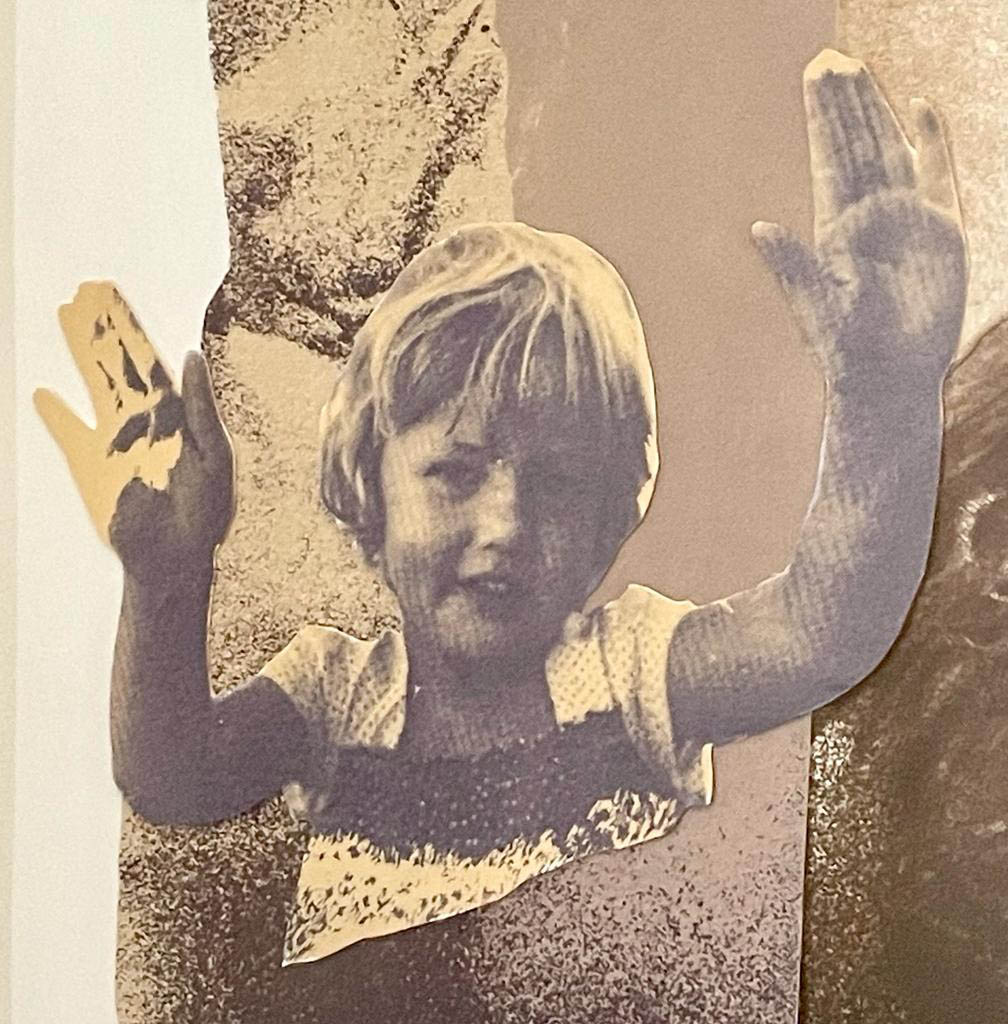 Obliterated: Craig Williamson sent a mail bomb that reduced Katryn Schoon to a ‘little pile of flesh’ and decapitated her mother, Jeanette Schoon, who was not involved in the armed struggle
The questions Dr Ingrid Williamson didn’t answer
Dear Dr Williamson,
This is Drew Forrest, who asked you last week [25 June] for an interview. You declined, saying you did not have time.
I’m sending a few emailed questions, which should not take much time to answer.
* In his book Unfinished Business Terry Bell claims you and your husband Craig were partners in espionage for the SA security police. Is that true? When did you start working together?
* Bell says you and Craig went through and copied documents in the IUEF offices, and that you personally took these back with you on your visits to SA, where you handed them over to the security police. Is that true?
* Bell says the documents may have contained information used in South Africa’s deadly cross-border raids into neighbouring states. Do you have any comment on that?
* Neville Rubin claims that you stole documents relating to Namibia from his desk at the ILO, and that soon afterwards the author of the materials was deported from Namibia. Is that true?
* Did you learn about Craig’s role in the bomb attack on the Schoons only from evidence at the TRC, or did you find out during the 14 years between the attack and the hearings? Did Craig tell you?
* Do you regret your and your husband’s beliefs and actions during the apartheid years?
Thanks in anticipation,
Drew Forrest
The views expressed are those of the author and do not necessarily reflect the official policy or position of the Mail & Guardian.
[/membership]