Kurt Sartorius set out on a reforestation project in the Brazilian Amazon.
When Kurt Sartorius and two South African friends dared to paddle down a 1 100km stretch of the inhospitable, mosquito-infested Rio Madeira, a southern tributary of the great Amazon River in July 1972, it nearly broke them.
Sartorius, now a senior accounting professor at Wits University, wondered if it was because they were “so young and stupid” that the trip was such a disaster. He promised himself he would tackle it again after 50 years.
Last month, Sartorius, who is 73, set out on an exact repeat of the month-long expedition — this time for a reforestation project in the Brazilian Amazon. He was joined by his son, Benn, Wayne van Zijl, an associate professor at the school of accountancy at Wits, and Brazilian adventurer Esdras Barbosa.
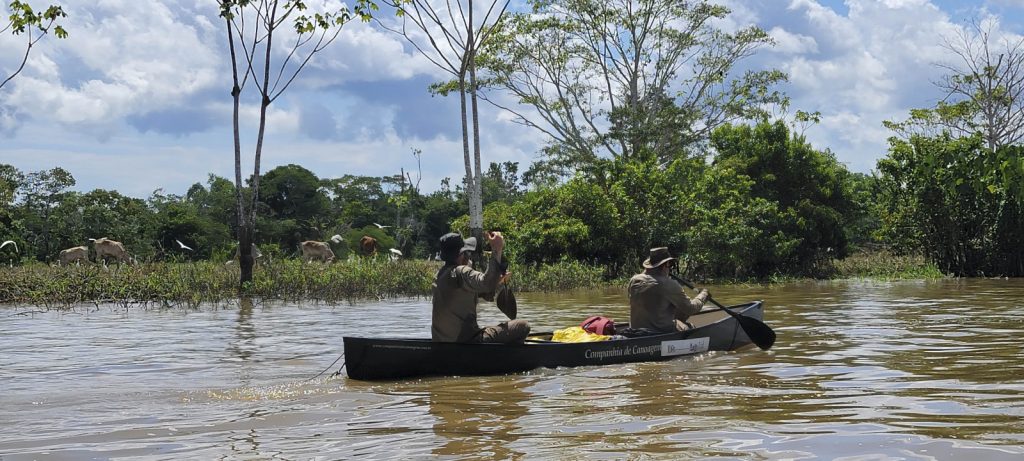 Kurt Sartorius was joined on his trip to the Amazon by his son, Benn, Wayne van Zijl, an associate professor at the school of accountancy at Wits, and Brazilian adventurer Esdras Barbosa.
Heat, tropical storms, illegal gold miners and river pirates
The “three gringos”, Sartorius said, endured the harshest physical conditions: unrelenting heat, tropical storms, mosquitoes and a prevailing headwind, and had to carefully navigate suspicious communities, illegal gold miners and river pirates.
“The first few days [after returning to South Africa] I felt a bit bossies,” he said, with a laugh. “It’s the weirdest thing, I suppose during this entire trip, there must have been an adrenaline factor that almost when you get up in the morning, you know you’ve got to do this thing, so you’re kind of energised. I feel hundreds again.”
His aim is to create a long-term accountancy climate change initiative by inspiring the commitment of corporate South Africa to fund a reforestation project in the Amazon, and to pioneer a new genre of climate reporting in integrated annual reports. The expedition was formally mandated by Wits and the South African Institute of Chartered Accountants (Saica).
Diabolical
“Why would any sane person of 73 paddle 1 100km down a tributary of the Amazon River that can only be described as diabolical?” Sartorius asked. For him, it’s “e meu destinio” (my destiny).
But it’s more than that. “I believe the survival of these great rainforests is under threat and they are being destroyed at a terrifying rate. The Amazon Basin occupies about seven million square kilometres and contains 20% of the world’s freshwater.”
Burning the rainforest is accelerating the “shocking change” in global rainfall patterns that are already clearly evident. “The Amazon Basin acts as a carbon sink that stores carbon dioxide. For the first time ever, this forest is emitting more CO2 than it traps because of the forest fires, which are estimated to release a billion tons of CO2 per year.”
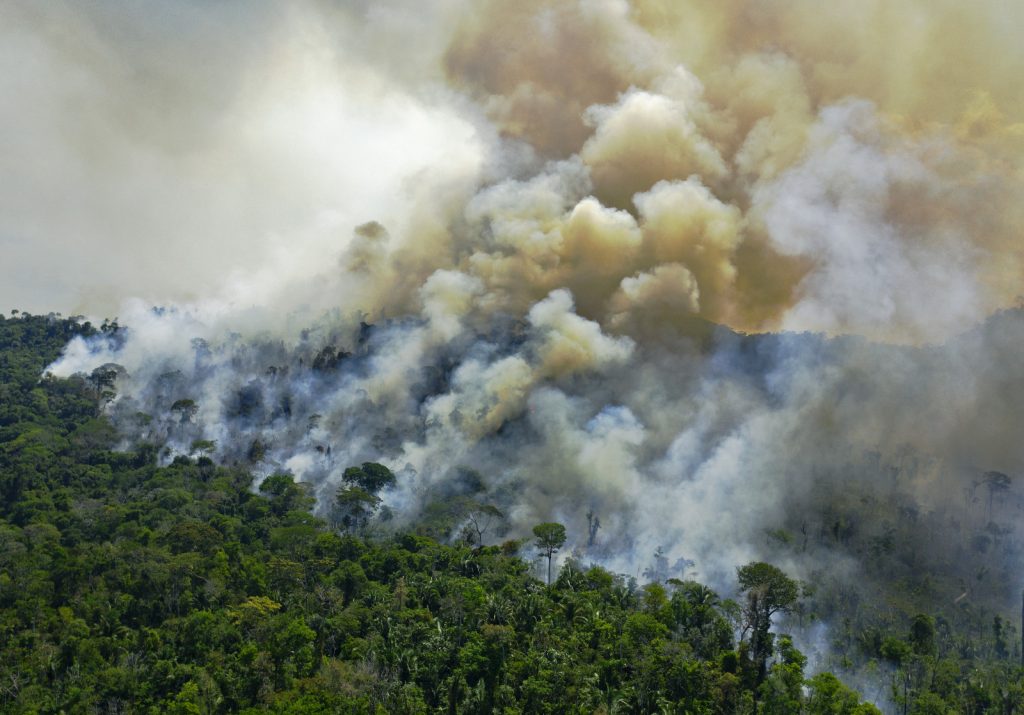 Mercury pollution is the biggest change in the Amazon since 1972, according to Kurt Sartorius
Finding small pleasures
In 1972, Sartorius, Colin Amm and Andre Holtzhausen were entirely unprepared to traverse the Rio Madeira, which he describes as “completely inhospitable, infested with insects” and sweltering at more than 35°C and 100% humidity.
“We had no experience. We were city boys who went in for something they couldn’t actually do … It was a terrible river then and now, 50 years later, it’s still a terrible river,” he said, grinning. “It was unpleasant then and it was unpleasant now.”
The only difference this time was taking pleasure in small things, like heeding his son’s suggestion that they pack mosquito-proof cooking tents, and not rely on hammocks alone. “The biggest problem on the Madeira is mosquitos at night. Exactly, just after 6pm, they land on you in a black, buzzing, demented sort of cloud … We cooked and slept in these cooking tents, which meant it was completely peaceful.”
‘I was the big mouth’
Their days started at 5am and, to avoid being “eaten alive”, they dressed in long-sleeve pants and shirts. “For the first few hours in, the river is beautiful. It’s cool, the wind isn’t up and you sort of look at the jungle and kind of think it’s nice. Once the sun comes out it’s not nice.”
The tropical sun on the equator “burns down on you with breathless intensity” and “sucks you dry of moisture”, especially for “soft city boys” who have come from winter in South Africa.
“We just could not carry enough water and could not drink the river water because it is polluted with mercury. A whole day would pass without having a piddle and then it was dark brown … We probably needed four litres each a day but could only drink around two litres. Getting fresh water also required us to stop at local communities.”
The Rio Madeira has little current and paddling the canoes “often felt like we were in oatmeal porridge”. After 10am, a prevailing headwind raised waves of up to a metre.
Most days, they paddled about 50km to 60km. “Well, everyone suffered with this routine — the heat, the dehydration — and needless to say at 73 going on 74, I was not a happy chappy but just put my head down and shut-up and paddled. After all, I was the big mouth who initiated this little lot.”
Frontier country
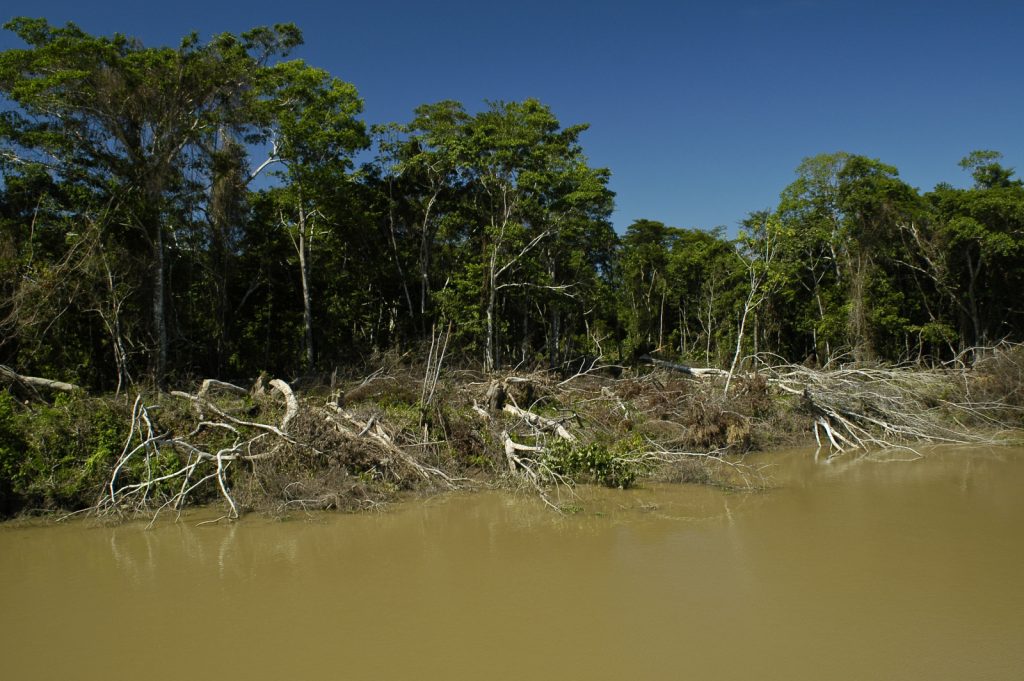
The expedition, too, served to highlight the changes in the region since 1972. Rio Madeira is frontier country, he said. “The law is hard-pressed to cover vast tracts of jungle and river pirates operate in the region preying on the traffic on the river.”
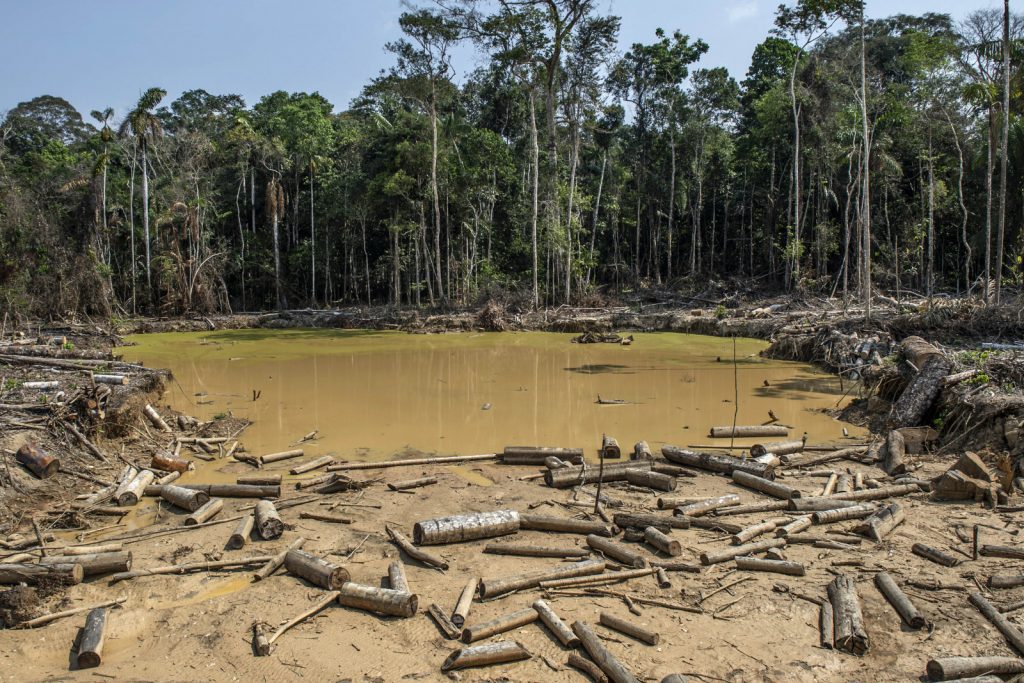
Poverty has prompted thousands of illegal gold miners to suction the riverbed from their dragas (barges) using mercury to extract the gold. “This has obviously massively polluted the Madeira river. The mercury pollution is the biggest change I’ve seen from 1972 until now.
“The problem is that this river supplies 15% of fresh water in the Amazon Basin. You’ve got a situation where the major source of the world’s fresh water can be contaminated, but these people have no option,” he said, describing how the governments of the state of Rondonia and Amazonas have turned a “blind eye” to the mercury pollution, because of the poverty and lack of opportunity.
Although they were concerned about confrontation from the gold miners, they assured local people they were not the army or law enforcement. As for the river pirates, they prey on larger cargo. “Saica supplied us with khaki tops and pants. I’m not sure if these people saw us as a miltitary exercise along the river or whether they just thought these stupid gringos don’t look like they’re worth robbing.”
The state of Amazonas appears to have supported wide-scale cattle ranching, stocked with Indian water buffalo, resulting in large areas denuded of rainforest. “They’ve set up the most impoverished type of cattle ranches because these things can’t put on weight and can’t survive in these conditions … Clearly, cattle ranching is never going to be a major source of beef that’s going to change life in the Amazon Basin.”
Mobilising the accounting profession
The Wits-Saica initiative involved mobilising the accounting profession to actively support climate initiatives such as Sartorius’s because they are at the “coal face of power, brains and money” and are strategic long-term thinkers.
“The most disappointing aspect … is that there was a combined effort by Wits and Saica to try and elicit interest from the accounting profession and corporate SA to fund this rainforest project,” he said. But, they were “fobbed off with ‘there’s no money’”, he said.
The accounting profession has a corporate responsibility to address climate change. “People like Larry Fink and BlackRock have identified climate change as the number one business risk. So how can the accounting profession say ‘this has got nothing to do with us’?
“We’ve spoken to people in Canada, we’ve spoken to the accounting profession in Australia and it’s all a case of ‘oh we’re in the process of changing our standards’, and ‘we are concerned’, and there’s the hand wringing.”
He said Saica has taken a bold step by articulating that climate change must become a central focus for corporate South Africa, adding that R100 000 has been raised and fundraising will continue for the next month.
Milton Segal, the executive director for standards at Saica, said Sartorius and his team took on the expedition to raise awareness of the “drastic impact of deforestation in the Amazon rainforest on climate change, and to raise funds in support of reforestation initiatives and related scientific and business research”.
“The trip also aimed to raise awareness among the accounting industry of the importance of the role that the profession has to play when it comes to reporting, not only on financial profits and losses, but also on the environmental impact of the businesses they operate in and, in so doing, help fight climate change.
“In addition to making a direct financial contribution to this expedition and the research that will stem from it, Saica entered into this partnership to help further spread and promote the awareness of Wits’s call for research funding into climate change through our numerous established networks and to attract more attention, and hopefully more contributions to both the fund and the cause,” he said.
[/membership]