A passenger minivan tows a trailer loaded with goods near the border crossing with Zimbabwe, near Musina, South Africa. (Waldo Swiegers/Bloomberg via Getty Images)
The last time I travelled by bus from Zimbabwe to South Africa was several years ago, before Greyhound Lines closed. These days, the only options are carriers that are popular with cross-border traders. And this is how I witness the precarious border crossings by my compatriots who seek a better life across the Limpopo River.
As soon as the bus leaves Bulawayo, the crew goes down the aisle saying, “Those who want days.” It’s a complete sentence. R100 notes are exchanged. The money is collected for the South African immigration officials who allegedly “sell” days to Zimbabweans crossing the border.
If one wants to stay for longer in South Africa, the palms of immigration officials must be greased more, so that they stamp more days on one’s passport. If you don’t “motivate” them, they will cut your travel short by giving you just a few days.
Truly, the troubles of the poor.
As we approach the Beitbridge Border Post, the crew is back in the aisle. “Those without passports.” Another complete sentence.
I’m stunned. They are dropped off and picked up by a sedan. We proceed.
On the South African side, the bus crew stand in front of the line at the immigration desks.
“Laban’ abami [my people].” He is asking for those who gave him the “days money” to come forward so the official can stamp the “right” dates for them.
Across the border, our fellow passengers who responded to the call for “those without passports” join us once more.
 A truck tows a trailer loaded with goods near the border crossing with Zimbabwe, near Musina, South Africa. (Waldo Swiegers/Bloomberg via Getty Images)
At various police checkpoints, officers inspect our passports, and they say nothing about those who don’t have any. After a brief chat with the bus crew, we are on the road again.
At some point, an argument ensues between the crew and an undocumented passenger. She had paid too little for the numerous police checkpoints on the N1 highway. They are threatening to abandon her at the next police checkpoint, because she has run out of bribe money. She has an agitated baby, worn out by the long hours of overnight travel. At this point, she and her baby are crying. You cannot erase that from your memory.
As we arrive in Johannesburg with our undocumented compatriots, I think of the border management officers whom I saw sitting leisurely at the border. Home Affairs Minister Aaron Motsoaledi, synonymous with tough talk against illegal Zimbabwean immigrants, launched his tenure with camera crews and the usual “securing our borders” interviews. All thunder and bluff.
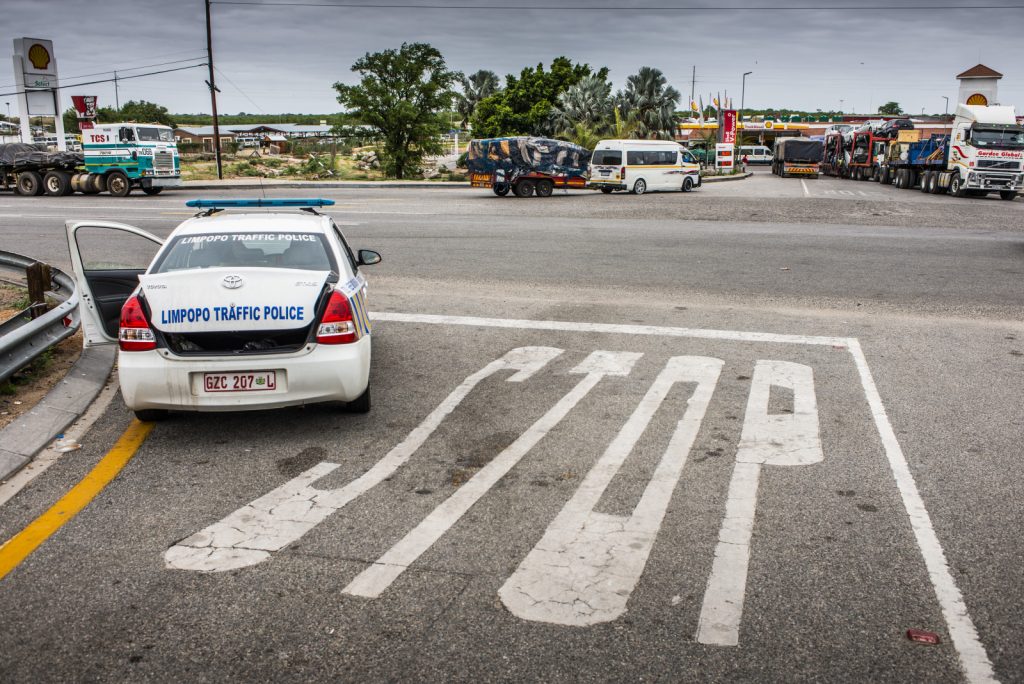 A Limpopo state traffic police vehicle patrols at a road junction near the border crossing with Zimbabwe, near Musina. (Waldo Swiegers/Bloomberg via Getty Images)
If the Zimbabwean economy is still in perpetual doldrums, the floodgates are open. The intensifying hostility against Zimbabwean immigrants, both legal and illegal, will not affect the border crossings. The ruined Zimbabwean economy is too much of a push factor.
Zimbabweans are going to the polls in 2023, and the history and culture of political violence cast a long shadow. So far, by-elections for the house of assembly and local authorities have signposted the nature of the upcoming campaigns. Earlier this year, violence broke out in the Midlands. Opposition activist Mboneni Ncube succumbed to injuries sustained when suspected Zanu-PF youths attacked Nelson Chamisa’s supporters at a rally in Kwekwe. In August, a suspected Zanu-PF mob attacked and injured journalists at Nelson Chamisa’s Citizen Coalition for Change (CCC) rally in Gokwe.
 Zimbabwe President Emmerson Mnangagwa
Many Zimbabweans who live in South Africa fled the combination of a failing economy and post-electoral state-sponsored violence , particularly in 2008, when the killings of opposition supporters created such a crisis that it led to calls for an intervention by the Southern African Development Community.
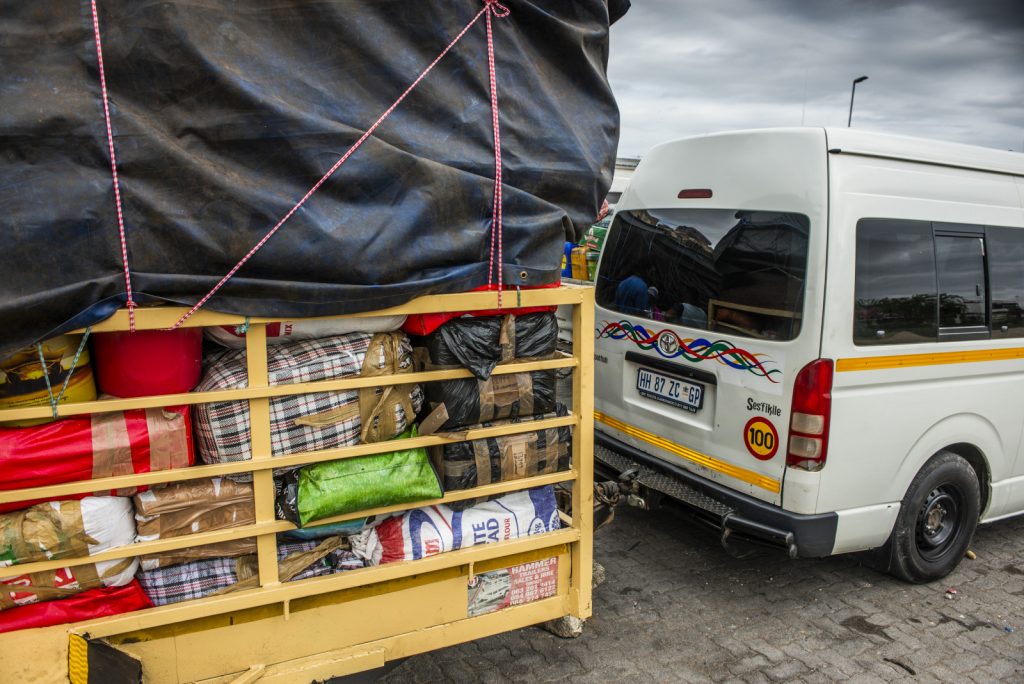 A passenger minivan with a trailer loaded with goods stands at Beitbridge border station near the border crossing with Zimbabwe, near Musina, South Africa. (Waldo Swiegers/Bloomberg via Getty Images)
Zimbabwe still generates ugly scenes of political violence, so it is impossible to convince those who left to come back. Between a rock and a hard place, they must choose between the hostility of xenophobic aggression and reliving the nightmares of sleeping with one eye open in fear of armed political opponents who still act with impunity.
They are not coming back here.
Zimbabwe’s political problems are concerning, but they are known. What is more worrying is the xenophobia in South Africa. As the global flow of people continues, there will be inevitable feelings of asserting belonging and identity-making processes that thrive on marking and amplifying differences. In many parts of Africa, deprivation and insecurity amplify this process into aggressive behaviour.
South Africa has participated in peacekeeping missions in the region. Has it learned nothing?
 A Zimbabwaen immigrant moves through a hole cut in the border fence while illegally crossing from Zimbabwe into South Africa. (John Moore/Getty Images)
When Herman Mashaba launched his opposition Action SA party, he unequivocally moulded his campaign along anti-immigrant messaging that resonated with many South African citizens. He was not the only one to do so.
Operation Dudula, led by Nhlanhla Lux Dlamini, styled itself as “grassroots oriented” and added to the hostile momentum against foreigners. It quickly discredited itself through senseless aggression and victimisation of the poor.
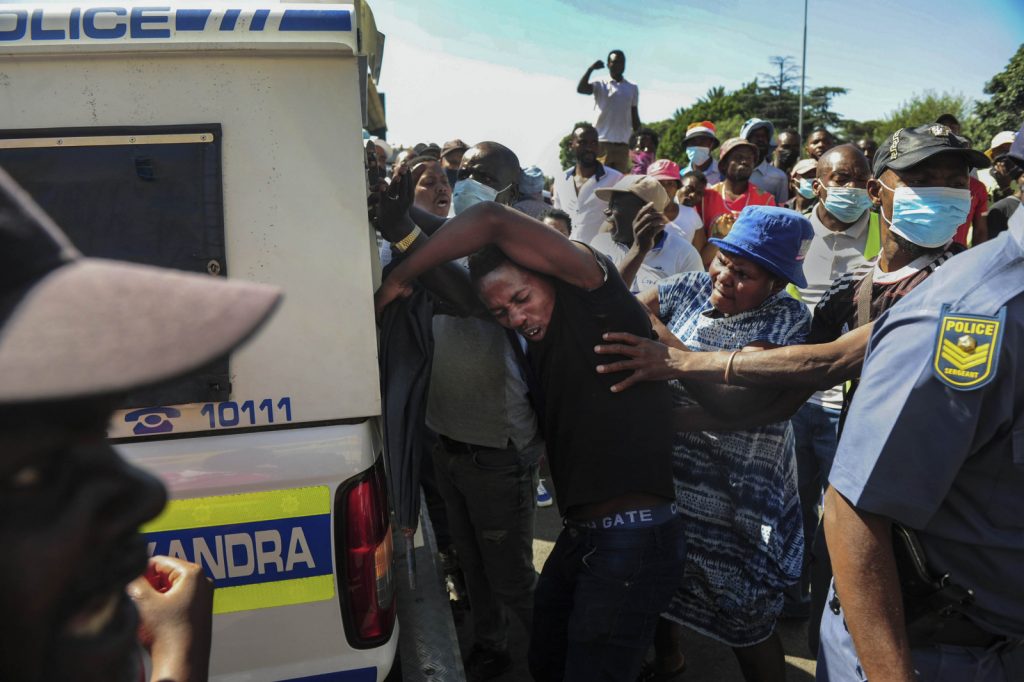 Reckless: Operation Dudula members attack black Africans in Alexandra, Johannesburg. Getting rid of poor black foreigners will not stop crime and solve the unemployment problem. (Leon Sadiki/Bloomberg/Getty Images)
Patriotic Alliance leader Gayton McKenzie recently joined the fray, saying he would not hesitate to cut off the oxygen supply to a foreign national to save a South African.
It is not unusual for fringe personalities and their movements to opportunistically ride on what they see as popular sentiment, especially if there is an attractively packaged scapegoat. Freeing yourself from the constraints of political correctness centres you somehow. Several politicians have cashed in on it – former US president Donald Trump was a great inspiration to those inclined to such political disposition.
It is baffling when members of the ruling ANC think narratives of exclusion are something to leverage on. You cannot enthusiastically build on something that will eventually blow up in your face.
Limpopo Health MEC Dr Phophi Ramathuba reignited this focus on the foreign national’s body as infringing and “stealing” what belongs to the locals. This, she told a patient, deprived South Africans of quality healthcare and was “endangering the community” .
Ramathuba’s diagnosis was too simple, as was her remedy. Poor healthcare service delivery is not because foreigners are overburdening budgets. A fact-check points the finger elsewhere: the poor management of hospitals in the MEC’s province.
In just one bus journey, I witnessed institutional failures by three entities. The Home Affairs’ Immigration Department officers corruptly traded days’ access for R100 notes; the Border Management Authority officers leisurely sat at the border facilities while undocumented people passed right under their noses, and the South African Police Services officers patrolling the N1 highway granted passage to people who had no right to be there.
These are failures of governance. No raving bedside rants can fix that. Ramathuba and others must rather do the arduous work of cleaning up and strengthening institutions.
The more I reflected on that journey, the more it felt like I was staring at a mirror. Everything had a ring of familiarity. As a Zimbabwean who lives in Zimbabwe, that brazen and shameless corruption is something I often encounter.
The scapegoating, red herrings, oversimplified explanations for complex problems, and exclusionary rhetoric by South African politicians are the regular diet of Zimbabwean political culture.
Clayton Moyo, a Canon Collins PhD scholar, is a digital media enthusiast teaching broadcast media at a local university in Zimbabwe. He shares media skills outside the university with citizen journalists and emerging media entrepreneurs.
The views expressed are those of the author and do not necessarily reflect the official policy or position of the Mail & Guardian.
[/membership]