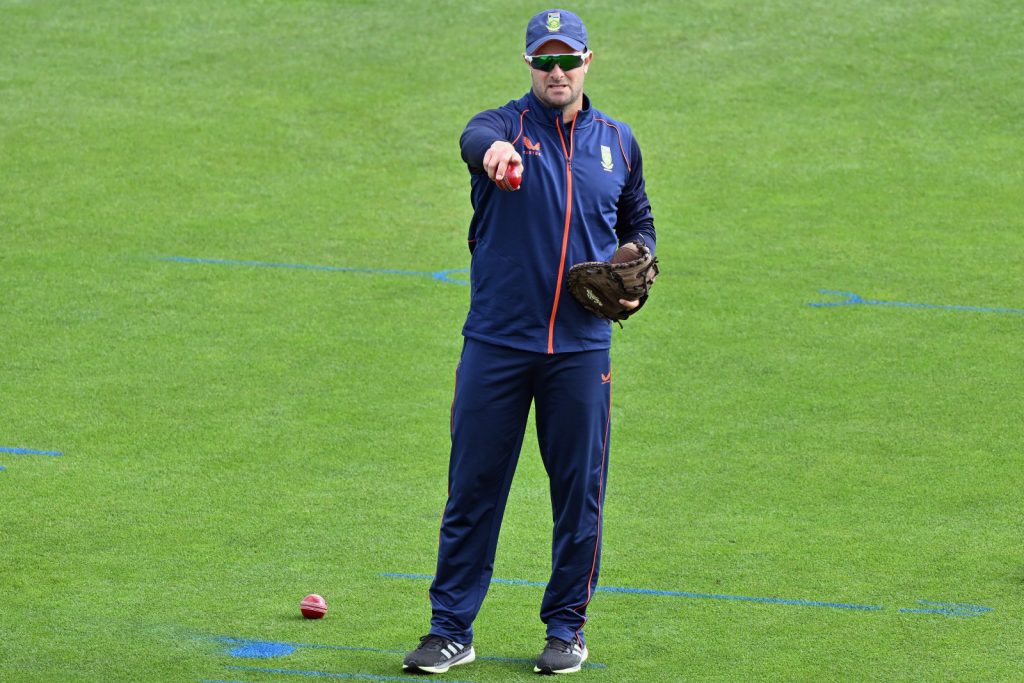
Howzat: The Proteas’ Lungi Ngidi (above) celebrates a wicket during the 2022 ICC Men’s T20 World Cup match between South Africa and India in Perth, Australia, on Sunday. Head coach Mark Boucher (below) in action. Photos: Isuru Sameera Peiris/Gallo Images/Getty Images and Kai Schwoerer/Getty Images
Certain cities, certain grounds, and stadiums even, have special significance for sportsmen. Soccer City in Johannesburg, for instance, will always have resonance for Iker Casillas’ World Cup-winning Spain, while Yokohama in Japan will always loom transcendent for Siya Kolisi’s 2019 World Cup-winning Boks.
So it is with Perth in Western Australia, possibly Australia’s most South African of cities, where Temba Bavuma’s Proteas beat India by five wickets on Sunday. It would be wrong to say the result sent shockwaves through the tournament (it didn’t) but it did signal South African intent in a difficult-to-miss way.
India are to cricket what Germany are to football — driven, resourced and subtly full of themselves without lapsing into anything quite as crass as arrogance. After limiting India to 133 for nine in Perth, the Proteas passed their score with two balls to spare, which makes the result seem almost close.
As with much else in cricket, though, the match secrets lie buried in the fine print. With Hardik Pandya’s wicket, India were 49 for five, hobbling to their final total largely because Lungi Ngidi, with his savvy array of slower balls and cutters, had made life so difficult for them upfront. This match was never close.
As with life, batting is about rhythm, and India spent a full innings in a vain search for theirs. South Africa — Kagiso Rabada was the stand-out — caught with easy aplomb and suddenly the innings was over. India didn’t score enough to seriously threaten South Africa’s chase and with fifties from Aiden Markram and David Miller, the match was concluded.
When Miller and Wayne Parnell, the not-out batsmen when victory was achieved, hugged at the end, the body language was revealing. Miller didn’t look remotely pleased. After a little cajoling from Parnell, he allowed himself a weak smile but that was it. What he was really saying in his conspicuous lack of emotion was that there is still work to be done here in Australia. This time round we aim to be there at the end.
Bar fate and the weather — which has been rotten so far in the tournament — the Proteas should be in the semifinals as a result of the Indian victory. They played Pakistan on Thursday and, even if they lost to the other men in green, it’s unlikely that they won’t qualify for this week’s knockout stages after their final round-robin game against the Netherlands on Sunday.
The South Africans like being in Australia and you can sense this team’s growing confidence. Their coach, Mark Boucher, has fond memories of the place because, as a player, he came to the country 14 years ago and became part of the first Test side to win a series Down Under since 1989.
Boucher was skipper Graeme Smith’s wicket keeper back in 2008-09 and he knows exactly what it takes to do big things Down Under.
That time round, the South Africans won in Perth — no surprises there — and went on to take the Test series by beating Ricky Ponting’s Australia in the Boxing Day Test at the famous Melbourne Cricket Ground (MCG). This week’s semi-finals are played in Adelaide and Sydney, with the weekend’s World Cup final at the MCG, a ground Boucher knows reasonably well.
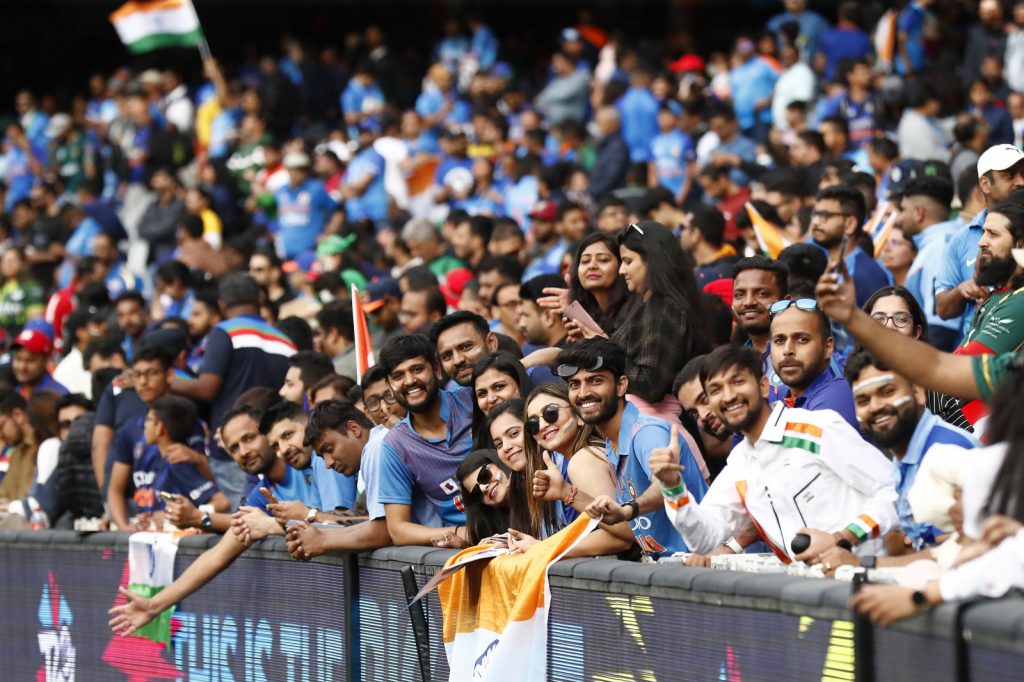
Television never does justice to how astonishingly large the MCG really is. The stands are so far from the square that it sometimes takes a relay of two throws from the boundary. Stand out in the middle and the seats, suites and press gallery seem so far away that you can easily feel, well, existential. The MCG is an easy place in which to feel lost and lonely.
There will be ample opportunity for loneliness come the semifinal stage because knockout cricket has no safety net. You misjudge a second run or drop a catch and that’s it. Often people do mind-bending things in semifinals and finals; their judgment gets scrambled because the weight of the moment is simply too much.
There’s little to separate the four semi-final teams — probably South Africa, India, New Zealand and England — in terms of ability, so it all boils down to fortitude. All semi-finals and finals loiter tantalisingly on the verge of a nervous breakdown.
In South Africa’s case, there’s also a backstory worth mentioning. This is Boucher’s last assignment because next year he goes off to coach the Mumbai Indians in the Indian Premier League, a gig that is infinitely better paid and of far shorter duration than is his time with South Africa.
Boucher has been shabbily treated by his employers, Cricket South Africa (CSA). At its social justice and nation building hearings it believed he had a case of racism to answer for, a tendentious claim. When its two star witnesses, Paul Adams and Enoch Nkwe, were confronted with the possibility of cross-examination by Boucher’s counsel at his disciplinary hearing, they ran for the hills. The CSA apologised “unreservedly” to Boucher but the damage had been done.
All of this lends pathos to his last innings as national coach. Truth to tell, he didn’t start off in impressive fashion, losing a Test series at home to England 3-1, but slowly he began to mould the team into his image. He experimented with players — and discarded some. Finally, he has settled on his best team, arguably the finest fielding side in the competition, with a couple of handy replacements such as Tabriaz Shamsi and Reeza Hendricks, who haven’t been able to muscle their way into the starting XI, waiting in the wings.
At the Mumbai Indians next year, Boucher will be coaching Dewald Brevis, the wunderkind of domestic cricket. On Monday afternoon Brevis — wait for this — scored 162 off 57 balls, including 13 fours and 13 sixes, playing for the Titans against the Knights in Potch. A Tshwane boy, Brevis is not yet 20.
Word out of the Titans camp suggests a night out for Brevis consists of an alcohol-free couple of hours watching teammate Quinton de Kock in the casino. By the time he’s finished with cricket he’ll be far, far bigger than his boyhood hero, AB de Villiers.
When a system produces a player like Brevis it’s difficult to sustain the argument that it’s not doing its job. But down in the nooks and crannies, all is not well. Northern Cape Cricket in Kimberley has had an acting chief executive for seven months; over in Benoni, Eastern has yet to have a 2022 annual general meeting, while down in East London, the board of Border Cricket is flirting with appointing Kugandrie Govender, who was turfed by the CSA as its acting chief executive amid much hullabaloo in July last year.
The tournament in which Brevis played scoring his fairytale 162 saw all eight first division teams congregate at a single venue to save travelling costs and the CSA still have no broadcast rights deal for its mini-IPL, the SA20, due to start in January.
All this makes definitive statements about the game and its health fiendishly difficult. It reminds one of what Winston Churchill said about Russia: “It’s a riddle, wrapped in a mystery, inside an enigma.”
As we head into the most important playing week for the sport in the last couple of years, the words have a ring of truth.
[/membership]